
MK Stalin Criticizes Union Government for Eroding State Powers on Independence Day
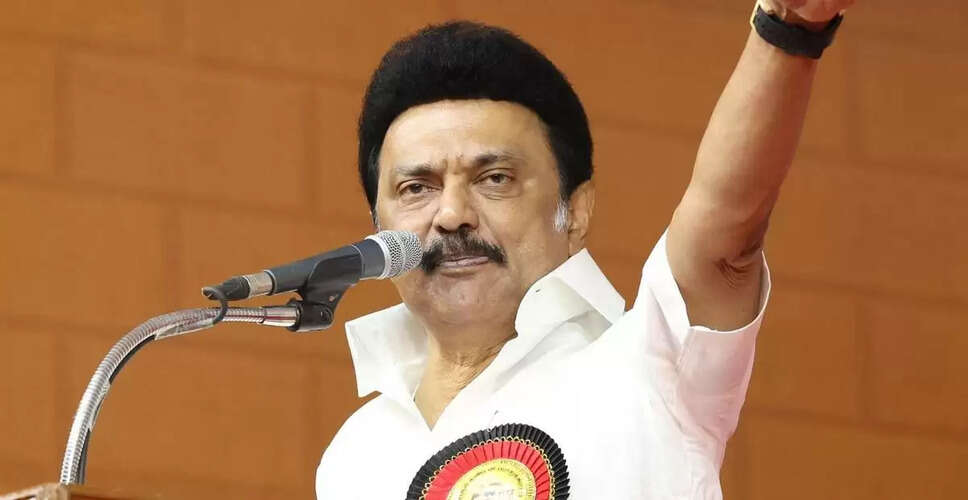
Stalin's Independence Day Address
On Friday, Tamil Nadu's Chief Minister MK Stalin accused the central government of trying to undermine state authority, as reported by a local news outlet.
During his speech at Fort St George in Chennai on Independence Day, Stalin remarked that state governments are increasingly reliant on the Union government due to unfair distribution of funds and welfare initiatives dictated by central legislation and judicial rulings.
He highlighted that essential state powers in areas like education and healthcare are being eroded, according to another news source.
Stalin emphasized that state governments are more attuned to the needs of their citizens and therefore require enhanced powers.
The leader of the Dravida Munnetra Kazhagam party argued that constitutional reforms are necessary to reclaim the powers and financial resources that have been gradually diminished over time.
He stated, "The only way to safeguard our rights, powers, and financial entitlements is through political and legal efforts, and that moment has arrived," as quoted by a media channel.
Stalin referenced the Constitution crafted by BR Ambedkar, asserting that the initial concept of cooperative governance between the Centre and states has been compromised.
He further stated, "A genuinely federal India is essential for a robust and prosperous nation," in a separate social media update.
Earlier, in an editorial for a prominent publication, Stalin remarked, "In a genuine federal framework, states should not need to protest, litigate, or plead for their fair share of revenues."
He added that such circumstances not only hinder state development but also threaten national unity.
Stalin has long accused the Union government of withholding financial support as a means to pressure states into adopting centrally imposed policies.
Tamil Nadu has consistently opposed the three-language policy outlined in the 2020 National Education Policy, reaffirming its commitment to its long-standing two-language policy of teaching Tamil and English.
The three-language policy advocates for the instruction of English, Hindi, and the local language, a concept first introduced in the National Education Policy of 1968 and retained in the latest version.