
Mizoram Intensifies Efforts Against Drug Trafficking Amid Rising Concerns
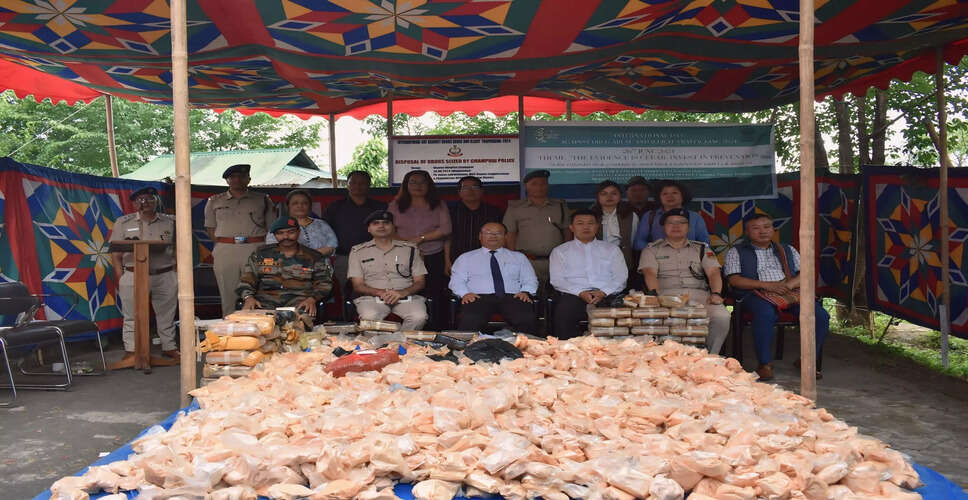
Significant Drug Seizures in Mizoram
Aizawl, June 23: This year, Mizoram has reported the confiscation of 127.49 kilograms of illegal drugs, as stated by Excise and Narcotics Minister Lalnghinglova Hmar. The Excise and Narcotics Department accounted for 46.68 kg of heroin, while the Mizoram Police contributed by seizing an additional 80.81 kg.
Combating Drug Trafficking
During a ceremony organized by the YMA Tlangnuam Branch in Aizawl to celebrate the 90th YMA Day, the Minister emphasized that authorities are taking urgent measures to tackle drug trafficking and assist individuals struggling with addiction.
Despite numerous seizures, Hmar expressed concern over the substantial amount of narcotics that continue to flow through the state unnoticed. He remarked, “Most of the drugs confiscated are not intended for use in Mizoram,” adding that the state has become a significant transit point for smugglers transporting drugs from Myanmar.
Impact of Regional Instability
Officials have linked the increase in drug trafficking through Mizoram to the closure of the Moreh route in Manipur, which has been affected by ongoing ethnic conflicts and political turmoil in Myanmar. This situation has turned Mizoram into a new pathway for cross-border smuggling.
Addressing the Addiction Crisis
Highlighting the gravity of the situation, Hmar noted that there are approximately 14,000 identified injecting drug users (IDUs) in the state. He called upon civil society organizations, including the YMA and local churches, to take a proactive stance in addressing this issue. “We cannot revert to old ways. It’s crucial that we treat this as a mission,” he stated.
Drawing a comparison to the COVID-19 pandemic, Hmar pointed out that churches played a vital role when the government was overwhelmed. “In the same way, to save our youth from drug addiction, churches must again take the initiative,” he urged, advocating for collaborative efforts among different denominations to organize at least one de-addiction camp annually.
Community Initiatives Against Drug Abuse
In alignment with the Centre’s Nasha Mukt Bharat Abhiyan, various NGOs and churches in Mizoram have been actively engaged in campaigns against drug abuse. Recently, the Baptist Church of Mizoram (BCM) conducted a special program in Lunglei’s Electric Veng area, targeting children under 17 and their parents.
The event, led by Upa R Vanlaldika, Chairman of the Social Concern Committee, featured Rev. Lalremsiama Fanai, Chaplain of HATIM, who served as the resource person. His discussion centered on “Good Parenting and Protecting Children from Drug Abuse.”
According to a survey conducted by BCM, alarming statistics were revealed: 95% of young drug users (aged 13-17) were male, while only 5% were female. Among middle and high school students, 71% had already tried drugs.