
Mizoram Churches Rally Against FCRA Amendment Bill 2026
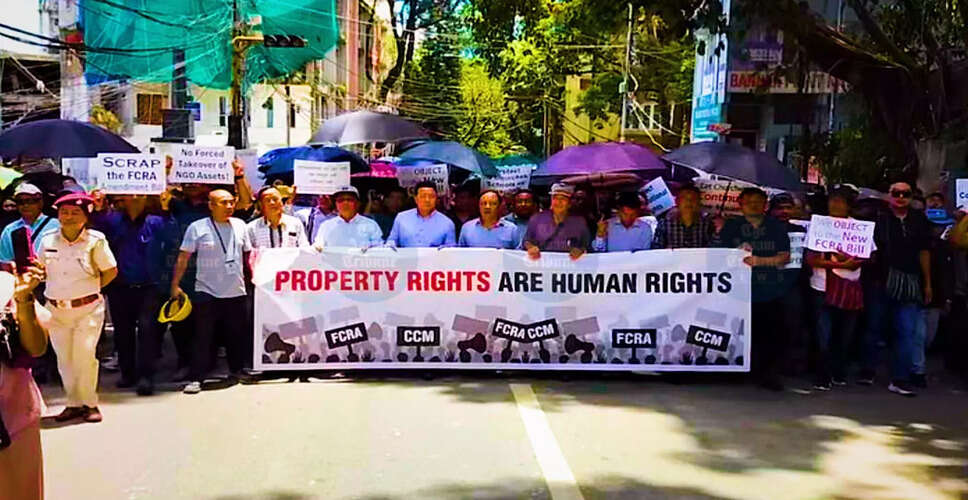

Mass Protest in Aizawl Against FCRA Changes
Members of the Council of Churches in Mizoram during Tuesday’s rally. (AT Photo)
Aizawl, Aug 11: The Council of Churches in Mizoram (CCM) organized a significant rally in Aizawl on Tuesday to voice their opposition to the proposed FCRA Amendment Bill, 2026, raising concerns about its implications.
The march commenced from Sikulpuikawn and Zarkawt, culminating at Vanapa Hall, where a substantial crowd gathered.
Participants, including members and supporters from various churches, displayed banners and placards denouncing the proposed changes.
During the address at Vanapa Hall, CCM president Rev Dr R Lalbiakliana stated that while the government claims the amendments aim to enhance safeguards, they are not targeting Christians, the church remains apprehensive about how these provisions might impact Christians and other minority groups.
“Should the FCRA Amendment Bill, 2026, be enacted in its current form, churches and NGOs risk losing their properties and assets,” Lalbiakliana warned.
He further contended that the proposed measures contradict Article 300A of the Constitution, which safeguards an individual's property rights.
The legislation includes clauses regarding the management, oversight, and disposal of foreign contributions and assets belonging to organizations whose FCRA registration has lapsed, been canceled, or not renewed.
Additionally, it establishes a designated authority to supervise these assets.
The CCM has consistently opposed the Bill, particularly due to its potential repercussions on churches and organizations that rely on foreign contributions for their religious, social, and charitable endeavors.
This protest reflects the increasing dissent against the proposed amendments in both Mizoram and Nagaland.
Both states, with a majority Christian population, are advocating for more thorough parliamentary examination and broader stakeholder engagement, including the possibility of referring the Bill to a Joint Parliamentary Committee (JPC).
The FCRA governs the acceptance and use of foreign contributions by individuals, associations, and NGOs in India.
The amendment aims to establish a framework for managing the assets of organizations whose FCRA registration has ceased.
Introduced in the Lok Sabha on March 25, 2026, the Bill has sparked significant debate among church organizations, civil society groups, and opposition parties during the ongoing Monsoon Session of Parliament.