
Mild Earthquake Shakes Mandi, Himachal Pradesh: Residents Alarmed
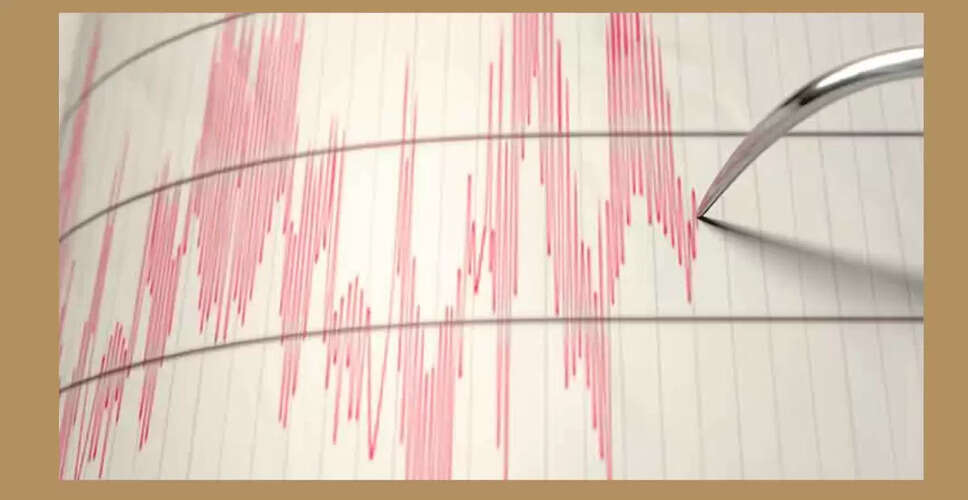
Seismic Activity in Himachal Pradesh
News Media
Mandi: On Monday afternoon, January 5, 2026, residents of Himachal Pradesh experienced mild earthquake tremors, causing brief panic. The quake's epicenter was identified in Mandi district, registering a magnitude of 3.6 on the Richter scale.
Officials reported that the earthquake occurred at approximately 12:57 PM, originating from a depth of around five kilometers below the surface. Many individuals in various locations felt the ground shake and quickly evacuated their homes and workplaces as a safety measure. Fortunately, there were no reports of casualties or property damage.
Mandi district is situated in a seismically active zone and often experiences low-intensity tremors. However, the unexpected shaking on Monday startled residents, leading to a moment of alarm.
This tremor in Himachal Pradesh followed a stronger earthquake earlier in the day in Assam, which measured over magnitude 5. The occurrence of these two seismic events in quick succession has raised concerns among the local population, particularly in the hilly region.
Experts have consistently highlighted that Himachal Pradesh is highly susceptible to earthquakes. The Bureau of Indian Standards has recently updated its seismic zoning map, categorizing the entire Himalayan region as the highest-risk Zone VI (red zone). Districts including Shimla, Mandi, Kangra, Kullu, Chamba, Kinnaur, and Lahaul-Spiti are now classified as facing the most significant risk.
A substantial portion of Himachal Pradesh is already classified under Zone V, which is regarded as extremely sensitive to seismic activity. The state has a tragic history of seismic disasters, notably the catastrophic Kangra earthquake on April 5, 1905, which resulted in thousands of fatalities and had a magnitude exceeding 7 on the Richter scale.