
Middle East Conflict Escalates: Houthi Rebels Join the Fray with Missile Strikes on Israel
Escalation of Hostilities in the Middle East
On Saturday, the Iranian-backed Houthi rebels declared their involvement in the ongoing conflict in the Middle East, asserting that they had launched two missile strikes targeting Israel.
In response to the escalating situation, approximately 2,500 US Marines have been deployed to the region. Meanwhile, the Pakistani government announced that key regional players would convene on Sunday to explore potential resolutions to the conflict.
This war has significantly impacted global oil and natural gas supplies, leading to fertilizer shortages and disruptions in air travel.
Iran's control over the vital Strait of Hormuz has caused market instability and price fluctuations.
The United States and Israel have continued their military actions against Iran, which has retaliated with strikes on Israel and neighboring Gulf states, resulting in over 3,000 fatalities.
The Houthis' involvement raises concerns about the safety of global shipping, particularly if they target vessels in the Bab el-Mandeb Strait, a crucial passage for about 12% of global trade.
There may be some respite as Iran agreed to permit humanitarian and agricultural shipments through the Strait of Hormuz following a request from the United Nations. US President Donald Trump has set a deadline of April 6 for Iran to reopen the strait.
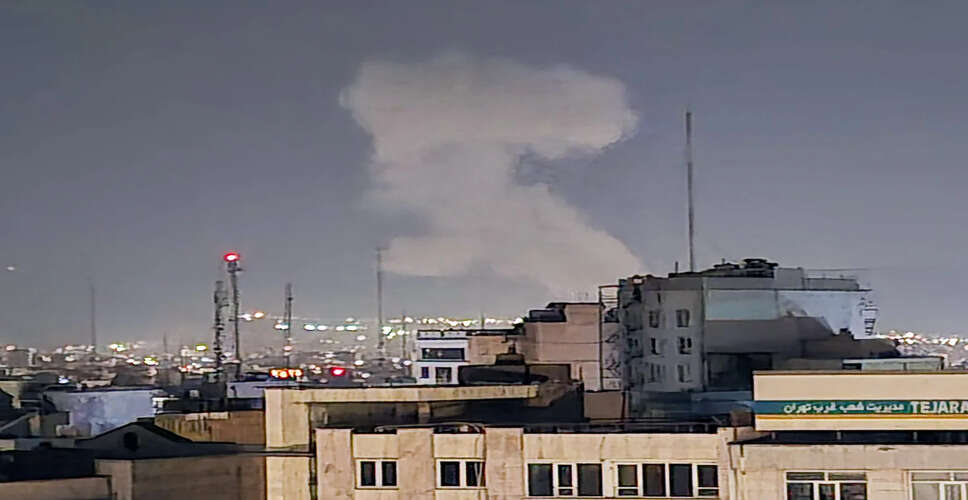
Reports from Tehran indicate heavy bombardments occurred late Saturday.
Earlier, Israel's military confirmed it had targeted Iranian naval weapon production facilities, vowing to continue its offensive against critical weapons manufacturing sites in the coming days.
Iran has launched missiles towards Israel, while air defenses intercepted missiles and drones across Gulf nations. The US has claimed to have struck over 11,000 Iranian targets during the conflict.
Additionally, Ukraine's president has visited Gulf countries to offer drone defense assistance.
Concerns Over Houthi Participation
Houthi Brigadier General Yahya Saree announced on the rebels' Al-Masirah satellite channel that they had targeted 'sensitive Israeli military sites' in the south.
Should the Houthis escalate their attacks on commercial shipping, as they have previously, it could lead to a surge in oil prices and jeopardize maritime security, according to Ahmed Nagi, a senior analyst at the International Crisis Group. He emphasized that the repercussions would extend beyond the energy sector.
The Bab el-Mandeb Strait, located at the southern tip of the Arabian Peninsula, is vital for vessels en route to the Suez Canal via the Red Sea. Saudi Arabia has been transporting millions of barrels of crude oil daily through this route due to the effective closure of the Strait of Hormuz.
Between November 2023 and January 2025, Houthi rebels attacked over 100 merchant ships with missiles and drones, sinking two vessels, claiming these actions were in solidarity with Palestinians during the Israel-Hamas conflict.
The Houthis' latest actions complicate the deployment of the USS Gerald R Ford, which arrived in Croatia for maintenance. Sending it to the Red Sea could provoke attacks similar to those on the USS Dwight D Eisenhower in 2024 and the USS Harry S Truman in 2025.
Since 2014, the Houthis have controlled Yemen's capital, Sanaa, and Saudi Arabia has been engaged in a military campaign against them on behalf of Yemen's exiled government since 2015, although a fragile ceasefire currently exists.
Diplomatic Efforts Amid Military Buildup
Pakistan has announced that top diplomats from Saudi Arabia, Turkey, and Egypt will arrive in Islamabad for discussions aimed at resolving the conflict, with their visit scheduled for Sunday.
Pakistani Prime Minister Shehbaz Sharif reported having extensive talks with Iranian President Masoud Pezeshkian regarding regional tensions.
However, Iranian Foreign Minister Abbas Araghchi expressed skepticism about recent diplomatic initiatives during a phone call with his Turkish counterpart.
Iranian state media quoted Araghchi as accusing the United States of making 'unreasonable demands' and displaying 'contradictory actions.'
Pakistani Foreign Minister Ishaq Dar later communicated with Araghchi, advocating for an end to all hostilities.
Trump's envoy, Steve Witkoff, revealed that Washington had presented a 15-point 'action list' to Iran for a potential ceasefire, which includes proposals to limit Iran's nuclear program—central to the tensions with the US and Israel—and to reopen the Strait of Hormuz.
Tehran rejected this proposal, offering a five-point plan that called for reparations and recognition of its sovereignty over the waterway.
In the meantime, US forces, including around 2,500 Marines trained for amphibious landings, have arrived, marking the largest American military presence in the region in over 20 years. Additionally, at least 1,000 paratroopers from the 82nd Airborne Division, trained for rapid deployment in hostile environments, have been dispatched to the Middle East.
US Secretary of State Marco Rubio stated that Washington can achieve its objectives without deploying ground troops.
US Troops Injured in Attacks
Recent Iranian assaults on Saudi Arabia's Prince Sultan Air Base have resulted in injuries to over two dozen US troops, according to sources familiar with the situation who requested anonymity.
On Friday, Iran launched six ballistic missiles and 29 drones at the base, injuring at least 15 personnel, five of whom sustained serious injuries.
The base, located approximately 60 miles from Riyadh, was previously attacked twice earlier in the week, resulting in injuries to 14 US troops.
In total, more than 300 US service members have been injured in the ongoing conflict, with at least 13 reported fatalities.
Rising Casualties Amid Ongoing Conflict
Iranian officials report that over 1,900 individuals have died in Iran, while 19 fatalities have been confirmed in Israel.
In Lebanon, where Israel has initiated an invasion in the south targeting the Hezbollah militant group, officials indicate that more than 1,100 people have lost their lives since the conflict began.
In Iraq, where Iranian-backed militia groups have joined the fray, 80 members of the security forces have been killed.