
Mehbooba Mufti Clarifies PDP's Stance Amid Controversy Over Regional Status
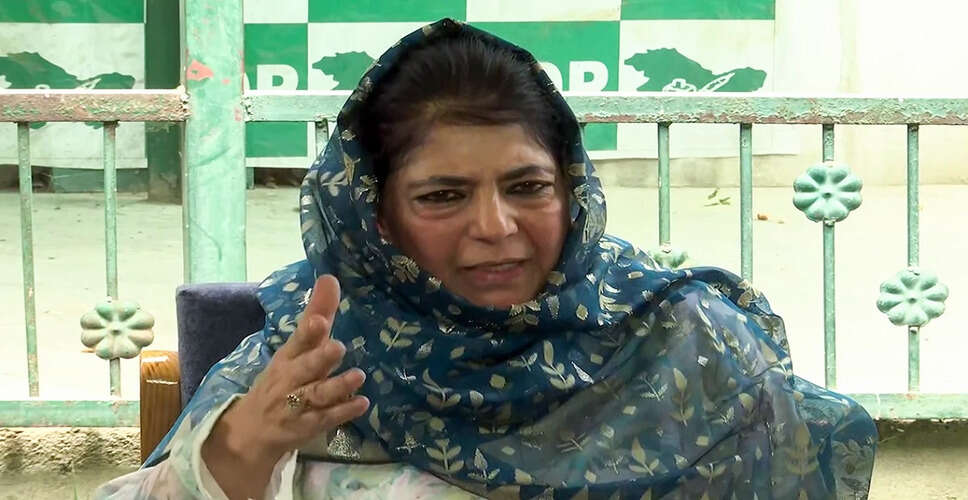
Mehbooba Mufti Responds to Controversy
The leader of the People's Democratic Party (PDP), Mehbooba Mufti, has distanced her party from the so-called 'Dixon Plan' while addressing recent controversies regarding the regional status of the Pir Panjal and Chenab Valley areas in Jammu. During a press conference, Mufti also criticized Farooq Abdullah, a leader of the National Conference, asserting that Abdullah's father, Sheikh Abdullah, was arrested due to the 'Dixon Plan', emphasizing that this agenda belongs to the National Conference, not the PDP.
Clarification on Regional Status Statement
Elaborating on her comments regarding the regional status of the Pir Panjal and Chenab Valley, Mufti stated that her remarks were focused on administrative matters and did not reference the 'Dixon Plan'. Citing her father's ideology, she mentioned, "Mufti Sahib dedicated his life to uniting Jammu and Kashmir." She reiterated that the PDP does not support the division of Jammu and Kashmir and is advocating for regional administration in these districts, which are remote and make it challenging for locals to voice their grievances to authorities.
Understanding the Dixon Plan
The 'Dixon Plan' refers to a proposal made by UN mediator Sir Owen Dixon in 1950, which suggested the partition of Jammu and Kashmir, transferring Ladakh to India, handing over the northern areas/Pakistan-occupied Kashmir to Pakistan, and conducting a referendum in the Kashmir Valley under UN supervision. India rejected this proposal. Mehbooba Mufti welcomed the return of Kashmiri Pandits to Jammu and Kashmir, stating, "We want them to come back." She also highlighted her previous request for two reserved seats for Kashmiri Pandits in the state assembly.
Promoting Unity Among Communities
In response to a question regarding the migration of Kashmiri Pandits, she expressed, "They should return; we want them back." She further noted that reserving two seats for them in elections would foster interaction between them and Kashmiri Muslims, thereby improving their relations.