
Meghalaya Introduces Bag-less Days and New Academic Guidelines for 2027-28

New Academic Session Guidelines in Meghalaya
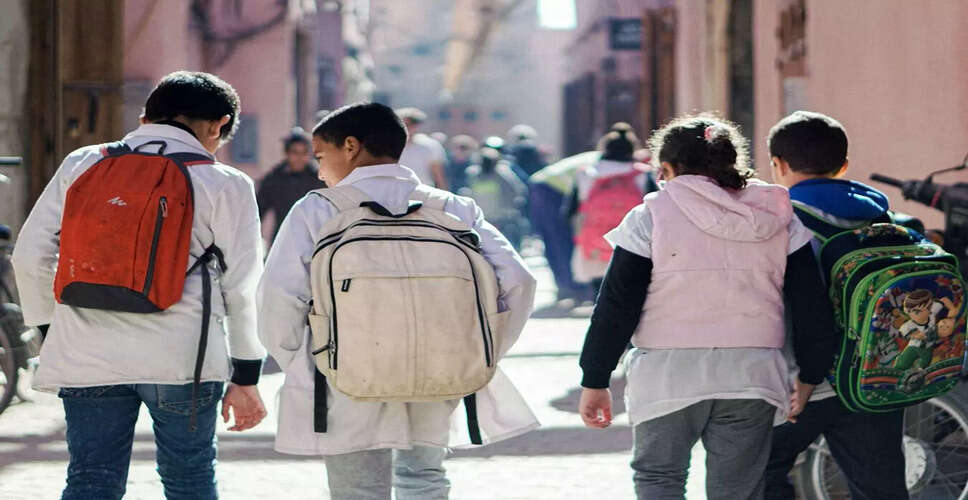
Representational image of schoolchildren carrying bags. (Photo:Unsplash)
Shillong, Nov 29: The government of Meghalaya has revealed that the academic year 2027-28 will kick off on February 8, introducing a policy of 10 bag-less days in schools aimed at enhancing experiential learning and vocational exposure for students.
A notification from the Education Department, released earlier this week, states that the academic year for pre-school to Class 2 will wrap up on November 26, 2027, while Classes 3 to 10 will conclude on December 16, followed by winter break starting the next day.
The department has set a minimum of 200 working days and 1,000 instructional hours for Classes 1 to 5, while Classes 6 to 8 will require 220 working days and 1,320 instructional hours.
For students in Classes 9 to 12, the requirements are also 220 working days and 1,540 instructional hours.
As part of the new initiatives, all schools are required to implement at least 10 bag-less days during the academic year, where students will engage in activities that extend learning beyond traditional classroom settings.
These activities will encompass exposure to local crafts, interactions with artisans and farmers, visits to heritage sites and farms, as well as sports, cultural events, nature walks, environmental conservation, financial literacy, and entrepreneurship.
The guidelines particularly stress vocational exposure and engagement with local experts, especially for students in Classes 6 to 8.
Additionally, Community-Integrated Skill Learning (CISL) will be mandatory for students in Classes 6 to 10 starting from the 2027-28 academic year.
CISL, which is part of the Health and Physical Education curriculum, will contribute 50 marks to the total of 100, with the remaining marks allocated to Health and Physical Education.
Schools will perform initial assessments to identify students needing extra support in reading readiness, with teachers providing age-appropriate assistance to enhance listening, sound and word recognition, comprehension, and reading skills, as stated in the notification.
The department has also established school hours for government institutions, with lower primary classes operating from 9 am to 2 pm, upper primary classes from 9 am to 3 pm, and secondary and higher secondary classes from 9 am to 4 pm.
Schools are instructed to ensure complete coverage of the prescribed syllabus through proactive lesson planning and consistent monitoring by school heads.
Regarding assessments, the department has advocated for a transition to competency-based evaluations in accordance with the National Education Policy 2020, moving away from a focus on rote memorization.
Regular parent-teacher meetings will also be mandated, especially after mid-term and final examinations, to discuss students' academic performance, attendance, and overall development.
School heads will be accountable for adhering to the academic calendar and enforcing the established guidelines throughout the academic year.