
Meghalaya Government Signs MoUs to Boost Rural Entrepreneurship and Sustainability
Transforming Agricultural Waste into Valuable Products
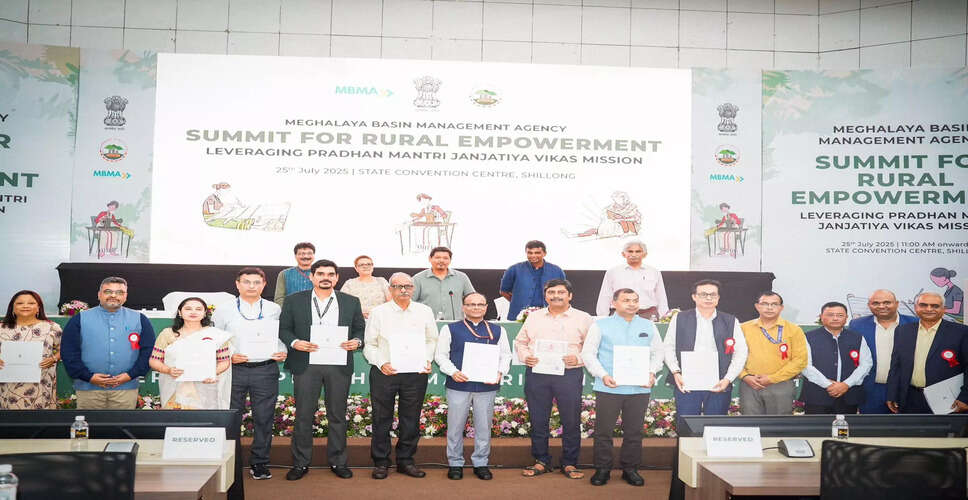
Shillong, July 26: In a pivotal step towards enhancing sustainability and fostering rural entrepreneurship, the Meghalaya government has entered into 13 Memorandums of Understanding (MoUs) with prominent technical and research institutions. This initiative aims to convert agricultural and floral waste into useful organic products, such as compost and herbal colors like gulal, as reported by officials.
Every year, the state sees a significant amount of pineapple peels, banana stems, and flower waste going to waste. This project intends to utilize this untapped biomass to create eco-friendly products while also encouraging the production of health foods from millets, sorghum, and maize, thereby providing new income opportunities for rural populations.
The MoUs were signed during the Summit for Rural Empowerment at the State Convention Centre in Shillong and are part of a larger strategy under the Pradhan Mantri Janjatiya Vikas Mission (PMJVM). The initiative aims to enhance rural livelihoods through innovation, technology, and improved market access.
Officials mentioned that six additional agreements are forthcoming, focusing on bolstering sustainable livelihood initiatives, particularly in tribal and remote regions.
The emphasis is on shifting from low-value agricultural production to high-value processing of local resources in a manner that is both economically advantageous and environmentally sustainable.
- Producing organic compost from fruit waste
- Extracting essential oils from medicinal and aromatic plants
- Converting flowers into natural dyes
- Developing nutritious food products from local crops
Officials highlighted that this comprehensive approach will not only create jobs and increase farmer incomes but also minimize environmental waste and promote a circular rural economy.
During the event, Chief Minister Conrad K Sangma remarked that the summit reflects the government's ongoing commitment to farmers, women, and rural communities.
Over the past seven years, the state has supported the establishment of more than 55,000 Self-Help Groups (SHGs) involving over 500,000 women, and has provided assistance to more than 200,000 farmers and 20,000 farmer collectives, according to the CM.