
Meghalaya CM Defends Reservation Policy Amid Calls for Review
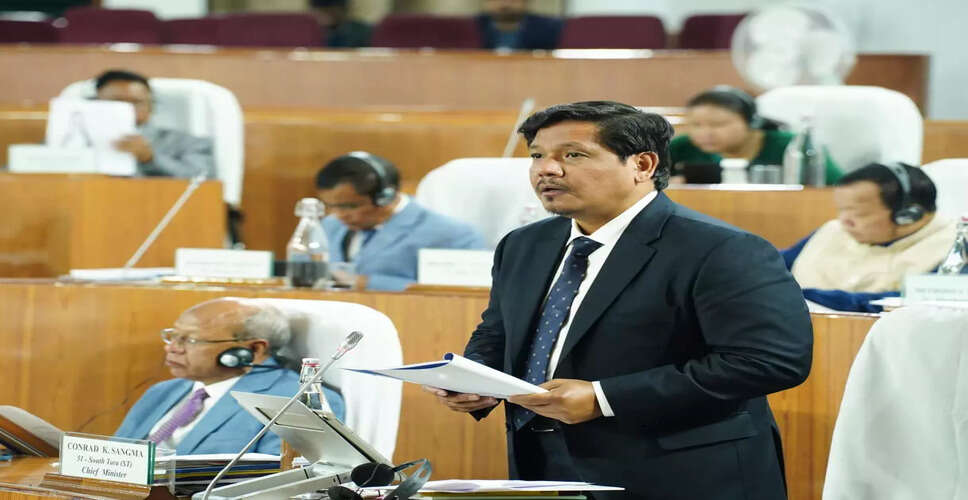
Chief Minister's Stance on Reservation Policy
Shillong, Feb 26: Conrad K. Sangma, the Chief Minister of Meghalaya, has stood firm in support of the state's current reservation policy, warning that any modifications could face judicial scrutiny.
He pointed out that while no policy is without flaws, any changes should be approached with caution, respecting constitutional principles and the potential for legal challenges.
During a discussion prompted by a Zero Hour notice from Voice of the People Party (VPP) member Ardent Miller Basaiawmoit regarding the Committee on the Reservation Policy, Sangma informed the Assembly that the committee itself advised against hasty alterations.
“The committee clearly indicated that any changes to the Reservation Policy might be subject to judicial review. Thus, we must tread carefully and adhere to constitutional safeguards,” the Chief Minister stated.
He also recognized the importance of periodic evaluations of the policy.
“No policy is perfect, and they must adapt over time. This current review aims to assess the framework for potential improvements without breaching constitutional norms,” he elaborated.
Sangma referenced a 1972 memorandum that allocated 40% reservation for the Garo community and another 40% for the Khasi and Jaintia communities in state government employment.
According to him, the committee acknowledged that the previous government made a balanced decision based on the socio-economic data available at that time.
“The committee concluded that the reservation distribution was appropriate given the circumstances and considerations of that era,” he remarked.
However, the Chief Minister admitted that socio-economic conditions have significantly evolved over the last fifty years, although disparities among major tribal groups persist.
“In the past five decades, socio-economic indicators have changed considerably. Yet, the disparities among communities remain, suggesting that the original goals of the policy are still relevant,” Sangma stated.
He emphasized that the current reservation framework has been in effect for over fifty years without facing substantial judicial challenges, but any changes could provoke legal disputes.
“The existing policy has proven resilient. While the likelihood of it being challenged now is low, any modifications could lead to judicial scrutiny,” he warned.
In response to calls for population-based reservations, the Chief Minister explained that such a method might not comply with constitutional guidelines.
“Reservation cannot be based solely on population numbers. Smaller communities may need more support, while larger groups might not be underrepresented,” he clarified.
He reiterated that the main criteria for reservation should focus on socio-economic disadvantages, historical injustices, and adequate representation in public services.
“These principles are enshrined in the Constitution and upheld by the Supreme Court. The emphasis has always been on ensuring justice and fair representation,” he added.
Sangma also rejected claims that religious factors influence reservation policies in the state.
“The basis for reservation has consistently been socio-economic backwardness, not religious affiliations,” he concluded.