
Martha Ann Lillard, Last Iron Lung Patient in the U.S., Passes Away at 78
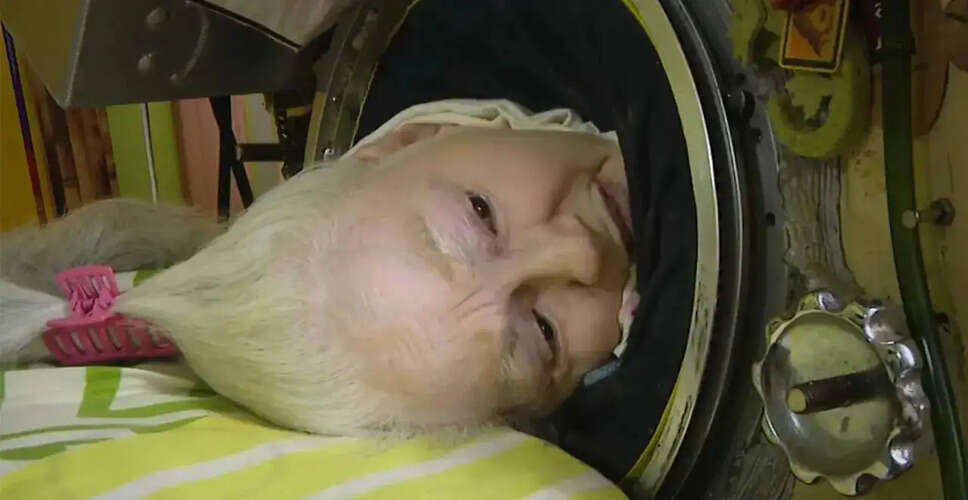

Martha Ann Lillard's Journey with Polio
Martha Ann Lillard, who is believed to be the last individual in the United States reliant on an iron lung for survival, has died at the age of 78. Her obituary indicates that her passing was primarily due to long COVID, a condition that emerged following years of health decline linked to her prolonged struggle with polio, as reported by various sources.
Lillard's narrative dates back to 1953 when she was just five years old. In an interview with KFOR shortly before her death, she recounted waking up to a sunny day but sensing something was amiss. She experienced severe neck pain that prevented her from lifting her head. Within four days, her health deteriorated drastically; she lost consciousness, ceased to breathe independently, and became completely immobile. This was the onset of her polio diagnosis, occurring just two years prior to the introduction of a vaccine that would significantly reduce polio cases nationwide.
Experiencing Life in an Iron Lung
Life Inside the Iron Lung
During that era, severe cases of polio were treated using an iron lung, a machine that enveloped the body to assist with breathing. Lillard shared with KFOR that medical professionals were often reluctant to place children in these devices due to their resistance. However, she found comfort in it, expressing how good it felt to breathe again.
Her initial experience in the iron lung lasted six months, during which she spent 23 hours daily in the machine as her lungs gradually regained functionality. She described the early days as exhausting, but getting into the machine always brought her relief. As she grew stronger and eventually returned home, her reliance on the device decreased. Although she regained enough strength to walk, her right arm remained paralyzed for the rest of her life.
Living Life to the Fullest
A Full Life Despite the Odds
A GoFundMe page established in her honor highlights how Lillard refused to let her physical limitations define her existence. Despite living with only a quarter of normal lung capacity, scoliosis, and a paralyzed arm, she led a fulfilling life filled with creative endeavors, including painting, writing poetry, and composing music.
Throughout the years, she attempted to transition to more modern breathing devices, but none matched the effectiveness of the iron lung. She tested various alternatives but found that none provided her lungs with the necessary support.
Health Challenges in Later Years
Health Decline in Later Years
For a period, Lillard only required the iron lung for nighttime use. However, as she aged, her health further declined, especially after being diagnosed with post-polio syndrome, which is characterized by significant fatigue and muscle weakness in polio survivors. Her health faced additional setbacks when she contracted COVID-19 twice, which ultimately led to long COVID.
As her medical requirements increased, so did the strain on her aging equipment. Her sister, Cindy McVey, explained to KFOR that some parts of the iron lung were from the 1940s and had become nearly impossible to replace. Although the family had a spare motor, they lacked someone knowledgeable to install it if necessary. By the end of her life, Lillard relied on the iron lung continuously, needing it every hour of every day to breathe.