
Maoist Leader Ganesh Uike Killed in Odisha Gunfight with Security Forces
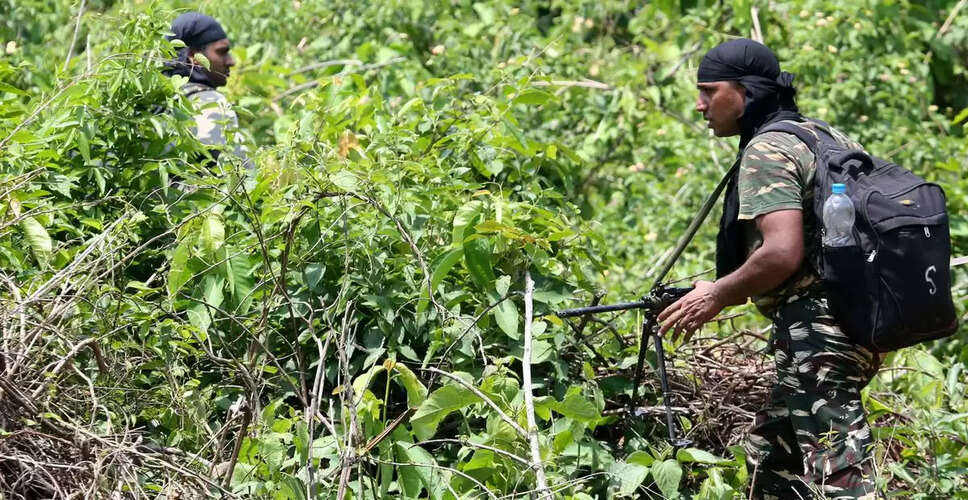
Maoist Leader Neutralized in Odisha
Ganesh Uike, a prominent Maoist figure, was shot dead during a confrontation with security personnel in the Kandhamal district of Odisha on Thursday, according to police reports.
Uike, who had a bounty of Rs 1.1 crore on his head, was not alone; three other suspected Maoists also lost their lives in the skirmish, which occurred in a forested area near the Chakapad police station.
As the head of the outlawed Communist Party of India (Maoist) in Odisha, Uike's death marks a significant blow to the organization.
The identities of the other three deceased individuals have yet to be confirmed.
This incident follows a recent statement from the Union government to Parliament, revealing that 335 'Left-wing extremists' were killed, and 2,167 had surrendered in 2025.
On December 16, the Minister of State for Home Affairs, Nityanand Rai, informed the Lok Sabha that 942 Left-wing extremists had been apprehended this year alone.
Since 2014, a total of 1,841 individuals associated with such groups have been killed, over 16,000 arrested, and 9,588 have surrendered.
The Union government has committed to eradicating Maoism by March 31, 2026.
In October, the home ministry reported a decrease in districts affected by 'Left-wing extremism' from 18 to 11 since March.
In 2025, the number of districts classified as 'most affected' dropped from six to three, specifically Bijapur, Sukma, and Narayanpur in Chhattisgarh.
As part of the Centre's ongoing anti-Maoist campaign this year, notable leaders like Uike and Madvi Hidma have been eliminated, while others, including Vikas Nagpure alias Anant and Mallojula Venugopal Rao, alias Bhupathi, have surrendered.
A report highlighted that in the Andhra Pradesh village nearest to Hidma's death, residents reported not hearing any gunfire.
Previous reports indicated that many individuals killed in Chhattisgarh's Bastar region were labeled as reward-carrying Maoists by police, a claim disputed by families who assert that those killed were civilians.
Concerns have been raised by civil liberties organizations and opposition parties regarding some of these fatalities, suggesting they may represent 'fake encounters.'