
Manipur's Project Hinichi: A Step Towards Sustainable Farming
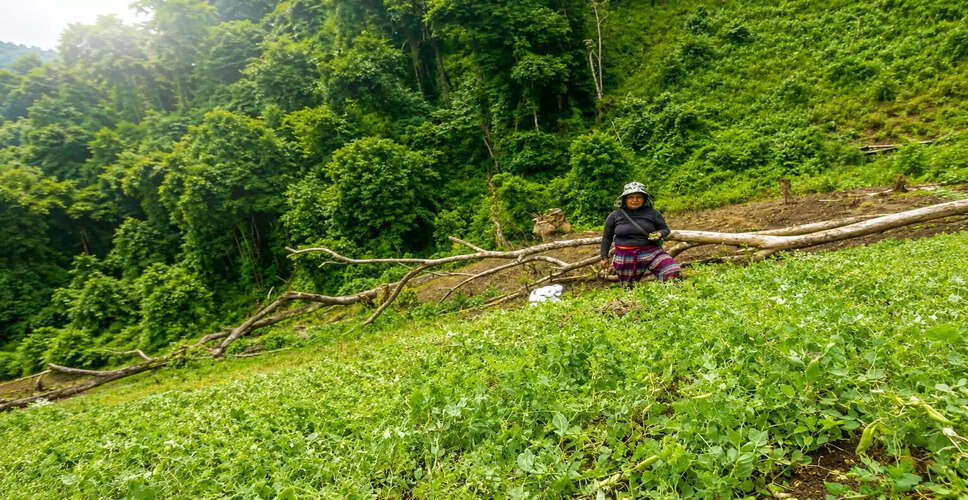

Transforming Agriculture in Manipur
A farmer tends to a green pea field in Churachandpur district. (AT Photo)
Imphal, June 10: The recent green pea harvest in Churachandpur represents more than just a typical farming event.
This harvest marks the initial success of Project Hinichi, which aims to provide farmers in the hill districts of Manipur with a legitimate alternative to the long-standing illegal poppy cultivation that has plagued the region.
As reported by Manipur Police, this initiative has successfully helped 124 families shift from illicit poppy farming to sustainable agricultural practices.
Project Hinichi is designed to offer farmers sustainable livelihood options while contributing to the overarching goal of establishing a drug-free society.
Officials noted that this successful harvest illustrates the potential of alternative development programs to motivate communities to embrace legal and sustainable farming practices.
"The project aims to empower local communities, enhance farmers' economic prospects, and decrease reliance on narcotic crop cultivation," the statement emphasized.
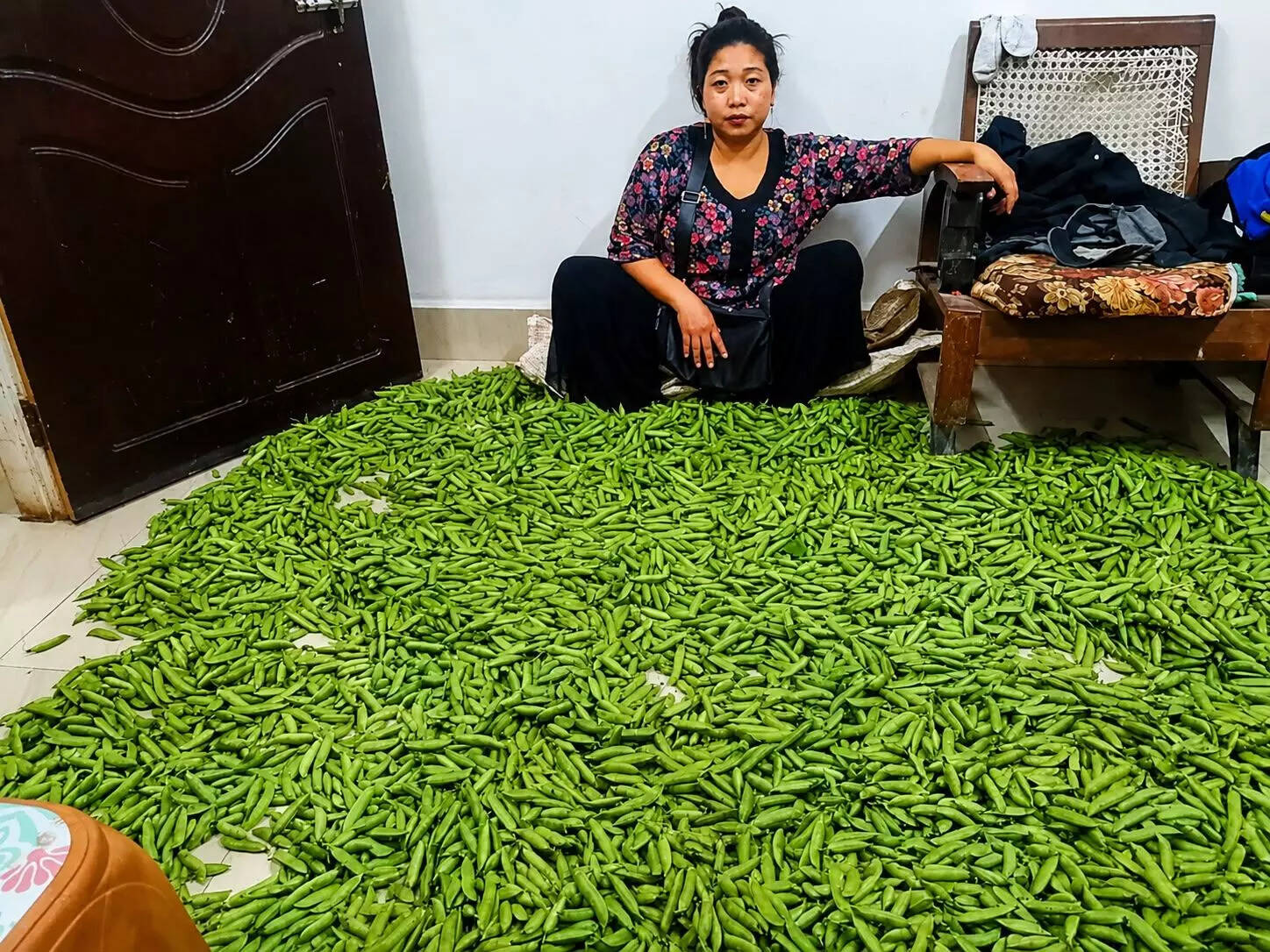
A green peas farmer with her harvest. (AT Photo)
Manipur Police hailed this development as a significant move towards fostering stronger communities, improving livelihoods, and working towards a drug-free future.
This initiative is particularly important given the extensive poppy cultivation that has occurred in Manipur's hill districts over the years.
Regions such as Churachandpur, Kangpokpi, Tengnoupal, Ukhrul, and Senapati have seen large areas dedicated to poppy farming, leading to numerous destruction operations by security forces and government agencies as part of the state's anti-narcotics efforts.
Official statistics reveal the scale of the challenge and the intensity of enforcement actions.
In 2020, authorities discovered 8,057 acres of illegal poppy cultivation statewide, with 1,695 acres destroyed. By 2024, the identified cultivation area had decreased to 4,127 acres, while 3,690 acres of poppy fields were eradicated that year.
Anti-poppy operations have persisted this year as well.
In January, security forces dismantled over 306 acres of illegal poppy cultivation in Kangpokpi district within six days, with estimates suggesting these plantations could have produced over 2,080 kg of opium.
Authorities assert that while enforcement actions are essential, offering sustainable livelihood alternatives is equally crucial to tackle the socio-economic factors that drive poppy cultivation.
Initiatives like Project Hinichi are thus seen as vital components of Manipur's long-term strategy to lessen reliance on illegal crops, enhance rural livelihoods, and combat drug production and trafficking.
The inaugural green pea harvest in Churachandpur is viewed as an encouraging sign that alternative development initiatives can pave the way away from narcotics-related farming while generating sustainable income opportunities for local communities.
This initiative is part of broader efforts to confront the challenges posed by illegal poppy cultivation through community-driven interventions and sustainable development strategies, complementing the state's ongoing anti-narcotics campaign.