
Mandi District Unveils Heritage Publications to Celebrate Cultural Legacy
Heritage Publications Launched in Mandi
Munish Sood
MANDI:
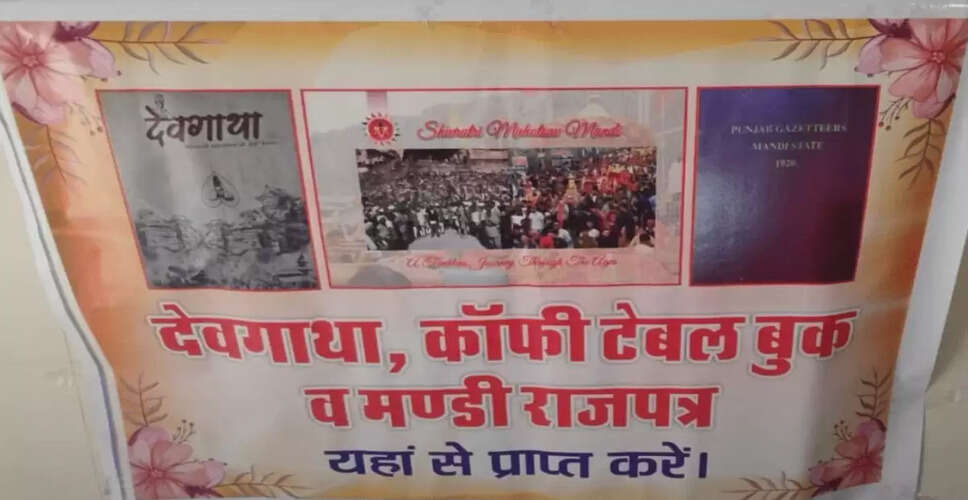
In a significant move aimed at safeguarding and promoting the rich cultural, historical, and spiritual heritage of Himachal Pradesh, the administration of Mandi district has released three important heritage publications for public access. These include a beautifully illustrated coffee table book on the International Shivratri Festival, the esteemed Mandi State Gazetteer, and the extensive religious compendium titled Devgatha.
According to Apoorv Devgan, the Deputy Commissioner and Chairman of the International Shivratri Festival Committee, these publications can be found at the DC Office. The coffee table book, named “A Timeless Journey Through the Ages,” is priced at Rs 1,650, while the Mandi State Gazetteer is available for Rs 500, and Devgatha for Rs 400.
Devgan described the coffee table book as a vital visual record that chronicles the history of the International Shivratri Festival, tracing its roots from the pre-district era of Mandi through the 20th century and into the celebrations planned for 2025. This publication showcases a unique collection of archival photographs that capture ceremonial processions, traditional sports, cultural performances, and the enthusiastic participation of the public, highlighting the festival's integral role in the region's social and cultural landscape.
Many of the images featured in the book have not been publicly displayed before, adding to its historical significance. Collectively, they illustrate how the Shivratri Festival has served as a vibrant symbol of shared faith, tradition, and cultural continuity in Mandi over the centuries.
Additionally, Devgatha is presented as a comprehensive depiction of the International Shivratri Festival, referred to as a “Mahakumbh of deities.” This book portrays Mandi, often called Chhoti Kashi, as a prominent spiritual hub and documents the legends, customs, and rituals associated with approximately 216 deities in the district. It also provides detailed insights into deity chariots, belief systems, and ceremonial practices, making it an invaluable resource for researchers, devotees, and cultural enthusiasts.
The Mandi State Gazetteer (1920), recognized as a key historical reference, is also available. Initially published during the British era under the title “Punjab States Gazetteers, Mandi State,” this work was compiled between 1904 and 1908, with an expanded edition released in 1920. The gazetteer offers an in-depth account of Mandi’s geography, history, social structure, economy, and administrative systems, accompanied by rare photographs from that time.
Devgan encouraged citizens, scholars, students, and those interested in heritage studies to explore these publications, emphasizing that they are more than mere books—they represent the collective memory of Mandi. He expressed hope that this initiative would aid in preserving the district’s rich traditions and religious heritage, providing future generations with authentic and well-documented reference materials.