
Mamata Banerjee Renames Employment Scheme After Mahatma Gandhi Amid Political Tensions
Mamata Banerjee's Bold Move
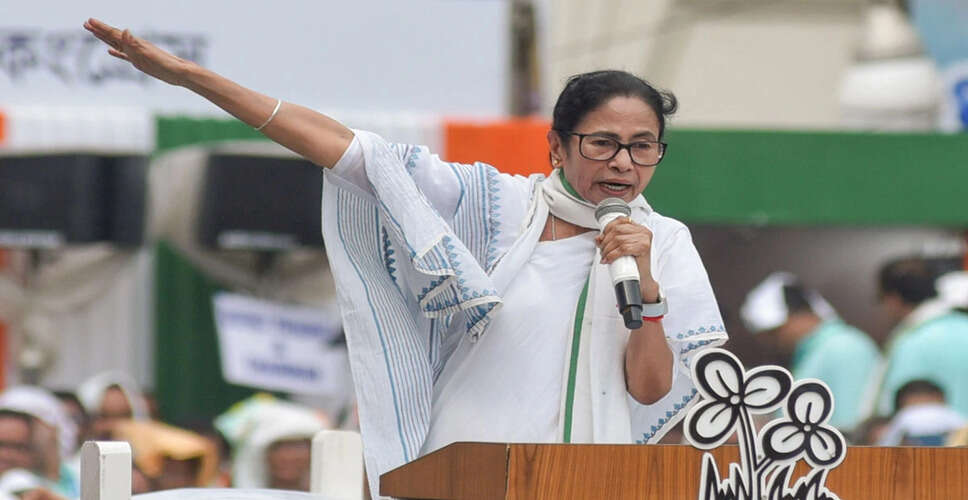
In a significant political statement during a public event, West Bengal Chief Minister Mamata Banerjee announced the renaming of the state's employment initiative, 'Karmashree', to honor Mahatma Gandhi. She expressed her discomfort over the diminishing recognition of Gandhi's name in national welfare schemes, particularly referencing the alleged changes to the Mahatma Gandhi National Rural Employment Guarantee Act (MGNREGA), which has been a point of contention for the opposition against the central government.
Details of the Karmashree Scheme
Banerjee explained that the 'Karmashree' scheme provides employment for 75 to 100 days within the state and will now carry the name of Mahatma Gandhi. With a heartfelt tone, she remarked, "I truly feel ashamed. The Father of the Nation's name is being removed from these schemes. I do not blame anyone else, as I am a citizen of this country. It is sad that we are forgetting the Father of the Nation."
A Direct Challenge to the Central Government
In a veiled critique of the central government, she stated that if the center fails to honor Mahatma Gandhi, then West Bengal will. Banerjee asserted, "If you do not respect Mahatma Gandhi, we will." Throughout her speech, she also acknowledged other prominent figures such as Netaji Subhas Chandra Bose, Rabindranath Tagore, Dr. B.R. Ambedkar, Maulana Abul Kalam Azad, Sardar Patel, and the Lal-Bal-Pal trio. She emphasized Bengal's inclusive culture, which respects every community and ideology. This statement comes at a time when there is a nationwide political debate regarding the identity and name of MGNREGA, with the Trinamool Congress labeling it as the central government's attempt to alter history and symbols.
Political Implications Ahead of Elections
Moreover, Banerjee's decision to rename the scheme is not merely a change of title; it marks the first clear chapter in the political narrative leading up to the upcoming West Bengal assembly elections. She understands that politics in Bengal is driven not just by developmental statistics but also by emotional and ideological issues. Gandhi stands as a significant symbol in Indian politics.
Strategic Messaging Through Karmashree
By associating the Karmashree scheme with Mahatma Gandhi, Banerjee has effectively targeted multiple objectives. Firstly, she positions herself as a guardian of Gandhian values. Secondly, she firmly holds the central government accountable for sidelining the legacy of the Father of the Nation. Lastly, she aims to rebuild an emotional connection with the rural, impoverished, and labor classes, which were once the backbone of the Left Front and now form the core of Trinamool's political strength.
Framing the Political Landscape
Looking ahead to the elections, Banerjee is clearly steering the political discourse towards a narrative of "Constitution vs. Power", "Gandhi vs. Ideology", and "State vs. Center". This strategy has previously helped her stand firm against the BJP's aggressive electoral campaigns. Acknowledging the challenges of directly countering Hindutva politics in Bengal, she is presenting an alternative of cultural nationalism versus constitutional nationalism.