
Mamata Banerjee Raises Alarm Over Election Commission's Flawed Process in West Bengal
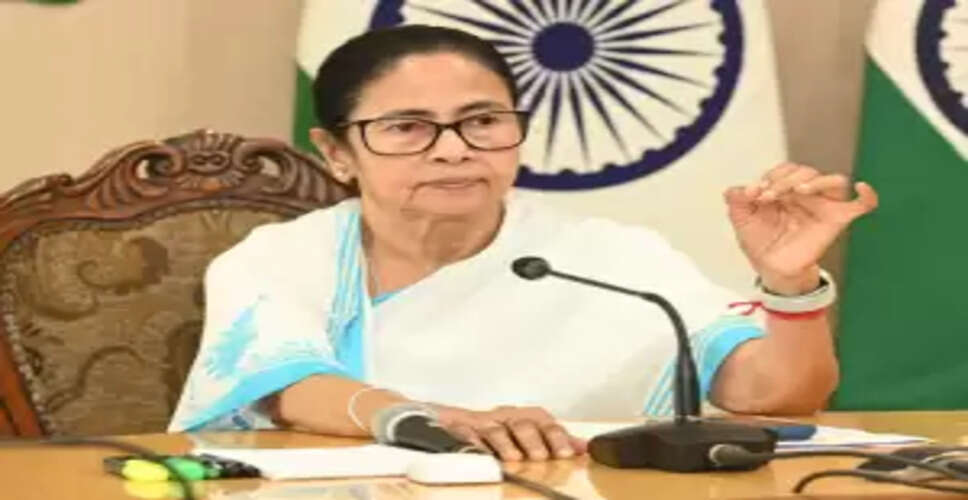
Mamata Banerjee's Strong Critique of Election Commission
Kolkata: West Bengal's Chief Minister Mamata Banerjee has intensified her criticism of the Election Commission, urging Chief Election Commissioner Gyanesh Kumar to suspend the 'arbitrary and flawed' SIR process in the state. She cautioned that continuing this approach could lead to 'mass disenfranchisement' and undermine the very foundations of democracy.
In a pointed letter dated December 3, Banerjee accused the commission of overseeing an 'unplanned, ill-prepared, and ad hoc' process riddled with 'serious irregularities, procedural violations, and administrative lapses.'
Despite her previous communications to the CEC, she noted that conditions on the ground have only deteriorated. 'I am once again compelled to express my grave concerns,' she stated, referencing earlier letters sent on November 20 and December 2.
Banerjee criticized the 'undue haste' with which the SIR is being executed, claiming it lacks adequate groundwork and preparation, rendering the process 'fundamentally flawed.'
She described the issues as 'illustrative and by no means exhaustive,' concluding that the current execution of the SIR is 'compromised' and threatens the core of democracy.
'These deficiencies collectively indicate that the SIR process is deeply compromised and undermines the structural integrity of our democracy,' she warned, urging immediate corrective measures to prevent 'irreparable damage' and 'large-scale disenfranchisement.'
The Chief Minister alleged that officials involved in the process had not received proper or uniform training, and the IT systems in use were 'defective, unstable, and unreliable.'
She pointed out that instructions issued were often inconsistent and contradictory, leading to a situation where the vital democratic exercise has been reduced to a farce, severely eroding public trust in the electoral process.
Banerjee also questioned the commission's preparedness, stating that even at the national level, the Election Commission of India seemed unclear about the 'precise objectives, modalities, and end goals' of the SIR.
'Although this exercise is labeled as time-bound, there are no clearly defined, transparent, or uniformly applicable timelines,' she remarked, highlighting that different states were following varying criteria with timelines being changed arbitrarily.
In one of her most pointed criticisms, she noted the 'shockingly informal' manner in which critical instructions were being communicated.
'Important directives are being issued almost daily, often through informal channels like WhatsApp and text messages,' she wrote, emphasizing the absence of proper written notifications or statutory orders for such a significant constitutional exercise.
This informality, she cautioned, leaves 'no room for accuracy, transparency, or accountability' and poses the risk of 'serious discrepancies, including the potential disenfranchisement of legitimate voters.'
Raising serious concerns, Banerjee alleged instances of 'backend deletion of electors through the misuse of IT systems' without due process or the knowledge of electoral registration officers, the statutory authorities under the Representation of the People Act.
'This raises critical questions about who authorized such actions and under what legal authority. The Election Commission must be held fully accountable for any illegal, arbitrary, or biased actions conducted under its supervision or direction,' she asserted.