
Majuli's Traditional Mask Art Gains National Spotlight at Rajasthan Camp
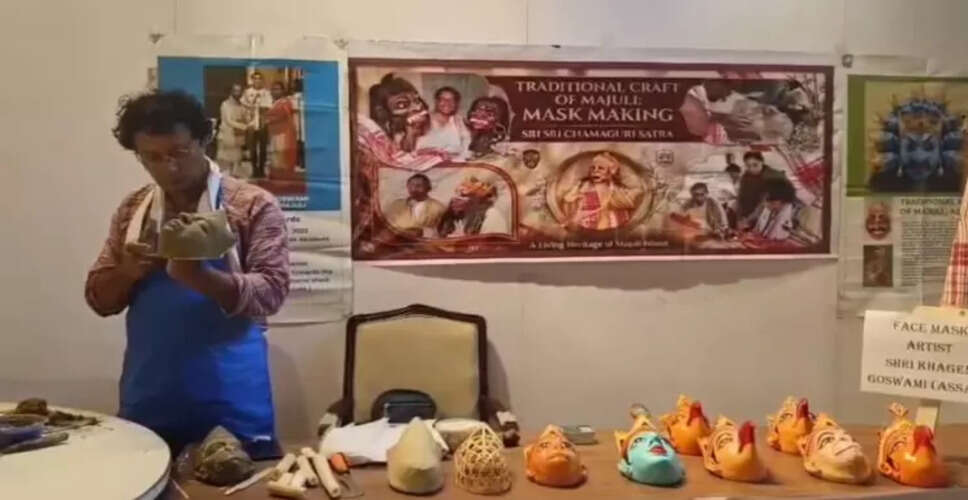

Celebrating Majuli's Cultural Heritage
Artist Khagen Goswami with his mask making tools
Jorhat, June 5: Majuli's renowned mask-making tradition has once again received national acclaim, showcased at a prestigious art camp in Rajasthan that gathered some of India's most esteemed folk and contemporary artists.
The Folk and Contemporary Art Camp, which took place from June 1 to June 5 at the Rajasthan International Centre (RIC) in Jaipur, highlighted a variety of artistic traditions from across the nation.
This event was organized collaboratively by the West Zone Cultural Centre (WZCC) in Udaipur and the Rajasthan International Centre, featuring 20 prominent artists and a wide array of artistic disciplines.
A standout feature of the camp was the live demonstration of Majuli’s traditional mask art, a vital aspect of Assam’s Vaishnavite cultural heritage. Khagen Goswami, a distinguished mask artist from the famous New Samuguri Satra in Majuli, represented Assam on this national platform.
During the camp, Goswami led workshops and live demonstrations, allowing visitors, fellow artists, researchers, and art lovers to explore the intricate process of crafting traditional masks used in Bhaona performances. His involvement offered a unique chance for audiences from various regions to engage with one of Assam’s most unique cultural art forms.
Reflecting on his experience, Goswami shared his pride in representing Assam at such a significant event.
“It is a joy to come from Majuli’s Samuguri Satra and connect with 20 esteemed artists from different states. I am here showcasing the traditional mask art of Srimanta Sankardev and feel privileged to represent Assam. I learned this craft under the mentorship of my guru, Padma Shri Hemchandra Goswami. I pay my respects to him and seek the blessings of the people of Assam and Majuli,” he stated.
Additionally, Assam's representation was bolstered by Bapan Pal from Silchar, who displayed the state’s traditional bamboo and cane craftsmanship.
The camp aimed to foster a meaningful dialogue between India’s ancient folk traditions and modern artistic practices.
Notable participants included Padma Shri awardee Paresh Rathwa, recognized for Gujarat’s Pithora art, Rajasthan’s Mughal miniature artist Chaki Ali, and celebrated Madhubani artist Dulari Devi from Bihar. The event also attracted numerous renowned sculptors, painters, researchers, and contemporary artists from across the country.
Emphasizing the importance of the gathering, Nikhat Ansari, curator of the Rajasthan International Centre, remarked that the camp was intended to highlight rare and historically significant art forms from various regions of India.
“This national-level art camp has been organized by the Rajasthan International Centre and the West Zone Cultural Centre, Udaipur. Twenty artists, including ten contemporary and ten folk artists, are participating. We are showcasing rare art traditions from across India, including Gujarat’s Pithora art and Assam’s historic mask-making tradition represented by Khagen Goswami, along with bamboo art and several other unique forms,” she explained.
Goswami also expressed his happiness at interacting with artists from diverse cultural backgrounds during the event.
“I am thrilled to be part of this program from June 1 to 5. It is a fantastic opportunity to meet and exchange ideas with artists from all over India while representing Assam’s cultural heritage,” he added.
Majuli’s mask art has consistently drawn national and international interest, attracting tourists, researchers, and students eager to learn about its rich history and techniques.