
Major Sentencing in Pakistan-Linked Espionage Case Involving SIM Card Fraud
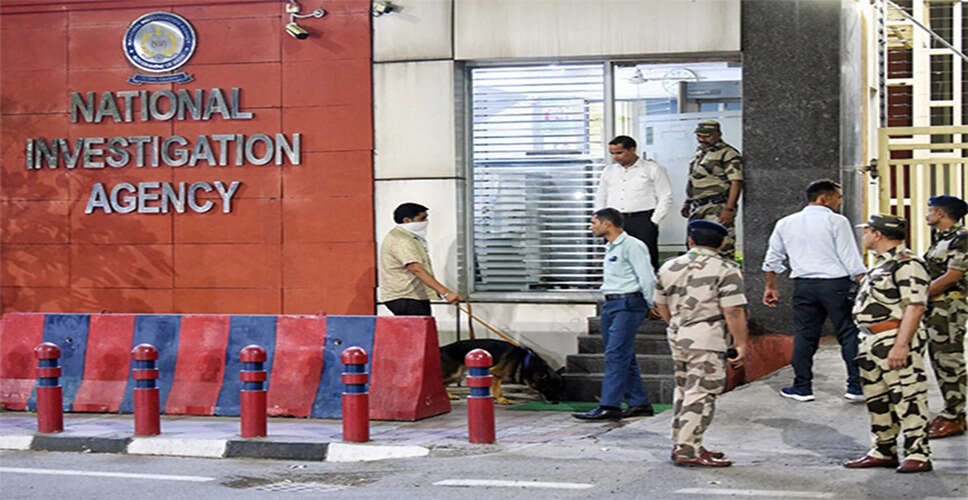
Significant Ruling by NIA Court
A special court of the National Investigation Agency (NIA) has sentenced a key defendant to over five years in prison for his involvement in a Pakistan-led espionage conspiracy that involved the fraudulent use of SIM cards and the misuse of social media platforms. The accused, Altaf Hussain Ghanchebhai, also known as Shakeel, confessed to his crimes during the trial, which included testimonies from 37 witnesses.
The NIA's special court in Visakhapatnam, Andhra Pradesh, delivered the sentence on Tuesday, finding Ghanchebhai guilty of misusing specific identification features, including SIM cards, one-time passwords (OTPs), and social media. Consequently, he received a sentence of five years and six months of simple imprisonment under Section 18 (punishment for conspiracy, etc.) of the Unlawful Activities (Prevention) Act (UAPA), along with a fine of ₹5,000. Additionally, he was sentenced to two years and six months of simple imprisonment and a fine of ₹5,000 under Section 66C (punishment for identity theft) of the Information Technology Act, 2000.
Details of the Espionage Activities
According to a statement released by the NIA on Wednesday, both sentences will run concurrently, with a maximum duration of 5.5 years. The case involved the use of Indian SIM cards by fishermen arrested by the Pakistani Navy while fishing in open waters. The investigation agency revealed that the mobile phones and SIM cards of these fishermen were seized by the Pakistani Navy, and the accused later activated them to conduct espionage activities in India.
The NIA's investigation clearly established that the defendants inserted Indian SIM cards into their mobile devices and generated OTPs, which they shared with Pakistani intelligence operatives (PIOs), enabling them to operate Indian WhatsApp numbers from Pakistan.