
Major Military Action by the US and Israel Against Iran
Significant Military Operations Launched
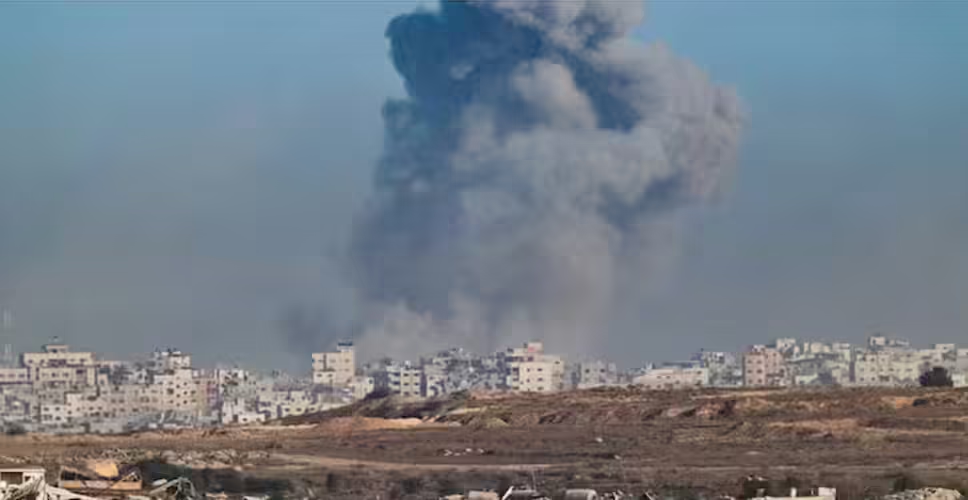
On Saturday, February 28, 2026, the United States and Israel initiated a substantial military offensive against Iran. President Donald Trump announced that the US has commenced "major combat operations" within Iranian territory. Concurrently, Israel executed missile strikes targeting various locations, including Tehran, resulting in multiple explosions. This military action aims to dismantle Iran's nuclear program, missile capabilities, and regional threats. Trump characterized the operation as "massive and ongoing," asserting that the US is employing "overwhelming strength."
Surge in Crude Oil Prices
The global oil market is experiencing significant turmoil following the attacks. Iran is a leading oil producer and is strategically located near the Strait of Hormuz, through which approximately 20% of the world's oil trade occurs. The recent military actions have introduced a risk premium into oil prices.
- Brent Crude: Prices have surged to around $72-73 per barrel, reflecting a 2-3% increase from previous days.
- WTI Crude: Trading at approximately $67-68 per barrel.
- Indian crude oil futures on the MCX are also trading between ₹6000-6100, marking a rise of 0.5-1%.
Analysts predict that if Iran retaliates by blocking the Strait of Hormuz or attacking regional oil infrastructure, crude prices could escalate to between $90-110 per barrel. The initial market reaction has already seen a 3-5% increase, with further rises anticipated when markets reopen on Monday.
Impact on Stock Markets on March 2, 2026
The recent developments are likely to negatively affect Indian stock markets (Nifty, Sensex) as well as global markets. The primary reasons include:
- Rising Crude Prices → Inflationary Pressure: India imports 80-85% of its crude oil. Increased prices will lead to higher petrol and diesel costs, raising expenses in the transport, FMCG, auto, and aviation sectors. This could reduce consumer spending and increase inflation, potentially impacting RBI's interest rate decisions.
- Risk-Off Selling: Global uncertainties may prompt Foreign Institutional Investors (FIIs) to withdraw. Historical events of this nature have seen declines of 1-3% in Sensex/Nifty.
- Sector-Wise Impact:
- Negative: Banking, auto, FMCG, real estate, consumer durables (due to inflation and weak demand).
- Positive/Minimally Affected: Oil exploration companies like ONGC and Oil India (benefiting from high crude prices), defense stocks (due to geopolitical tensions).
- Globally, US stocks may also see declines, particularly in the tech and growth sectors.
Possible Scenarios for March 2:
- A gap-down opening (1-2% lower) is likely.
- If Iran does not launch a significant counterattack, a recovery may occur throughout the day.
- However, if tensions escalate (such as disturbances in the Strait of Hormuz), declines of 3-5% could be expected.
The situation is rapidly evolving. Investors should remain vigilant, consider hedging (options/gold), and long-term investors should avoid panic selling. Stay tuned for updates.