
Maine Senate Candidate Graham Platner Faces Backlash Over Tattoo Controversy
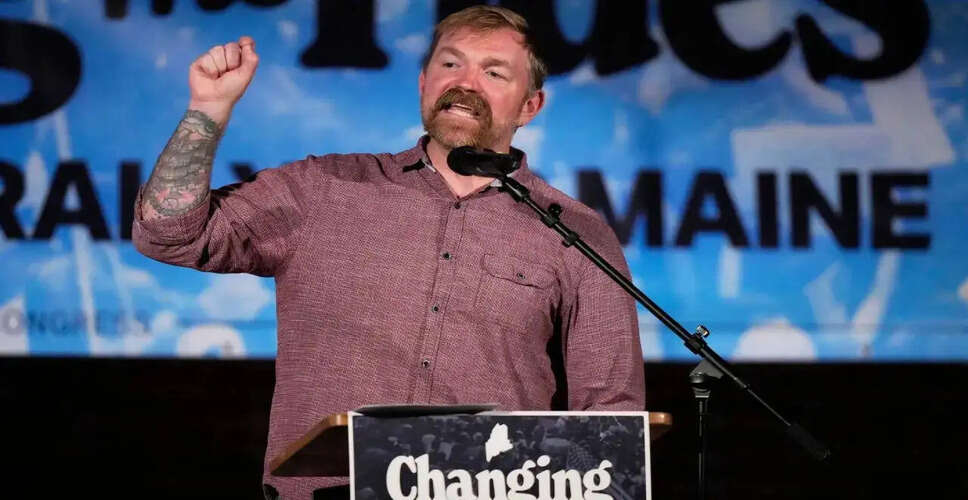

Criticism Intensifies for Graham Platner
A prominent Democratic congressman has ramped up his criticism of Graham Platner, a candidate for the Senate in Maine, asserting that there is "no way" he could have been oblivious to the Nazi connections of a tattoo he previously displayed. Representative Brad Schneider from Illinois, who leads the New Democrat Coalition and is a notable Jewish figure in Congress, stated that Platner needs to "own it and move on." In an interview with Punchbowl News, Schneider declared his lack of support for Platner's campaign, while emphasizing that the ultimate decision should rest with the voters of Maine.
Tattoo Controversy Explained
Platner, a Marine Corps veteran and first-time Senate hopeful, has come under fire for a skull-and-crossbones tattoo that some critics claim resembles the Totenkopf symbol from the Nazi era, linked to Adolf Hitler's SS forces. He has stated that he got the tattoo during a leave in Croatia in 2007 and was unaware of its historical implications at that time. Although he later covered it up, he has claimed he would not have chosen that design had he known its significance. However, a report from The New York Times revealed that several former associates alleged Platner was aware of the tattoo's Nazi associations and referred to it as "my Totenkopf." Platner has denied these allegations. Schneider expressed doubt regarding Platner's narrative, insisting that the candidate should confront the issue directly instead of disputing claims about his awareness of the symbol.
Democratic Party Concerns
This criticism arises as Democrats gear up for a closely watched Senate race in Maine, where Platner is anticipated to challenge Republican incumbent Susan Collins if he secures the party's nomination. Schneider's comments are significant given his status as a leading Jewish Democrat and reflect wider apprehensions among party members about the potential fallout from this controversy. Senator John Fetterman has also voiced concerns regarding Platner's tattoo, indicating divisions within the party about whether this issue could overshadow critical policy discussions in a race with national stakes. Democrats are closely observing this contest, which could influence the balance of power in the U.S. Senate. The tattoo controversy is just one of several issues that have emerged during Platner's campaign, including allegations of sending explicit messages to multiple women while married and scrutiny of his past social media activity. Additionally, a report from The New York Times cited Lyndsey Fifield, a conservative activist and former partner of Platner, who claimed that his past behavior was volatile and inappropriate. Platner has contested these claims. Despite the controversies, he continues to garner support from notable progressive figures, including Senators Bernie Sanders and Elizabeth Warren.
Insights on the Senate Race
Platner is widely expected to secure victory in Maine's Democratic primary, setting the stage for a general election showdown against Collins in November. Recent polling indicates that this race could be fiercely competitive. A survey conducted by a pollster associated with former President Donald Trump showed Platner and Collins in a dead heat, highlighting the importance of this contest in potentially shifting the Senate's power dynamics. The outcome of the Democratic primary is likely to influence how prominently the tattoo controversy will feature in the general election campaign, with Republicans expected to focus on the issue while Democrats balance concerns about electability with party unity.