
Maharashtra Government Introduces Hindi as Third Language in Schools
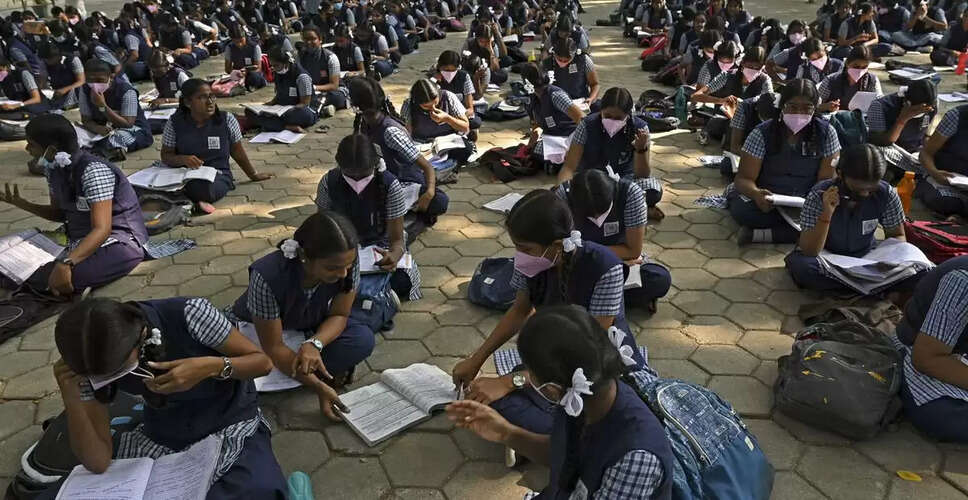
New Language Policy in Maharashtra Schools
On Tuesday, the Maharashtra government announced a new directive designating Hindi as a “generally” taught third language for students in Classes 1 to 5 across Marathi and English medium schools.
The revised order states that if a minimum of 20 students in a class express interest in learning another Indian language, they may opt out of Hindi. In such cases, the school will either appoint a teacher or provide online instruction for the chosen language.
This resolution was issued by the Maharashtra School Education Department as part of the implementation of the “State Curriculum Framework for School Education 2024,” which aligns with the 2020 National Education Policy.
While Hindi is not compulsory, Marathi will continue to be a mandatory subject in all medium schools, as per the new guidelines.
Earlier, on April 16, the Maharashtra government had revealed plans to enforce the 2020 National Education Policy starting from the academic year 2025-’26, which initially made Hindi compulsory as the third language for students in Classes 1 to 5, replacing the previous two-language system with a three-language approach.
However, following opposition from a language consultation committee appointed by the government, which rejected the mandatory status of Hindi in primary schools, the government temporarily suspended its April 16 order on April 22. The revised directives confirmed that while the three-language policy would proceed, students would not be obligated to study Hindi as their third language.
The three-language formula, which includes English, Hindi, and the state's native language, was first introduced in the National Education Policy of 1968 and has been retained in the 2020 update.
Reactions to the New Directive
Backlash to New Order
The recent government resolution has faced criticism from advocates of the Marathi language, who claim that the government is attempting to reintroduce the policy through a “backdoor” approach after previously retracting it.
Vasant Kalpande, the former chairman of the Maharashtra State Board of Secondary and Higher Secondary Education, expressed skepticism about the likelihood of finding 20 students in a class willing to choose a non-Hindi language. He also noted that the provision for online teacher availability seems designed to discourage opting for languages other than Hindi.
Kalpande pointed out that Hindi is not a mandatory third language in states governed by the Bharatiya Janata Party, such as Gujarat and Assam.
Maharashtra Congress president Harshwardhan Sapkal criticized Chief Minister Devendra Fadnavis, accusing him of betraying the Marathi community and suggesting that the new order is a deliberate attempt to impose Hindi.