
Madhya Pradesh and Assam Forge Wildlife Conservation Agreement
Strengthening Wildlife Conservation Efforts
Bhopal, Jan 9: In a significant move to enhance wildlife conservation across state lines, Chief Minister Dr. Mohan Yadav of Madhya Pradesh met with Assam's Chief Minister Himanta Biswa Sarma in Guwahati on Thursday. The two leaders reached a foundational agreement to facilitate the exchange of wildlife between their states.
This initiative is designed to bolster biodiversity and reintroduce species that have disappeared from certain areas.
Under the terms of the agreement, Assam will gradually transfer 50 wild water buffaloes to Madhya Pradesh over the next three years.
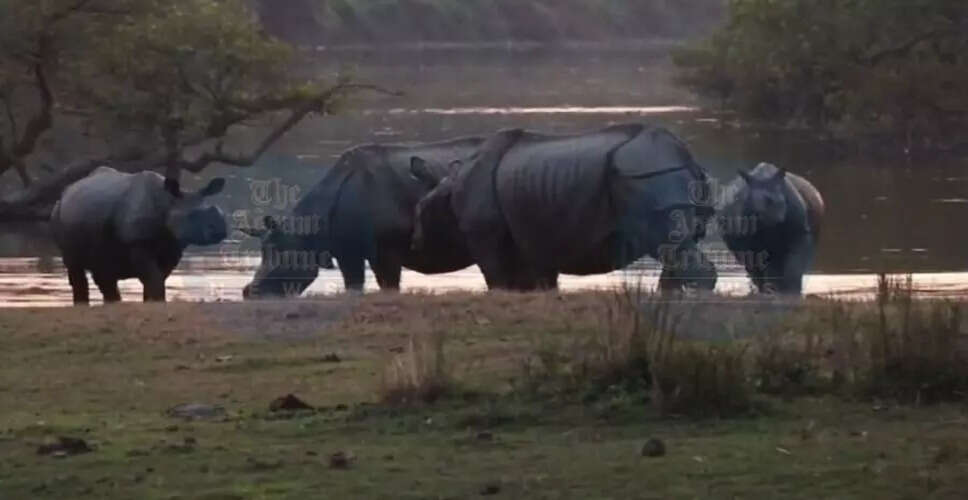
Additionally, a pair of one-horned rhinoceroses and three king cobras will also be relocated to Madhya Pradesh.
The rhinoceroses and king cobras will initially be accommodated at Van Vihar National Park in Bhopal for acclimatization and public viewing, while the wild buffaloes will be reintroduced into their native habitat at Kanha Tiger Reserve.
In exchange, Madhya Pradesh will send a pair of tigers and six mugger crocodiles to Assam, aiming to diversify and enhance the wildlife populations in that state.
Chief Minister Yadav announced this development on the social media platform X, emphasizing that this initiative is vital for enriching wildlife and biodiversity in Madhya Pradesh. He highlighted that the reintroduction of the wild buffalo, which has been absent from the state for over a century, represents a significant conservation achievement.
Dr. Yadav remarked that this program builds on the state’s recent conservation successes, such as the reintroduction of cheetahs at Kuno National Park, showcasing Madhya Pradesh’s dedication to restoring species that once flourished in its forests. The state is already recognized as the ‘Tiger State’ and ‘Leopard State’ in India.
The wild water buffalo (Bubalus arnee), classified as endangered, has a global population of fewer than 4,000, primarily residing in Assam’s Kaziranga and Manas National Parks.
A comprehensive study by the Wildlife Institute of India (WII) in Dehradun identified Kanha Tiger Reserve as an ideal location for reintroduction, citing its vast grasslands, dependable water sources, low human interference, and favorable ecological conditions.