
Madhabi Mukherjee Reflects on Her Journey in Bengali Cinema
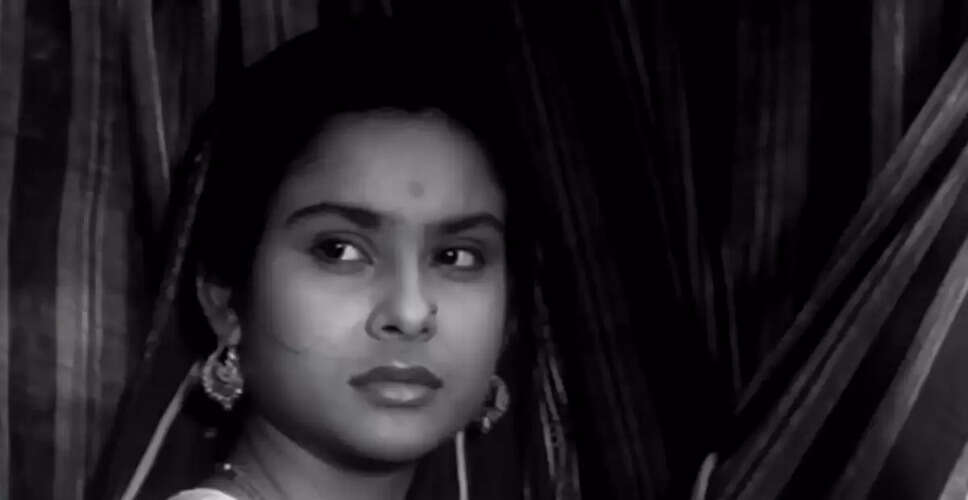
A Glimpse into Madhabi Mukherjee's Film Career
Madhabi Mukherjee's debut film with Premendra Mitra was Kankantala Light Railway, followed by Shetu, where Dhiraj Bhattacharya portrayed a dual role alongside heroine Chandraboti Debi. She fondly remembers her roles in films like Ashabarna and Boloygrash, both helmed by Pinaki Mukherjee. In Boloygrash, she played a friend to Shikharani Bag, who took on the role of Suchitra Sen’s daughter.
The journey to Baishe Srabon unfolded in an unexpected manner. Bijoy Chatterjee and Bholanath Roy, the film's distributor and producer, respectively, had previously acted with her in the play Ulka in Dhanbad. Although she had forgotten them, they remembered her and informed Mrinal-babu about her. Subsequently, Anupkumar reached out to her, collecting her address from Gita Dey. A member of the production team later visited her home to arrange a meeting with Mrinal-babu, who resided on Manoharpukur Road at the time.
During the interview, Mrinal-babu asked her various questions, including her ability to perform household chores. When he inquired about putting cow dung on walls, she hesitated, having never done it before. Fortunately, Geeta Sen, Mrinal-babu’s wife, intervened, dismissing the question. After the interview, Mrinal-babu mentioned that one of his staff members remarked, 'That face makes you want to take care of her.'
A significant change occurred during the production of Baishe Srabon: her name was altered. Originally named Madhuri, she was asked by Bijoy Chatterjee if she would accept the name Madhabi instead, to present her as a newcomer. She contemplated the importance of her name versus her family's financial stability. Ultimately, she prioritized survival over sentiment, leading to her new identity as Madhabi.
Most of the filming for Baishe Srabon took place outdoors, with minimal studio work. When she inquired about the filming location, Bijoy-babu referenced Rabindranath Tagore, indicating it was Jibon, Mankar, about sixty kilometers from Bardhaman. The village was ancient, with many buildings in disrepair. The crew stayed in a two-story house, with Mrinal-babu and several others occupying one room, while she shared another with Himangini Debi, who played her mother-in-law.
To ease her fears of sleeping alone, Mrinal-babu would sleep on the floor beside her bed, caring for her well-being. He affectionately called her Malati, the name of her character. Each morning, he would wake her up, prompting her to get ready quickly. Sometimes, Geeta-di would assist with household chores, but the couple communicated through notes during disagreements.

Bansi Chandragupta was responsible for the sets of Baishe Srabon, particularly the hut with mud walls, which was executed perfectly. However, he had a peculiar way of pronouncing 'kulungi' as 'kulangi'. The crew would shoot throughout the day and take evening walks, exploring ruins believed to be remnants of Maratha invaders. One evening, while returning, Bansi-babu startled them by hissing about a snake, causing a panic. Mrinal-babu suggested they investigate, and despite her fear, she clung to Bansi-babu's arm for support. They discovered it was merely a branch, but the area was indeed home to snakes and insects.
Dining in the absence of electric lights was a challenge, as they often had to fend off insects while eating by lantern light. She humorously remarked to Mrinal-babu’s assistant, Chandu, about the difficulty of eating with so many insects around, to which he quipped, 'Eat them too, free protein.'
Excerpted with permission from Madhabi’s Garden – A Memoir, Madhabi Mukherjee, translated from the Bengali by Arunava Sinha, Bloomsbury India.