
Lok Sabha Passes VB-G RAM G Bill Amidst Opposition Protests
The Lok Sabha has recently passed the VB-G RAM G Bill, which aims to replace the existing MGNREGA framework with a new rural employment and livelihood guarantee scheme. Amidst significant opposition protests, the bill promises to enhance employment guarantees from 100 to 125 days and introduces strategic infrastructure initiatives. The government argues that this modernization is essential for adapting to the evolving rural economy, while opposition parties express concerns about the financial burden on states and the absence of Mahatma Gandhi's name in the new legislation. This article delves into the details of the bill, its implications, and the ongoing political discourse surrounding it.
| Dec 18, 2025, 15:08 IST
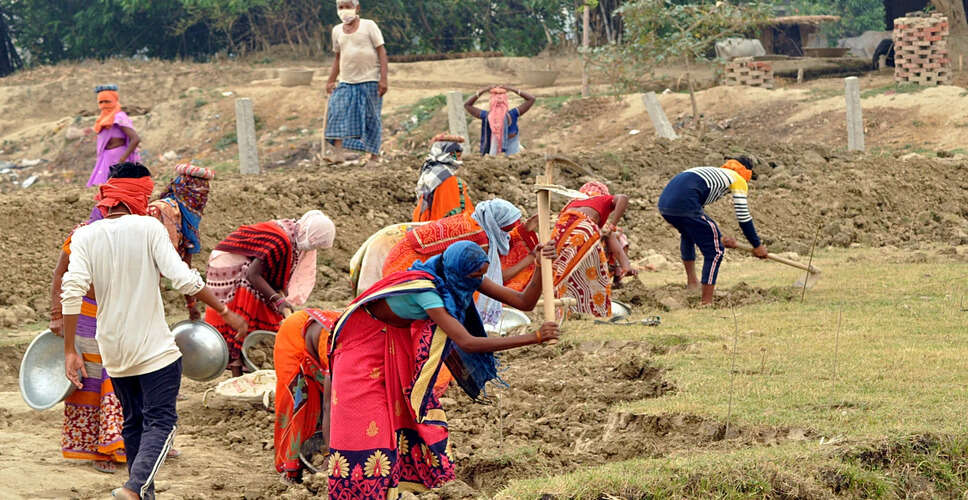
VB-G RAM G Bill Passed in Lok Sabha
The VB-G RAM G Bill, aimed at establishing a developed India through a rural employment and livelihood guarantee scheme, was passed in the Lok Sabha on Thursday amidst significant uproar from opposition members. They protested by tearing copies of the bill and demanded that it be sent to a standing committee. Despite the Speaker's assertion that the bill had already been thoroughly discussed, the opposition continued their demonstrations within the house. The bill will now be presented in the Rajya Sabha. This new legislation will replace the Mahatma Gandhi National Rural Employment Guarantee Act (MGNREGA) of 2005.
Shivraj's Remarks on the Bill
Shivraj emphasized the necessity for proper utilization of MGNREGA funds, advocating for transparency and an end to corruption. He stated that the initiative aims to develop villages as a foundation for a developed India. During his speech in the Lok Sabha, he noted that the original scheme was called NREGA and did not initially include Mahatma Gandhi's name. He remarked that the Congress party only invoked Gandhi's name during the 2009 elections to gain votes, while praising Prime Minister Narendra Modi for effectively implementing MGNREGA.
Understanding MGNREGA
The National Rural Employment Guarantee Bill was introduced in Parliament in 2004 and became law a year later. In 2009, Mahatma Gandhi's name was added to the act's title. Despite various rural employment schemes being run by the government, families in rural areas were receiving less than 20 days of work annually under these programs. The UPA government implemented MGNREGA under a common minimum program, granting rural poor the right to at least 100 days of employment.
What is VB-G RAM G?
The VB-G RAM G Act of 2025 represents a comprehensive restructuring of MGNREGA. Under this bill, the government aims to establish a modern statutory framework aligned with the vision of a developed India by 2047, guaranteeing 125 days of wage employment for each adult member of rural families willing to engage in unskilled physical labor. All assets created under this scheme will be integrated into the Developed India National Rural Infrastructure Stack, which seeks to ensure a coordinated national approach to rural development.
Key Differences from MGNREGA
- Employment Guarantee: The guarantee has been increased from 100 to 125 days, providing greater income security for rural families.
- Focus on Strategic Infrastructure: MGNREGA's initiatives were scattered across various categories without a cohesive national strategy.
- The new act mandates the development of village plans, which are to be prepared by the panchayats and integrated with national spatial systems like PM Gati Shakti.
- The act emphasizes four key types of work that ensure sustainable assets supporting water security, essential rural infrastructure, livelihood-related infrastructure, and climate adaptation.
Need for Change in MGNREGA
- MGNREGA was established in 2005, but rural India has undergone significant changes since then.
- The poverty rate has decreased from 25.7% in 2011-12 to 4.86% in 2023-24, as recorded by MPCE and NABARD RECSS surveys, due to increased consumption, income, and financial access.
- With stronger social security, improved connectivity, and greater digital access, the old framework no longer aligns with today's rural economy.
- Given these structural changes, the open model of MGNREGA has become outdated.
- The VB-G RAM G Bill modernizes the system, increases the number of guaranteed days, redefines priorities, and creates a more accountable, targeted, and relevant employment framework for the current rural economy.
Financial Implications for States
The new bill diverges from the MGNREGA model, which required states to contribute a larger share of funding.
- Standard Ratio: 60:40 (Central: State)
- Northeastern and Himalayan states/Union Territories: 90:10
- Union Territories without a legislature: 100% funded by the central government
- States were already responsible for 25% of material costs and 50% of administrative expenses.
- Estimated allocations assist in budget formulation.
- States can request additional support during disasters.
- Enhanced monitoring reduces long-term losses due to misappropriation.
- The central government maintains standards while states are accountable for implementation.
- This partnership model enhances efficiency and minimizes misuse.
Proposal for Employment Suspension During Peak Agricultural Months
For the first time, the employment bill includes a provision to suspend rural employment for up to 60 days during peak sowing and harvesting seasons. The stated goal is to ensure adequate availability of agricultural labor and address farmers' complaints regarding labor shortages during critical agricultural periods. The government argues that this will maintain a balance between rural employment and agricultural productivity. Similar concerns have been raised previously, with some policymakers advocating for a ban on MGNREGA work during peak seasons.
Opposition's Concerns
The opposition claims that this bill will impose a greater burden on states. MGNREGA was considered a significant achievement of the Congress government, and party leaders have consistently highlighted it as such. The transition to a new scheme has caused unrest within Congress, particularly due to the absence of Mahatma Gandhi's name in the new legislation. Congress accuses the BJP government of disrespecting Gandhi's legacy, while the government asserts that it is working towards the vision of a developed India as envisioned by Gandhi, stating that he resides in their hearts.