
Lok Sabha Approves New Employment Bill Amid Opposition Protests
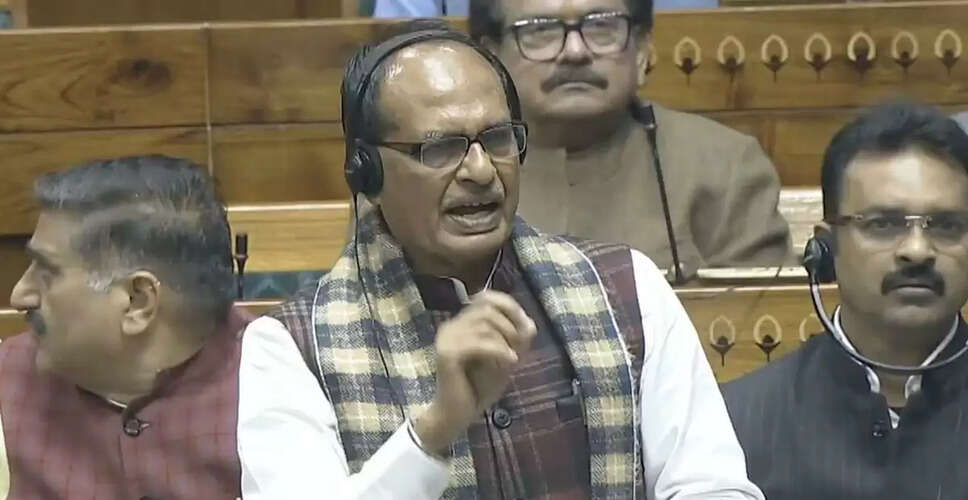
Lok Sabha Passes New Employment Legislation
On Thursday, the Lok Sabha approved the 2025 Viksit Bharat – Guarantee for Rozgar and Ajeevika Mission (Gramin) Bill, which aims to replace the 2005 Mahatma Gandhi National Rural Employment Guarantee Act (MGNREGA). This decision was met with significant protests from opposition members.
Before receiving presidential approval, the bill must also pass through the Rajya Sabha.
MGNREGA was initiated in 2005 by the Congress-led United Progressive Alliance to improve livelihood security for rural households, guaranteeing 100 days of unskilled work annually for those who seek it across all districts in India.
While the Union government covers the wage expenses, states are responsible for the costs associated with materials and administration.
The new legislation proposes to extend the guaranteed workdays from 100 to 125 and increase the states' financial contribution to 40%.
During an eight-hour debate on the bill, Union Rural Development Minister Shivraj Singh Chouhan highlighted perceived flaws in MGNREGA, stating that states had allocated more funds for labor than for material procurement. He also noted that previous governments had introduced employment guarantee initiatives prior to MGNREGA.
Chouhan dismissed opposition claims that the Modi administration was arbitrarily renaming programs, asserting that the Congress party had undermined Mahatma Gandhi's principles through historical actions.
Opposition members vocally protested in the Lok Sabha, expressing their discontent over the removal of Mahatma Gandhi's name from the scheme. They disrupted proceedings by tearing copies of the VB-G RAM G bill and throwing them towards the speaker.
The bill was ultimately passed via voice vote despite the uproar, leading to the adjournment of the Lok Sabha for the day.
In discussions prior to the vote, the Telugu Desam Party raised concerns about the increased financial burden on state governments, particularly in Andhra Pradesh, which is facing revenue deficits.
Telugu Desam Party member Lavu Sri Krishna Devarayalu requested that the same level of support provided over the past year and a half be maintained to ensure effective implementation of the scheme.
Opposition MP K Kanimozhi from the Dravida Munnetra Kazhagam criticized the bill's Hindi title, calling it misleading, and pointed out that while the state's share of central taxes was decreasing, their financial responsibilities were growing.
Trinamool Congress MP Mahua Moitra remarked on the frequent use of the term 'guarantee' in the bill, arguing that it does not provide any real assurances since the Union government retains control over budget allocations and the designation of areas for the scheme's implementation.
Congress MP Kodikunnil Suresh labeled the proposed legislation as detrimental to women, noting that women make up 90% of the MGNREGA workforce in states like Kerala.
The bill stipulates that governments in the North East, Himalayan states (Uttarakhand and Himachal Pradesh), and Union Territories with legislatures will contribute 10% of the scheme's funding, while the Centre will cover all costs in Union Territories without legislatures.
Additionally, the legislation maintains a provision for a daily unemployment allowance if work is not provided within 15 days of application, with the financial responsibility falling on state governments.
Mamata Banerjee's Response to the Bill
Following the bill's passage, West Bengal Chief Minister Mamata Banerjee expressed her dismay over the removal of Mahatma Gandhi's name from MGNREGA, stating it brought her 'deep shame.' She announced plans to rename a similar employment initiative in her state in honor of Gandhi.
Banerjee questioned, 'Are we now forgetting even the Father of the Nation?' and confirmed that the Karmashree scheme would be renamed after Mahatma Gandhi.
The Karmashree scheme, launched in 2024, aims to provide at least 50 days of employment to job card holders through various departmental projects.
She emphasized the need for respect towards Gandhi's legacy, asserting that if others fail to honor him, her administration would exemplify true respect.
“The removal of Gandhiji’s name fills me with deep shame. A Bill has been introduced that removes the name of Mahatma Gandhi from MGNREGA. Are we now forgetting even the Father of the Nation? We have therefore decided to rename our Karmashree scheme after Mahatma Gandhi. We seek… pic.twitter.com/JjBqdSRrq3
— All India Trinamool Congress (@AITCofficial) December 18, 2025