
Lok Sabha Approves Bill to Amend Payment and Settlement Systems Act
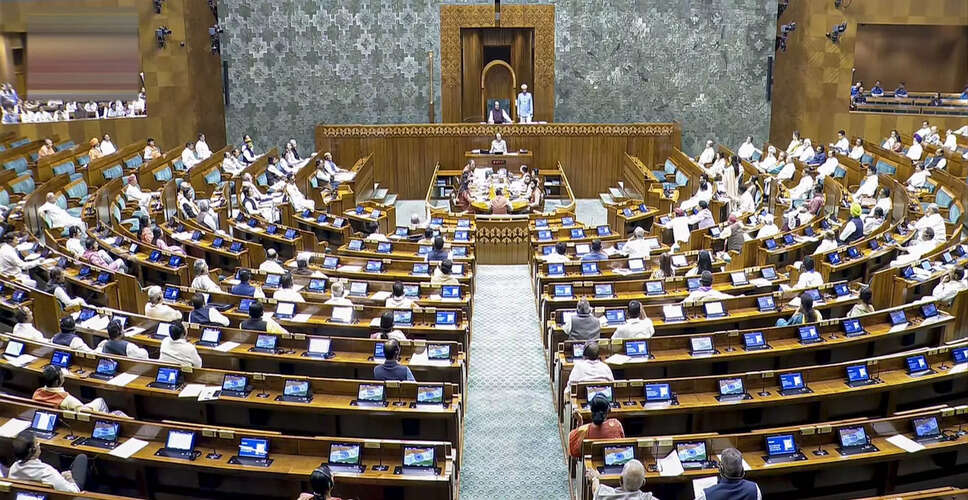

Lok Sabha Passes Significant Amendment
A file image of Lok Sabha session (Photo:PTI)
New Delhi, Aug 7: On Thursday, the Lok Sabha successfully passed a Bill aimed at modifying the Payment and Settlement Systems Act of 2007. This legislation empowers the government to allow banks and other service providers to impose charges on transactions made via the Unified Payments Interface (UPI) and other designated electronic payment methods.
The amendment was approved without any debate amidst a noisy session, and it seeks to eliminate the current legal restriction that prohibits banks and payment service providers from applying Merchant Discount Rate (MDR) on specified electronic payment methods.
Currently, real-time payments through RTGS and NEFT incur a service fee, but UPI transactions have previously been exempt from such charges.
This proposed amendment is part of a broader legislative effort concerning taxation, which was introduced in the House earlier this week.
The Bill was passed via a voice vote after the House reconvened at 2 PM following an earlier suspension.
Upon resuming, Finance Minister Nirmala Sitharaman presented the Taxation and Other Laws (Amendment) Bill, 2026, which aims to further amend the Payment and Settlement Systems Act, 2007, the Income Tax Act, 2025, and the Finance Act, 2026.
The Bill states, “In the Payment and Settlement Systems Act, 2007, in Section 10A, for the words, figures and letters ‘the electronic modes of payment prescribed under section 269SU of the Income-tax Act, 1961’, the words ‘one or more electronic modes of payment as the Central government may, by notification, specify’ shall be substituted with effect from the date of publication of this Act in the Official Gazette.”
The government's strategy aims to introduce a nominal fee for digital payment services, benefiting both consumers and small businesses while establishing a viable revenue model for banks, payment service providers (PSPs), and the infrastructure that supports the digital payments landscape.
At present, no bank or payment system provider is permitted to charge anyone, directly or indirectly, for utilizing the electronic payment methods outlined in Section 269SU of the Income Tax Act, 1961.
RBI Governor Sanjay Malhotra commented on the matter, stating that it is “premature” to discuss MDR for digital payment methods. He emphasized the necessity of investing in public payment infrastructure, noting that funding must come from somewhere.
“The options before us are straightforward: either the public bears the cost through taxes, or we implement the merchant discount rate (MDR), adhering to the ‘user pays’ principle.