
Lok Sabha Approves Anti-Paper Leak Bill Amidst Heated Debates
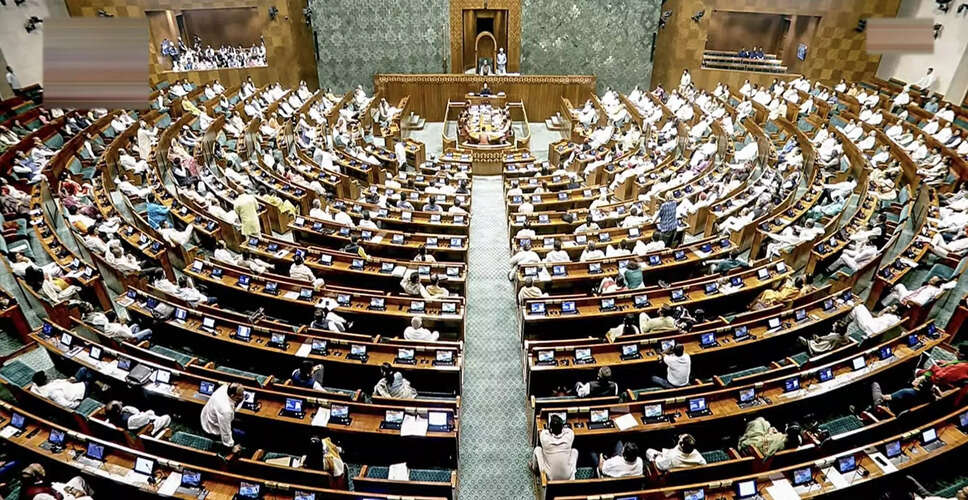

Lok Sabha Passes Key Legislation
Lok Sabha Speaker Om Birla conducts proceedings in the House, on Wednesday. (Photo:PTI)
New Delhi, July 29: The Lok Sabha successfully passed the Public Examinations (Prevention of Unfair Means) Amendment Bill, 2026, following two days of intense discussions characterized by sharp exchanges between government and opposition members, along with frequent disruptions.
This legislation, commonly referred to as the "anti-paper leak Bill," aims to enhance the legal framework addressing examination-related fraud and paper leaks.
It was approved through a voice vote after extensive deliberations focused on restoring integrity, transparency, and credibility in public examinations.
The revised law introduces tougher penalties, including potential imprisonment for up to 10 years, fines reaching Rs 10 crore, asset confiscation for those convicted, and a system to ensure that cases under this Act are resolved within three months.
The debate turned lively when Leader of the Opposition Rahul Gandhi commended the recent student protests at Delhi's Jantar Mantar, which were aimed at addressing alleged examination irregularities and paper leaks.
"I felt a sense of hope from the youth's actions on our streets. This was not an expression of anger or violence, but a reflection of the aspirations of the next generation," Gandhi stated. He emphasized that all political parties should honor the sentiments of the students and that "every Indian should take pride" in their protests.
However, his remarks sparked strong reactions from members of the Treasury Bench when he recounted a conversation with a student involved in the Congress' "Chhatron ki Goonj" campaign.
Gandhi highlighted the student's distinction between those eager to learn and another group she labeled as "idiots." As he reiterated this term, members from the Treasury Bench objected, deeming it inappropriate for parliamentary discourse.
Parliamentary Affairs Minister Kiren Rijiju raised concerns about the language used and requested Speaker Om Birla to remove the comments from the record, arguing they did not uphold the dignity of the House.
Despite escalating protests from ruling party MPs, Gandhi insisted that he was not targeting any specific individual within the government. The situation quickly devolved into shouting and verbal confrontations between the two factions.
Defence Minister Rajnath Singh intervened, urging members to avoid personal attacks and concentrate on constructive discussions regarding legislation that would impact millions of students.
The controversy intensified when Gandhi criticized the RSS, claiming it had undue influence over the education system and policy decisions.
He also raised concerns about the reported use of pellet guns against protesting students in the capital, questioning who authorized such actions.
Speaker Om Birla repeatedly called for order and requested members to refrain from making unfounded allegations. With neither side willing to back down, the House was adjourned until 3 pm, before resuming later.
In response to the debate, Union Minister Jitendra Singh defended the proposed amendments and detailed the increased penalties outlined in the legislation.
He noted that the maximum fine for service providers has been raised from Rs 1 crore to Rs 5 crore, and penalties for directors and senior management have also seen significant increases.
Individuals found guilty could face imprisonment ranging from five to ten years, along with fines up to Rs 50 lakh.
Entities and individuals involved in examination malpractice could incur fines of up to Rs 5 crore.
Organized examination rackets and criminal groups implicated in paper leaks would face a minimum prison sentence of seven years and fines up to Rs 10 crore under the new law.
The passage of this Bill comes amid growing public concern regarding examination irregularities, following the large-scale "Sansad Chalo" protest organized by the Cockroach Janta Party (CJP) in New Delhi over the NEET paper leak issue.
The protests called for accountability and the resignation of the then Union Education Minister Dharmendra Pradhan, who resigned on July 25.
The government asserts that the amended legislation will bolster transparency, accountability, and integrity in public examinations while protecting the interests of students nationwide.