
Local Communities Rally Against Proposed Kulsi River Dam Project
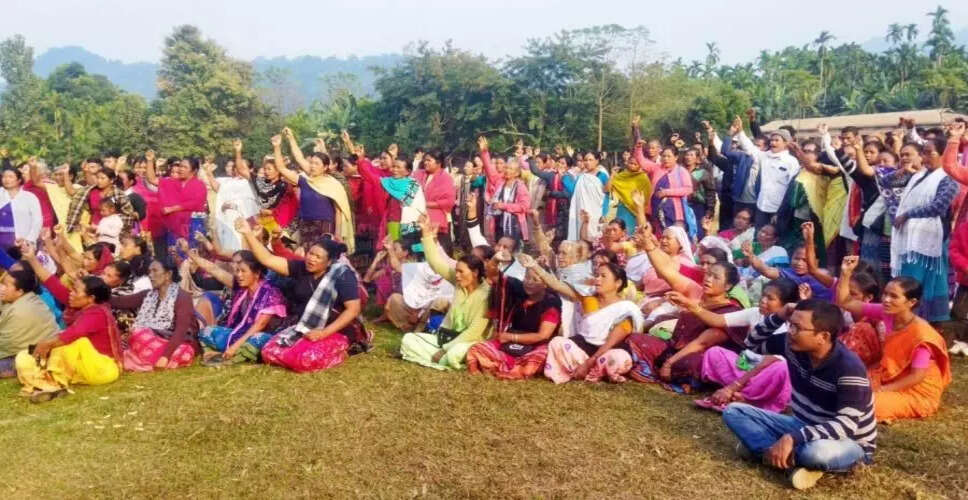
Protest Meeting Against Kulsi River Dam
Palasbari, Dec 29: A gathering was organized on Saturday to voice opposition against the planned dam project on the Kulsi River at Ukiam, situated on the Assam-Meghalaya border in Kamrup district. This event was coordinated by the Assam-Meghalaya Joint Action Committee, which is against the Kulsi river dam.
The Assam government has put forth a proposal for a 55 MW hydroelectric power project that involves damming the Kulsi River at Ukiam.
Local residents have been actively protesting against what they consider a harmful initiative. The protest meeting took place at the Ukiam ME School playground as part of their ongoing resistance.
Chabin Rabha presided over the meeting, while Mrityunjay Rabha outlined the goals of the gathering.
During the event, senior advocate Santanu Borthakur from the Gauhati High Court accused the current BJP-led administration of forcing indigenous and tribal populations to leave their homes. He stated that various regions in Assam are witnessing evictions under the guise of development projects.
Borthakur highlighted specific cases in Barduar, Kokrajhar, Karbi Anglong, and Kaziranga, claiming that lands belonging to the Rabha, Bodo, Karbi, Mising, and Adivasi communities are being cleared for corporate interests, particularly those linked to Adani and Ambani.
He raised concerns about the fate of residents from 25 villages if the dam at Ukiam is constructed.
“In a democratic society, it is essential for the government to engage with the affected communities before initiating such projects. However, there has been no dialogue with local residents regarding this dam,” he remarked.
Subrata Talukdar, a central figure in the Land Rights Joint Struggle Committee, criticized the government for claiming to promote development while simultaneously harming the environment.
“If genuine development is the goal, then the focus should be on establishing quality schools and healthcare facilities in border regions. What we are witnessing is development that favors corporate entities at the expense of indigenous populations,” he stated, cautioning that if the dam project is not scrapped, protests would escalate to Dispur and even New Delhi.
Lovisti Changmai, a leader of the Garo Mahila Parishad, emphasized that local residents would not relinquish their land and homes for the benefit of affluent corporations. She mentioned that women leaders would encourage Rabha Hasong Autonomous Council chief Tankeswar Rabha to actively support the anti-dam movement.
Chanjang Changmai, another member of the Joint Action Committee, suggested that the movement should extend beyond Ukiam to areas like Chhaygaon, Kukurmara, and Goroimari to bolster public opposition against the project.
Additionally, Thristar Shyem, a resident of Kersai village in Meghalaya and a former activist with the Khasi Students’ Union, warned that the dam would have dire repercussions for communities on the Meghalaya side as well.
He noted that despite multiple memorandums submitted to the Chief Minister of Meghalaya and other officials, no action has been taken. “Thus, we must intensify our efforts to safeguard our rights,” he concluded.
Other notable attendees at the protest included advocate Krishna Gogoi from the Gauhati High Court, Jayanta Gogoi, president of the Assam unit of the All India Kisan Sabha, environmental activist Debajit Choudhury, and Pakhiraj Rabha.