
LeT Terrorist Claims Involvement in Bangladesh Government Change and Threatens India
Claims of Involvement in Political Turmoil
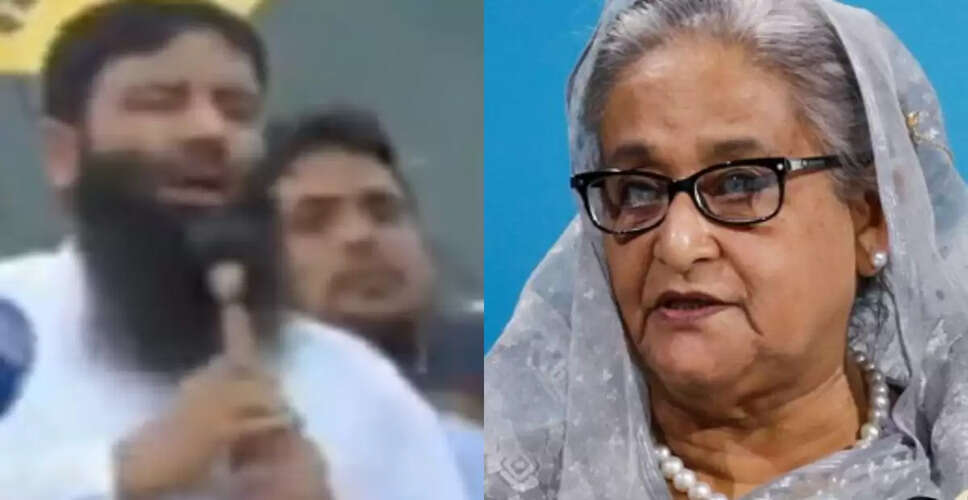
Muzammil Haazmi, a terrorist affiliated with the UN-designated Lashkar-e-Taiba (LeT), asserted that his group was instrumental in the ousting of Sheikh Hasina's government in Bangladesh last August. Speaking at an event in Gujranwala, Pakistan, he directed harsh criticism towards India and its Prime Minister, Narendra Modi.
Defiance Against India Post-Operation Sindoor
In a video shared by a commentator, Haazmi expressed that the LeT was responsible for the removal of Hasina, who he claimed had pro-India tendencies. He declared their intent to overcome India on all fronts, showcasing his anger following India's Operation Sindoor, which targeted nine terrorist camps in Pakistan and Pakistan-occupied Jammu and Kashmir on May 7.
LeT's Allegations and International Implications
Haazmi's assertions about the LeT's role in the political shift were met with skepticism from observers. Salah Uddin Shoaib Choudhury remarked that the LeT receives funding from both the CIA and Pakistan, indicating that the U.S. supports the regime that emerged after Hasina's departure. Following her exit, Bangladesh has reportedly gained more backing from both Washington and Islamabad.
Operation Sindoor Overview
On May 7, India executed Operation Sindoor, targeting nine terrorist locations within Pakistan as a response to the Pahalgam attack that resulted in the deaths of 26 civilians. The Indian Armed Forces successfully struck four sites in Pakistan, including Bahawalpur, Muridke, and Sialkot, along with five in Pakistan-occupied Jammu and Kashmir, utilizing precision munitions in a well-coordinated operation.