
Legionella Bacteria Detected in New York's Guggenheim Museum and Other Buildings
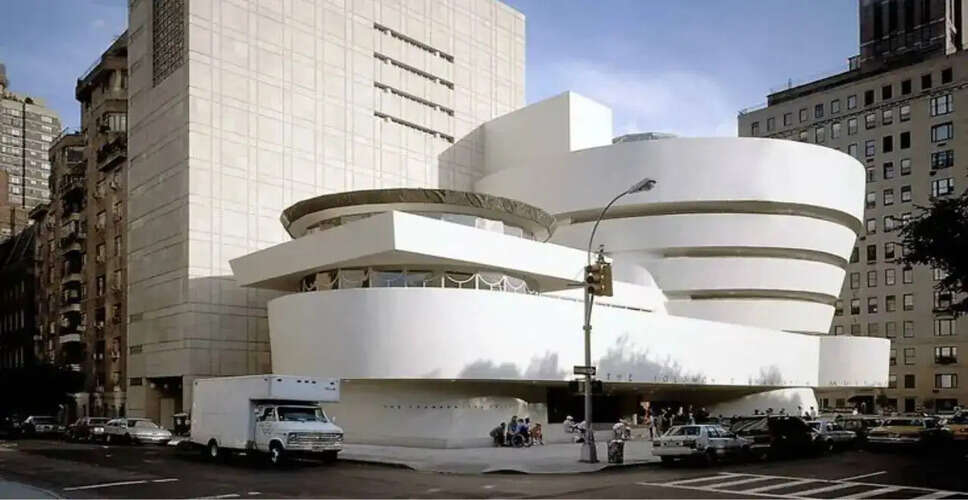

Legionnaires' Disease Investigation in New York City
Health officials in New York City have reported that the Solomon R Guggenheim Museum is one of 31 buildings on the Upper East Side where tests have found Legionella bacteria in water-cooling towers. This comes as part of an ongoing investigation into a Legionnaires' disease outbreak. The museum, situated at 1071 Fifth Avenue, along with 19 other locations, has already undergone cleaning and disinfection of their cooling systems, as stated by the New York City Department of Health.
Additionally, 12 other buildings have been instructed to perform deep cleaning by Saturday, although it remains uncertain if all have complied with this directive. Throughout the investigation, the Guggenheim has remained open and has not been required to close. It is also unclear if the museum has reached out to visitors who may have been present during the time Legionella was detected in the cooling system. The museum has yet to make a public statement regarding the situation.
Officials released an initial list of 31 affected properties after conducting polymerase chain reaction (PCR) testing on cooling towers. They emphasized that this test does not indicate whether the bacteria are alive or dead, noting that only live Legionella can lead to Legionnaires' disease, a serious form of pneumonia. As of now, authorities have not pinpointed which buildings might be responsible for the outbreak, and the investigation is ongoing, with the possibility of more properties being added to the list as further results are processed. Test results can take up to two weeks to be finalized.
The city has advised anyone who lives, works, or has visited the affected Upper East Side area since late June to seek medical attention if they experience flu-like symptoms. Currently, at least 46 individuals have been diagnosed with Legionnaires' disease, with 22 still hospitalized. Since the outbreak was first reported on July 2, a total of 183 cooling towers in the vicinity have been tested. Records indicate that over half of the cooling towers in the neighborhood had previously been flagged for health code violations during recent inspections, including lapses in routine monitoring and cleaning, as well as failure to submit necessary Legionella test results to the Department of Health.
Despite the outbreak, health officials have assured the public that it is safe to use air conditioning units and public cooling centers in the area.
The complete list of buildings identified in the preliminary report includes:
- 180 East End Ave.
- 1750 York Ave.
- 1660 Second Ave
- 1438 Third Ave.
- 1511 Third Ave.
- 1551 Third Ave.
- 1071 Fifth Ave.
- 1080 Fifth Ave.
- 1001 Fifth Ave.
- 240 E. 82nd St.
- 8 E. 83rd St.
- 145 E. 84th St.
- 117 E. 85th St.
- 125 E. 87th St.
- 152 E. 87th St.
- 120 E. 87th St.
- 501 E. 87th St.
- 168 E. 88th St.
- 160 E. 88th St.
- 1875 Second Ave.
- 1110 Fifth Ave.
- 153 E. 78th St.
- 135 E. 79th St.
- 300 E. 79th St.
- 238 E. 81ST St.
- 160 E. 84th St.
- 114 E. 85th St.
- 401 E. 88th St.
- 333 E. 91st St.
- 354 E. 91st St.
- 312 E. 95th St.