
Legal Battle Over E20 Petrol: Consumer Commission Orders Maruti Suzuki to Replace Vehicle

E20 Petrol Controversy Reaches Legal Crossroads
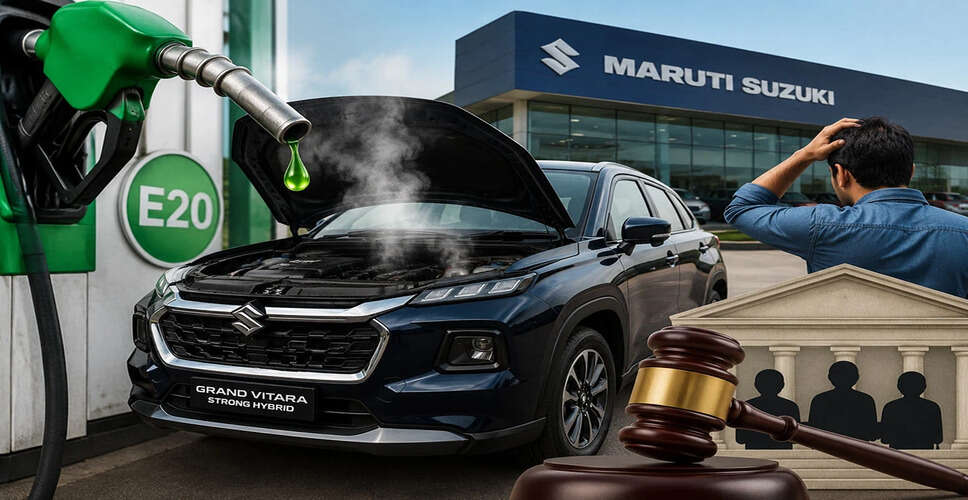
The ongoing debate regarding the mandatory sale of E20 petrol (20% ethanol blend) across the nation has taken a significant legal turn. The Consumer Disputes Redressal Commission in Raipur, Chhattisgarh, has directed Maruti Suzuki and its dealer to take back a customer's Grand Vitara Strong Hybrid SUV and provide a new vehicle of the same model. This ruling comes at a time when the central government is asserting that E20 petrol does not harm engines and that the opposition against it is misleading and politically motivated.
Consumer Complaint Sparks Action
According to media reports, Dr. Premraj Devta, a 41-year-old resident of Raipur, filed a complaint stating that after purchasing a Maruti Suzuki Grand Vitara Strong Hybrid Zeta Plus, he began experiencing repeated technical issues following the widespread use of E20 petrol. He alleged that he was not informed at the time of purchase that his vehicle was not fully compatible with E20 fuel. Both the dealer, Nexa Magneto (Sky Automobile), and Maruti Suzuki India Limited were named in the complaint.
Commission's Ruling and Implications
The commission, led by Chairman Prashant Kundu and member Dr. Anand Varghese, found both the manufacturer and dealer guilty of service deficiency. They ordered that within 45 days, both parties must return the complainant's vehicle and provide a new E20-compatible model. Failure to comply would result in a refund of the vehicle's total cost, including RTO fees and insurance premiums, amounting to ₹20.50 lakh. Additionally, they were ordered to pay ₹1 lakh for mental harassment and ₹10,000 for legal expenses, with a 7% annual interest on any delayed payments.
Significance of the Decision
This ruling is significant as it directly addresses the compatibility of E20 fuel and the information provided to consumers by vehicle manufacturers. Should more cases arise, it could spark a broader discussion regarding the responsibilities of automakers and dealers.
Government's Defense of E20 Program
Amidst the growing controversy, Union Minister for Road Transport and Highways Nitin Gadkari has once again defended the E20 initiative. He stated that the country has achieved the target of a 20% ethanol blend, and E20 petrol is now available at nearly every petrol station. While consumers wanting pure 100% petrol can opt for it, they will have to pay a higher price. However, he clarified that the final decision on the availability of different fuel types lies with the Ministry of Petroleum.
Addressing Engine Damage Claims
Gadkari dismissed claims that E20 causes engine damage, asserting that misinformation is being spread on social media. He noted that all vehicles compliant with the E10 standard can safely operate on E20 fuel, and the government has not received any complaints regarding engine damage. He claimed that vehicle manufacturers support E20 and launch their products with warranties. He encouraged individuals facing issues to directly contact the ministry, but no complaints have been filed so far.
Mileage Concerns and Ethanol Policy
Regarding mileage concerns, Gadkari acknowledged that ethanol has a lower thermal efficiency than petrol, which might lead to a slight decrease in mileage when using E20. However, he emphasized that this impact would be negligible in typical city traffic and only noticeable during high-speed driving. He also mentioned that accurate mileage measurement requires official testing, as consumers cannot gauge it precisely themselves.
Conflict of Interest Allegations
Gadkari refuted allegations of conflict of interest due to his family's involvement in the sugar industry, stating that his sons operate their business independently, with ethanol being a minor part. The pricing of ethanol is determined by the central government's cabinet, so he has no influence over it. He highlighted that ethanol production is no longer limited to sugarcane but also includes sources like maize, rice, crop residues, and bamboo, benefiting farmers and promoting clean energy.
Government's E20 Initiative
The central government mandated the sale of E20 petrol at petrol stations nationwide starting April 1. The government claims this will reduce dependence on crude oil imports, increase farmers' incomes, and decrease pollution. However, some vehicle owners and experts have expressed concerns about the compatibility of older vehicles, engine performance, and mileage. In response to these concerns, the Ministry of Petroleum and Natural Gas recently released a detailed clarification outlining scientific tests, regulatory safety measures, and international experiences, asserting that the E20 program is safe and environmentally friendly.
Future Implications
The recent decision by the Raipur Consumer Commission and the government's steadfast stance may intensify this debate. Attention will now focus on how vehicle manufacturers respond to this ruling and whether providing clearer information about E20 compatibility becomes a mandatory standard in the industry. Meanwhile, the opposition is preparing to raise this issue in the upcoming monsoon session of Parliament, raising questions about whether the government will offer any relief in light of the opposition's criticisms.