
Lebanon's Fragile Ceasefire with Israel: A Complex Dilemma Ahead

Temporary Truce Amidst Ongoing Tensions
Lebanon's leadership has managed to negotiate a brief ceasefire with Israel following intense backchannel discussions. This temporary truce, lasting 10 days, comes after weeks of conflict involving Israel and Hezbollah. In a significant shift, the Lebanese government has initiated dialogue with Israel to seek an end to hostilities, a move that appears to have yielded immediate results.
Despite President Trump advocating for a direct conversation between Israeli and Lebanese officials just before the ceasefire took effect on Thursday, President Joseph Aoun opted for lower-level discussions. This strategy aims to bolster his domestic political standing while advocating for peace, all while avoiding the perception of normalizing relations with Israel, a sensitive issue in Lebanon.
However, transforming this temporary pause into a sustainable peace agreement presents a formidable challenge. The Lebanese government lacks control over Hezbollah, which raises the contentious issue of disarming the Iran-supported group. There is no consensus within Lebanon regarding disarmament, and Hezbollah has historically resisted any attempts to relinquish its arms. Any government effort to enforce disarmament could provoke internal unrest at a precarious time.
For Israel, disarmament is a non-negotiable condition. Prime Minister Benjamin Netanyahu emphasized its importance for any broader peace agreement. This situation leaves Lebanon's leaders with limited options, each fraught with risks. Advocating for talks while confronting Hezbollah could destabilize the country, while inaction might reignite the conflict.
As Mohanad Hage Ali, a senior fellow at the Carnegie Middle East Center in Beirut, noted, it presents a significant dilemma. Additionally, Lebanon must contend with the reality of Israeli forces occupying substantial areas in the south, territories invaded during the recent fighting. Netanyahu has made it clear that Israel has no intention of withdrawing during this ceasefire, and there appears to be little pressure from Washington to change that stance.
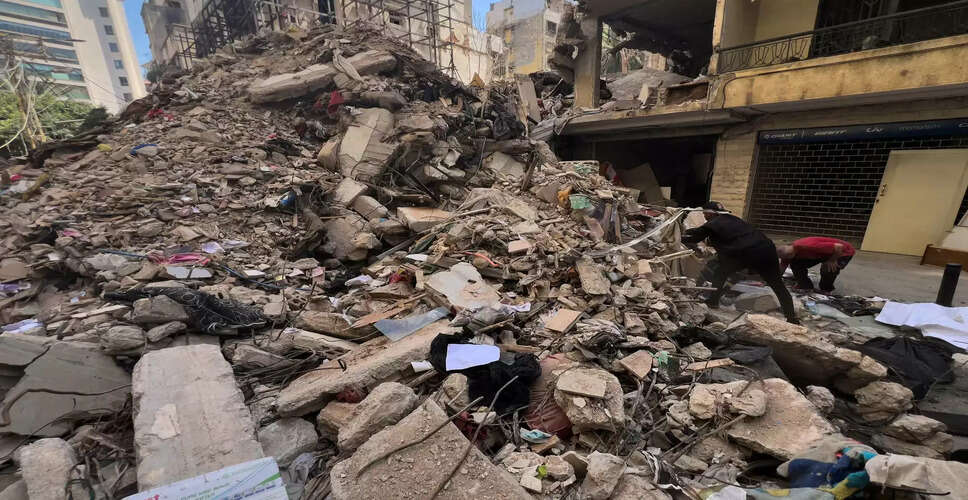
Netanyahu stated, “We are not leaving,” following the announcement of the ceasefire, indicating plans to establish a security zone extending over six miles into Lebanese territory. This ongoing Israeli presence, which may involve the destruction of border towns and villages, is likely to exacerbate the already dire humanitarian situation, leaving many Lebanese displaced for an extended period. The Lebanese government faces immense pressure to address this crisis.
As Lebanon prepares for further negotiations with Israel, the issue of Israeli withdrawal is expected to be a crucial point of contention. Analysts suggest that this will be a significant bargaining chip in discussions. Maha Yahya, director of the Malcolm H. Kerr Carnegie Middle East Center in Beirut, remarked, “These are people’s homes. Will Israel use this in the negotiations? Absolutely. It’s just one more card they can play.” She cautioned, however, that “you can’t build long-term peace under the barrel of a gun.”