
LCA Tejas Set to Soar Again After Grounding: A New Chapter for Indian Air Force
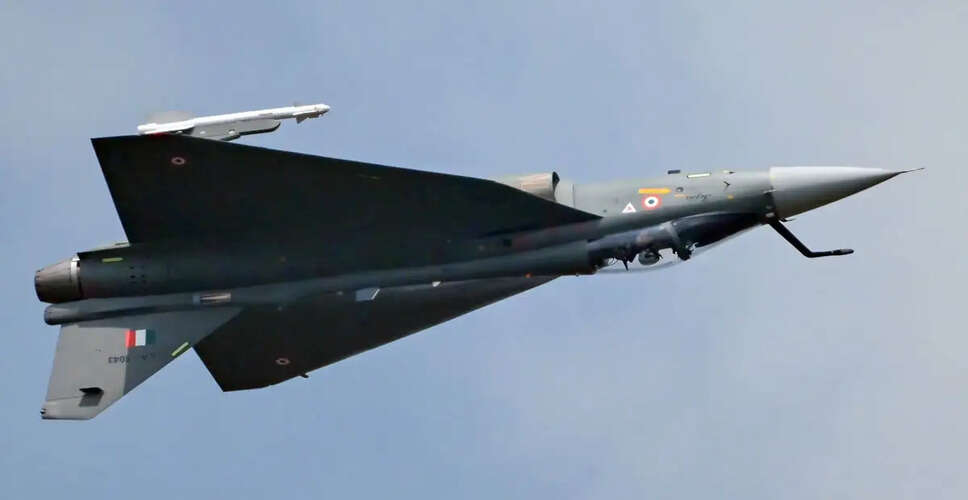
LCA Tejas Returns to the Skies
The LCA Tejas, regarded as the backbone of the Indian Air Force (IAF), is poised for a significant revival on April 8. Following a hard landing incident in February, approximately 34 aircraft were grounded for safety reasons. D.K. Sunil, Chairman of Hindustan Aeronautics Limited (HAL), has confirmed that the technical issues have been resolved. This marks the third incident related to the LCA Tejas in less than two years; previously, an engine fuel feed issue led to a crash in 2024, and another crash occurred during the Dubai Air Show in November 2025, resulting in the tragic death of Wing Commander Naman Syal.
Grounding and Resumption of Flights
Just weeks after the February incident, the entire fleet of 34 LCA aircraft was grounded. Now, after a two-month hiatus, the Tejas jets are set to take to the skies once more on April 8. HAL's Chairman D.K. Sunil announced that the issues have been addressed, stating, "All Tejas jets are ready to fly again starting next Wednesday."
Concerns Over Safety and Investment
However, the repeated crashes of the Tejas have reignited concerns regarding the program's viability. More than four decades after its inception during Prime Minister Indira Gandhi's tenure in the early 1980s, questions arise about whether HAL has squandered years and billions on a flawed project.
Strategic Importance Amid Regional Tensions
The approval for the LCA Tejas fleet to resume flights is a relief, especially given the ongoing conflicts from Europe to the Middle East. With neighbors like Pakistan and China, it is crucial for India to maintain readiness at all times. The IAF's fighter squadrons have already been weakened following the retirement of the MiG-21, raising concerns among defense analysts about the absence of combat platforms like the Tejas.
Current Status of IAF Fighter Squadrons
Currently, the number of IAF fighter squadrons has dwindled to approximately 30-32, while the authorized strength is 42. The IAF now holds only a slight numerical advantage over its Pakistani counterpart—about four to six squadrons—while facing dual threats from Islamabad and Beijing. The question of whether HAL has wasted time and resources on the LCA project, though sharp, is not unfounded.
Production Challenges and Delays
Designed to replace the MiG-21, this fighter jet is still being produced in limited numbers. Delays in engine supply from General Electric (GE) have led HAL to impose penalties on the American engine manufacturer. The pace of production has been notably slow.
Achievements Despite Setbacks
Despite the program's history and inherent flaws, experts assert that the LCA Tejas has been a significant achievement, even with the delays it has faced.
Organizational Challenges in the LCA Program
Senior defense journalist Sandeep Unnithan attributes the slow progress of the LCA program to organizational shortcomings. He compares it to India's nuclear submarine project, which began around the same time in 1984. By 2026, all four submarines—complex machines—were operational, with two already in service.
Need for Unified Organizational Structure
Unnithan credits the success of the submarine program to a cohesive organizational structure that included the Department of Atomic Energy (DAE), DRDO, and the Navy, all working under a unified program called the Advanced Technology Vessel Program (ATVP), led by a three-star naval officer.
Air Force's Role in LCA Development
He noted that the Air Force did not advance the LCA program with the same vigor as the Navy did with the nuclear submarine initiative. The LCA Tejas program was fragmented, involving the IAF as the user, HAL as the manufacturer, the Aeronautical Development Agency (ADA) under DRDO as the designer, and the Ministry of Defence. Unnithan emphasized that these four organizations often failed to communicate effectively and frequently pointed fingers at each other.
Timing and Development Phases
Air Marshal Philip Rajkumar (Retd.), who played a crucial role during the technology demonstration phase of the LCA program and helped establish the National Flight Test Center in Bengaluru, highlighted the importance of timing. He argued that counting the LCA program from Indira Gandhi's 1983 announcement is misleading, as serious work only commenced after receiving approval for the technology demonstration phase in 1993, following financial crises and expert reviews.
Flight Milestones and Challenges
The first flight took place in January 2001, despite stringent sanctions imposed after the Pokhran-II tests in 1998, which halted all assistance from Western countries, including critical support for fly-by-wire technology and engines. Large-scale engineering development began in April 2004, leading to the final operational clearance in 2019—a timeline comparable to that of the Eurofighter Typhoon program involving several European nations.
Expert Opinions on Recent Incidents
By March 2024, the Tejas had logged over 50,000 hours of flight without incidents. The crash in 2024 was attributed to a known fuel-feed issue. Unnithan stated that the Dubai display incident was a high-risk show-flying accident, not indicative of design or maintenance failures. The investigation into the February 2026 landing incident is ongoing and may relate to technical or maintenance issues.
Concerns Over Engine Development
Many defense experts lament the inability to incorporate the indigenous Kaveri engine into the Tejas. Currently, the aircraft relies on engines supplied by the American company GE. The Kaveri engine project, initiated in the 1980s by the Gas Turbine Research Establishment (GTRE) to power the LCA Tejas, aimed to eliminate dependence on imported engines. However, the program failed to gain necessary momentum, leading to its separation from the Tejas airframe in 2008.
Criticism of Past Decisions
Unnithan described the 2008 decision to separate the indigenous Kaveri engine from the airframe as a "grave mistake." He noted that India invested significantly less in this program compared to China, which has spent billions on its own fighter jet initiatives.
Current Engine Dependency Issues
Today, the Tejas Mk1A relies on GE F404 engines, and delays in their supply and support have become a headache for India. However, Air Marshal Philip Rajkumar (Retd.) defended the Kaveri program, stating that a naval version has been successful and is nearing certification for use in the 'lethal' stealth unmanned combat aerial vehicle (UCAV).
Technological Advancements and Future Prospects
Rajkumar emphasized that jet engines are among the most complex machines, and despite limited funding, the Kaveri program cannot be deemed a failure. He believes it will lay the foundation for future developments.
Contributions of LCA Tejas to the Aerospace Sector
The most significant contribution of the LCA Tejas may not be immediately visible. Unnithan pointed out that it has established a network of domestic aerospace companies, involving two to three hundred firms supplying high-tech components and assemblies. He stressed that creating this network is far more critical than merely producing aircraft.
Production Challenges and Future Directions
Nevertheless, the production of the LCA Tejas has been sluggish. Initial orders came in small batches of 20 aircraft each, which did not incentivize HAL to initiate multiple production lines, as it was already occupied with the licensed production of Su-30 aircraft. Now, three production lines are being established, aiming to supply approximately 30 aircraft annually.
The Path Forward for India's Fighter Jet Technology
Both Unnithan and Rajkumar agree that India has no alternative but to continue this endeavor. No country shares critical technologies like jet engines, as they are considered a nation's "most valuable heritage." Unnithan called for a comprehensive approach similar to that adopted by other powers for their initial fighter jets.
The Need for a National Mission
The Tejas program cannot remain a fragmented initiative among DRDO, HAL, and the IAF; it must evolve into a national mission supported by political will, substantial orders, heavy investment in testing facilities, and coordinated efforts among ministries. If India aims to master fighter jet technology and reduce reliance on foreign engines and platforms, this is the only viable path.
Reflections on the LCA Program's Journey
The LCA program has undoubtedly taken longer and cost more than ideal. Recent accidents have understandably raised concerns, especially as the IAF's squadron capacity is already limited. However, due to the LCA program, India has now become proficient in fighter design processes, established an excellent vendor network, and is operating an aircraft that is technically superior to the MiG-21 it replaced.
Comparative Performance of Tejas and MiG-21
Many have questioned whether the Soviet-era MiG-21 was indeed superior. Rajkumar, who has flown thousands of missions on the MiG-21, dismissed this notion, asserting that in terms of performance, the LCA Tejas is better. The man-machine interface, sensor fusion, and situational awareness are all significantly enhanced. The Tejas is compatible with modern missiles, laser-guided bombs, and helmet-mounted displays, representing a clear generational leap.
Future Developments and Enhancements
HAL's former chief designer, KP Singh, described the Tejas as "an excellent aircraft and platform," asserting that it is technically far superior. "We can compete with F-16s, Mirages, or any fourth-generation aircraft with it." Rajkumar noted that a larger and more capable Mk2 redesign is already underway, addressing shortcomings in payload, range, and stealth.
Conclusion: Embracing the Tejas as a National Mission
Labeling the Tejas as "useless," as some critics have claimed, would overlook the hard-won achievements. With the Mk1A entering service and the Mk2 expected soon, the question is not whether years and millions have been wasted, but whether India will finally embrace the LCA Tejas as a true national mission.