
Launch of India's First Cooperative-Based Taxi Service 'Bharat Taxi'
Introduction of Bharat Taxi Service
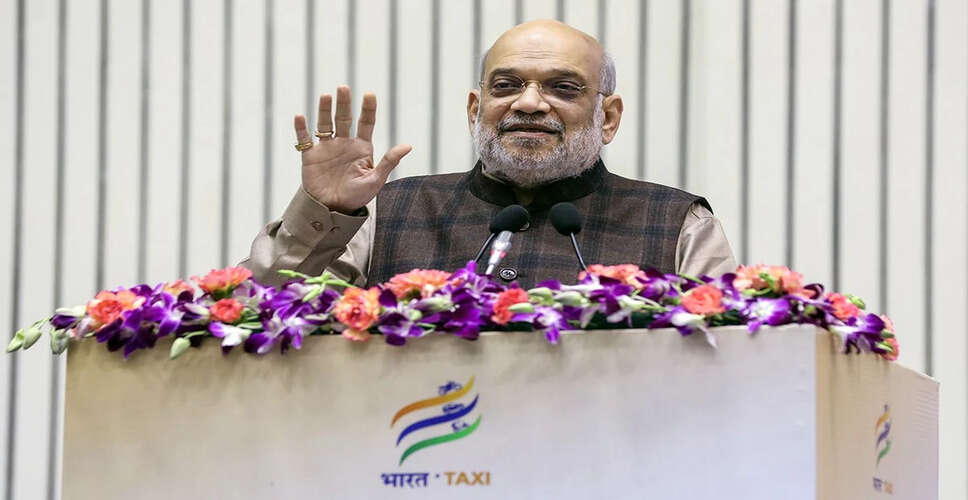
Today, Amit Shah, the Union Minister for Cooperation, inaugurated 'Bharat Taxi', the nation's first cooperative-based taxi service platform. Following a successful two-month pilot test, this service has commenced operations in the Delhi-NCR region and Gujarat. During the launch, Shah announced plans to expand Bharat Taxi across the country from Kashmir to Kanyakumari and Dwarka to Kamakhya within the next three years. He emphasized that the profits generated from this online taxi service will be shared with the drivers involved. Customers will have the option to book not only cars but also three-wheelers and two-wheelers for their transportation needs. Currently, the online taxi market in India is dominated by a few companies like Uber, Ola, and Rapido.
Details of the Cooperative Structure
Bharat Taxi was established on June 6, 2025, under the Multi-State Cooperative Societies Act of 2002. Notably, this platform does not charge any commission, nor does it implement surge pricing during peak hours. Instead, profits are directly distributed among the drivers. Launched with the support of eight major cooperative organizations, the pilot operations began on December 2 in Delhi-NCR and Gujarat. According to the Ministry of Cooperation, Bharat Taxi has emerged as the world's largest cooperative-based taxi service platform and the largest driver-owned transportation service. Since the pilot phase, over 300,000 drivers have joined, and more than 100,000 users have registered.
Operational Success and Driver Benefits
In Delhi-NCR and Gujarat, more than 10,000 rides are completed daily, with approximately ₹10 crore already distributed directly to drivers. The drivers associated with this platform are referred to as 'Saarthi'. The service prioritizes social security features for them, including health insurance, accident insurance, retirement savings, and a dedicated support system.
Unique Ownership Model
This platform is the first of its kind in the country, based on a cooperative ownership model where the 'Saarthi' is the owner. The initiative aims to provide drivers with better earnings, social security, and respect in their work, while also offering passengers fair and transparent fares. Bharat Taxi is seen as an alternative to private platforms like Ola and Uber. The government has stated that no commission will be charged from drivers, and there will be no provision for sudden fare hikes. The fares could be approximately 30% lower than other services, with a clear and regulated fare-setting system.
Future Prospects and Challenges
Under the 'Saarthi is the Owner' model, drivers can become members of the cooperative and purchase shares, with a minimum investment of ₹500 for five shares. As the organization becomes profitable, members will also receive dividends. Currently, the platform is free for drivers, but a nominal daily membership fee is expected to be introduced in February, estimated at around ₹30 for taxis and ₹18 for auto-rickshaws. Drivers will receive personal accident insurance of ₹5 lakh and family health insurance of ₹5 lakh. Retirement savings options and support centers in major cities are also being established. Drivers are allowed to work on other apps, ensuring no restrictions are imposed.
Pilot Phase and Expansion Plans
The pilot phase was conducted in Delhi-NCR and Gujarat, with around 400,000 drivers joining so far and over 10,000 rides being completed daily. Bharat Taxi has also taken over the prepaid taxi booths at Delhi Airport, claiming thousands of bookings daily. Registration is rapidly increasing in cities like Ahmedabad and Rajkot. However, some initial challenges have been reported, such as passengers noting that staff at the booths were not fully proficient with the software, leading to delays. The government's goal is to expand this service nationwide in the coming years and establish it as the largest ride-hailing platform, seeking institutional support from ministries and public enterprises for promotion.
Addressing the Needs of Taxi Drivers
The concept of Bharat Taxi appears to be timely, addressing long-standing complaints from taxi drivers about high commissions charged by private platforms amidst rising costs of fuel, insurance, and vehicle maintenance. The cooperative structure can provide drivers with both a voice and a stake in the business. The provision of social security is also a significant step, as many drivers in the unorganized sector lack any safety net.