
Kulsi River Faces Crisis Amid Monsoon Chaos in Assam
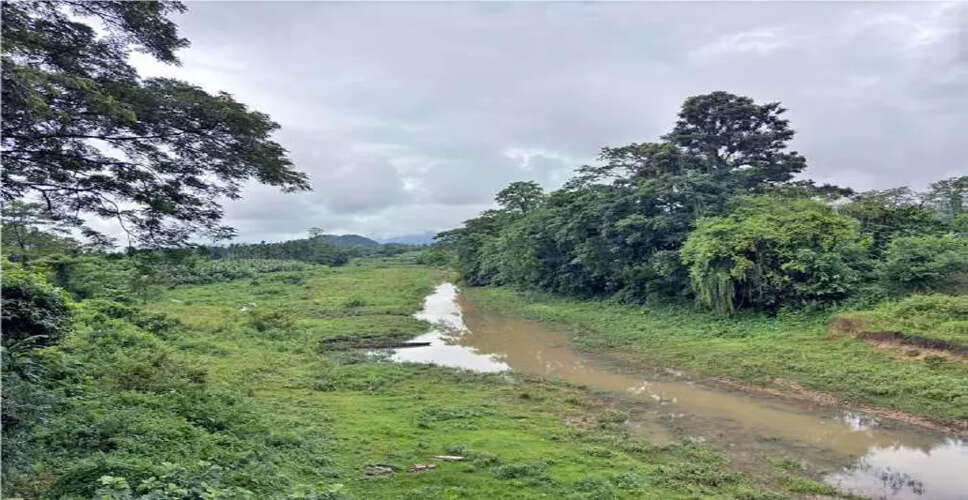

Impact of Monsoon on Kulsi River
Kulsi River
Amingaon, July 23: As the monsoon wreaks havoc across the region, the Kulsi River, which supports thousands and is home to the endangered river dolphin, is struggling with low water levels.
A 30-km stretch of the river, extending from Kulsi village to Sapartari village, is severely affected, impacting the livelihoods of over 30,000 residents.
The river splits at the Kulsi river point (Duyomukh) into two main channels, with the Kukurmara channel (Eastern) experiencing a significant drop in water flow.
Dhruba Narayan Das, president of the 3 No. Amtala Gaon Unnayan Somittee, described the situation as unprecedented, creating a disaster-like scenario for many, particularly fishermen and farmers.
“The river, once teeming with diverse fish and home to the endangered freshwater dolphin, used to sustain us,” Das lamented, as he leads efforts to restore the river's health.
Following discussions with local villagers, an expert committee was formed to investigate the river's degradation and to promote dolphin conservation and secure local livelihoods. In March 2022, the committee proposed both immediate and long-term solutions.
Experts from IIT Guwahati, Gauhati University, Tezpur University, the Wildlife Institute of India, the Forest Department, and the State Pollution Control Board recommended a complete ban on mechanized sand mining in the Kulsi river basin.
They also suggested a study of climate patterns. “It is perplexing why the government has not acted on the committee's recommendations,” Das expressed.
“Since 2021, we have been waiting for action. We urge Chief Minister Himanta Biswa Sarma to take immediate steps to revive the river,” he added.
In light of the urgency, the former Deputy Commissioner of Kamrup district instructed the Divisional Forest Officer of Kamrup West Forest Division in April 2022 to create an execution plan and commence dredging as recommended by the expert committee without delay.
Additionally, agricultural activities have been severely impacted due to the lack of groundwater recharge.
Harmohan Boro, a farmer, shared the struggles faced by the Nalbari village community after losing their primary source of income. “Our lives are in disarray as our traditional livelihoods are collapsing,” Boro lamented. Nalbari, situated along the dried river, relies heavily on paddy cultivation, horticulture, and vegetable farming.
“After losing paddy farming, I turned to banana cultivation. However, the severe water shortage threatens this crop as well,” Boro noted.
Pradip Rabha, a conservation advocate, emphasized the urgent need to revitalize the river, urging the state government to dredge it to ensure consistent water flow, even in dry seasons.
Moreover, the tourism industry has taken a hit, with no visitors coming to see the river dolphins. “Those days of earning from tourists are long gone,” lamented a group of boatmen.