
Kullu Dussehra 2026: A Grand Celebration of Culture and Faith in the Himalayas
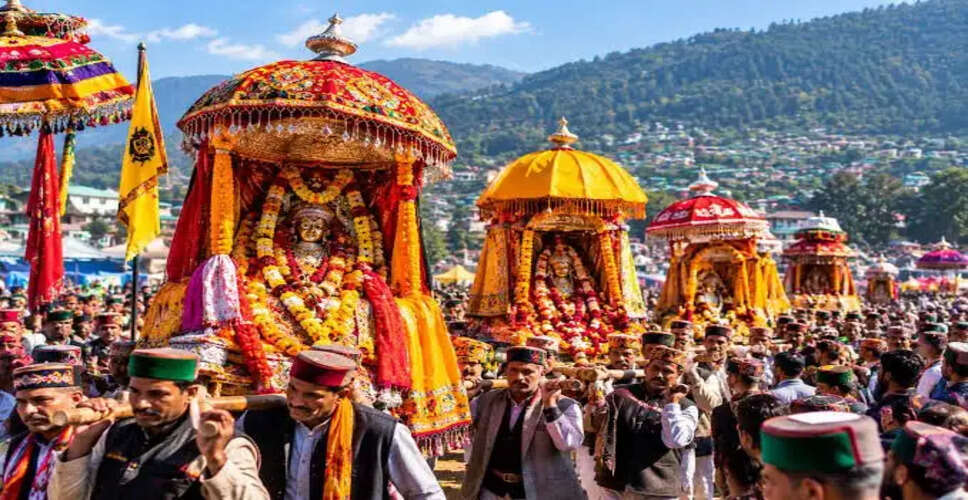

A Unique Cultural Gathering in Kullu
A record 347 deities, centuries-old mountain pilgrimages, international folk performances and a 500-drone spectacle set the stage for seven extraordinary days in the Himalayas.
Munish Sood
KULLU
As Dussehra festivities conclude across India with the burning of Ravana’s effigies, a remarkable cultural and spiritual event commences in the Kullu valley. Here, Dussehra signifies not an end, but a beginning—a week-long celebration where numerous village deities converge from the mountains, reviving ancient traditions and transforming the valley into a vibrant hub of faith, folklore, and global cultures.
An Unprecedented Gathering of Deities
Scheduled from October 21 to 27, the Kullu Dussehra this year promises an extraordinary display, with an unprecedented 347 local deities invited to the annual event. This number significantly surpasses the traditional count of 284 deities noted in the region’s Wajib-ul-Arz revenue records, underscoring the remarkable scale of the 2026 festivities.
However, the festival's splendor transcends mere numbers. Its true essence lies in a time-honored tradition that continues to connect remote Himalayan villages with their deities, safeguarding a unique cultural identity in an era increasingly influenced by modernization.
A Journey of Faith Across the Mountains
Long before the celebrations reach Dhalpur Maidan, the festival commences on the mountain paths of Kullu. In a time of accessible roads and modern transport, some deities and their caretakers, known as Kardars, embark on challenging journeys on foot, covering distances of 150 to 200 kilometers across rugged terrain to join the annual gathering.
Accompanied by traditional palanquins, musicians, and devotees, these processions bring the cultural heritage of distant villages into the heart of the valley. The journey itself becomes a manifestation of devotion, community pride, and a connection to the past.
The Atmosphere of Celebration
As the deities arrive at Dhalpur, the ambiance shifts dramatically. The sounds of dhols and nagaras resonate across the grounds, while the deep, rich tones of traditional brass karnals herald the arrival of the processions. Vibrant Himachali attire, handwoven shawls, and ornately decorated palanquins create a stunning visual display against the backdrop of the majestic mountains.
For the participating communities, this gathering is more than just an annual religious event; it serves as a reaffirmation of collective identity and an opportunity to uphold customs passed down through generations.
Historical Roots of Kullu Dussehra
The origins of Kullu Dussehra trace back to the 17th century, linked to Raja Jagat Singh, whose reign endowed the festival with lasting religious significance.
Local lore suggests that the king, burdened by guilt after an incident involving a Brahmin, sought spiritual redemption. He subsequently brought the idol of Lord Raghunath from Ayodhya and installed it as the supreme deity of his kingdom, positioning himself as a humble servant.
This tradition is believed to have begun in 1651, when the worship of Lord Raghunath became central to the kingdom’s spiritual life. The annual gathering of village deities is tied to this legacy, where the valley's deities unite to honor the presiding deity.
Lord Raghunath: The Heart of the Festival
At the core of the celebrations is Lord Raghunath Ji, revered locally as Lord Rama and recognized as the presiding deity of Kullu.
The traditional Rath Yatra, featuring the deity’s grand wooden chariot, is one of the festival’s most significant events. Devotees gather in large numbers to pull the chariot’s thick ropes, transforming the procession into a powerful expression of collective faith.
The sight of hundreds of deities converging in the valley, accompanied by their attendants and musicians, offers a rare glimpse into Himachal Pradesh’s unique religious traditions. Here, deities are not merely figures of worship confined to temples; they play an active role in the social and cultural fabric of their communities.
Modern Technology Meets Tradition
While the spiritual foundations remain deeply rooted in tradition, Kullu Dussehra 2026 is also set to incorporate modern technology on a grand scale.
A 500-drone light show and laser exhibition are scheduled for the second, fourth, and sixth nights of the festival. This aerial display is expected to illuminate the valley, using coordinated lights and visual effects to depict elements of local folklore and cultural heritage.
This initiative adds a contemporary layer to a festival traditionally characterized by religious processions, folk music, and community involvement. It also provides a platform to showcase the region’s stories and cultural identity through a modern visual medium.
A Global Stage for Cultural Exchange
The festival will also feature an international aspect, with performances by cultural troupes from over 20 countries, as detailed in this year’s program.
A major global dance presentation is planned to merge Kullu Nati, the region’s renowned folk dance, with international folk traditions. This spectacle aims to highlight the diversity of dance, music, and movement while placing Himachali culture within a broader global context.
The cultural program will enrich the celebrations, allowing local artists and international performers to share the same stage. For attendees, it will be an opportunity to experience the cultural richness of the Himalayas alongside global traditions.
A Distinctive Dussehra Celebration
Kullu’s celebration stands apart from the typical Dussehra format, which often features towering effigies of Ravana, Meghnad, and Kumbhakarna being set ablaze on Vijayadashami.
In Kullu, the festival commences around Vijayadashami and continues for seven days. Its concluding ritual, known as Lanka Dahan, traditionally involves burning a small pile of dry grass, twigs, and bushes on the banks of the Beas River.
The focus is not on the dramatic destruction of large effigies but rather on the gathering of deities, the central role of Lord Raghunath Ji, and the preservation of local religious customs.
A Celebration of Continuity
From deities traveling hundreds of kilometers on foot to the pulling of Lord Raghunath’s chariot, from the thunder of traditional instruments to the glow of hundreds of drones, Kullu Dussehra 2026 encapsulates elements that span centuries of cultural evolution.
The record attendance of 347 deities gives this year’s festival a distinctive character, while international performances and high-tech displays broaden its appeal beyond the region.
Yet, beneath the spectacle lies a deeper narrative: the survival of a living heritage where faith traverses mountains, village traditions maintain their significance, and generations continue to engage in a shared cultural legacy.
A Meeting Point of Cultures
For seven days, Dhalpur Maidan will transform into more than just a festival venue. It will serve as a convergence point for the spiritual traditions of Himachal Pradesh and the cultural expressions of the wider world.
In Kullu, Dussehra transcends being merely a festival of victory over evil. It is a celebration of continuity—where ancient traditions thrive, the gods are welcomed among the people, and a Himalayan valley opens its doors to the world.