
Kuki-Zo Community Demands Removal of Unauthorized Checkpoints in Manipur

Ultimatum Issued by Committee on Tribal Unity
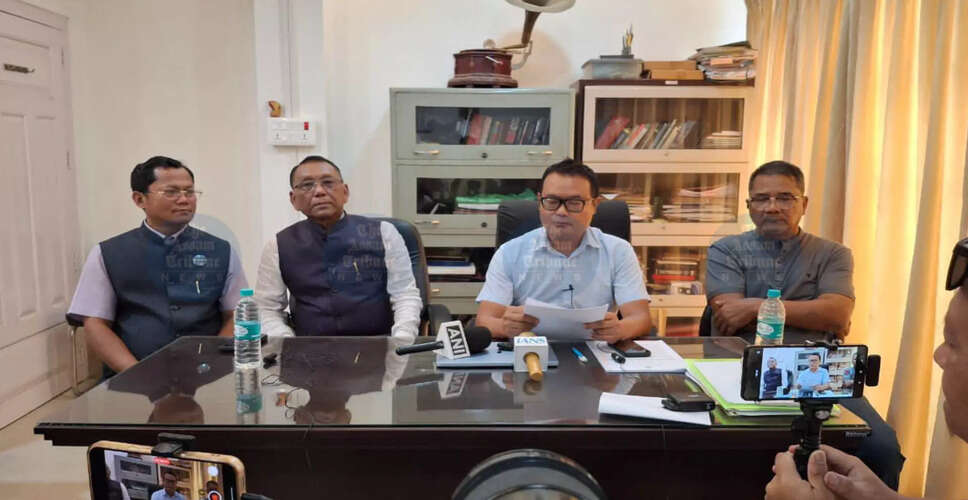
CoTU & KZC leaders addressing a press conference in Churachandpur on June 25
Imphal, June 28: The Committee on Tribal Unity (CoTU) has set a 48-hour deadline for both the Central and Manipur state governments following a collaborative meeting with civil society organizations in Kangpokpi district. They are demanding the removal of what they term as "unauthorized checkpoints and gates" along National and Inter-State Highways in the area.
In a statement released on June 27, CoTU expressed concerns over the ongoing hindrance to the transport of essential goods, medicines, and other necessities, which has been affecting road transport and economic activities for over a month.
The organization accused "Kacha Naga groups" in Manipur of operating these checkpoints, which have caused considerable difficulties for local residents, especially in Kangpokpi district.
CoTU has called on the Manipur government, in collaboration with the Centre and security forces, to eliminate all unauthorized checkpoints and ensure free public movement within the next 48 hours.
“Should there be non-compliance within the given timeframe, the Kuki-Zo community will be compelled to take necessary democratic actions to protect the interests, rights, and safety of the public,” the statement warned.
It also noted that any adverse incidents resulting from the government's inaction would be the responsibility of the Manipur government and relevant agencies.
In a related development, the Kuki-Zo Council (KZC) issued a clarification on Sunday regarding its use of the term "Kacha Naga" after some groups called for an apology.
In a statement on June 28, the council asserted that "Kacha Naga" is not a pejorative term but an officially recognized tribal designation under Indian law.
“This term was included in the Scheduled Tribes list in Manipur through the Scheduled Castes and Scheduled Tribes Orders (Amendment) Act, 1956, and was retained in the subsequent amendment in 1976,” the statement explained.
The KZC emphasized that its use of the term is based on the constitutional and legal framework acknowledged by the Government of India, and they did not intend any disrespect towards any community.
The council further stated that if any group wishes to change the terminology, they should seek amendments to the relevant laws through the proper channels, rather than blaming the council for using terms that are part of the official Scheduled Tribe classification.
Reiterating its commitment to fostering positive inter-community relations, the KZC urged all parties to engage in constructive dialogue and mutual understanding.