
Krantijyoti Vidyalay: A Call to Preserve Marathi Education
Marathi Filmmaker Hemant Dhome's Latest Venture
Marathi director Hemant Dhome celebrates Maharashtra Day and Teachers Day early in 2026 with his new film. Set in Nagaon, Alibaug, the story revolves around the Krantijyoti Vidyalay, a Marathi-medium school facing closure due to its dilapidated condition, with plans for a modern English-medium replacement.
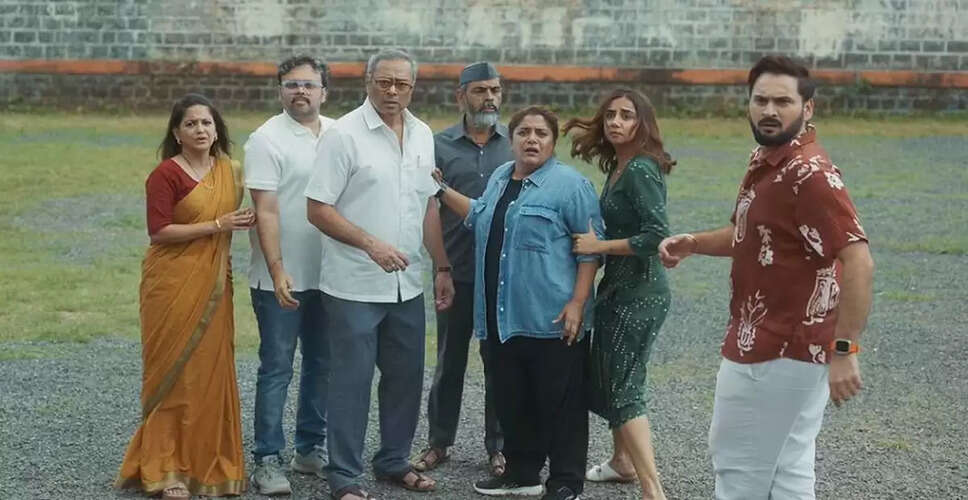
The school, managed by Dinkar Shirke's family for generations, sees Shirke (played by Sachin Khedekar) rallying his former students to save it. Most of them have moved away, except for Baban (Amey Wagh), creating a reunion atmosphere as they return to Nagaon.
The group includes Deep (Siddharth Chandekar), Anjali (Prajakta Koli), Salma (Kshitee Jog), Rakesh (Harish Dudhade), Vishal (Pushkaraj Chirputkar), and Suman (Kadambari Kadam), who reminisce about their school days. The chemistry between Deep and Anjali remains palpable, while Rakesh and Vishal seek out their old bhaji vendor. Salma reflects on her less-than-pleasant classroom experiences, while Baban joyfully reconnects with his friends.
For a significant portion of its runtime, Krantijyoti Vidyalay captures the essence of adults reliving their childhood. Dhome's episodic screenplay shines during these moments, showcasing the students' fond memories of Shirke's teaching style, their shared love for orange candies, and the nostalgia that envelops them.
However, as teacher Narkevar (Nirrmitee Sawant) reminds them, their visit is not merely for nostalgia; they aim to assist Shirke in outsmarting the indifferent developer Jagtap (Anant Jog) and to safeguard the Marathi language.
The film's underlying message becomes increasingly clear as it progresses. Dhome passionately advocates for the preservation of Marathi-medium schools and the language itself, presenting a battle cry against their potential extinction.
Certain scenes resemble televised debates on the preference for English-medium education, the decline of Marathi literature, and the diminishing pride in Marathi culture. Shirke even addresses the audience directly, reminiscent of a political campaign.
Dhome maintains a balanced tone, avoiding an anti-English stance, as characters like Anjali and the couple Vishal and Suman live abroad. Instead, he encourages viewers to embrace Marathi education from the grassroots level.
As the narrative unfolds, it shifts towards a political discourse rather than a cinematic experience. Despite addressing a significant issue, Krantijyoti Vidyalay simplifies the complexities surrounding Marathi-medium schools and the broader challenges facing Marathi culture.
The film portrays the struggle to save Marathi as straightforward, with Jagtap depicted as a comically inept antagonist. Although Jitendra Joshi makes a brief appearance as Maharashtra's education minister, the film fails to tackle the deeper political challenges threatening the language.
Set against the picturesque backdrop of Alibaug, with its beaches and lush greenery, the film's setting can be misleading. The real challenges for Marathi-medium schools often lie in Mumbai, where a troubling alliance of politicians, bureaucrats, and developers threatens municipal institutions.
Despite its flaws, Dhome's progressive ideas shine through, presenting a vision for a united Maharashtra under a common language.
At 149 minutes, the film takes its time to convey its message, often meandering after establishing its intent. The lack of concise and coherent writing transforms what could be an enjoyable film about relatable characters into a drawn-out experience.
The performances are commendable, with Sachin Khedekar perfectly embodying the dedicated principal. Amey Wagh brings humor to the role of the endearing Baban, while Prajakta Koli impresses in her Marathi-speaking debut as Anjali, despite some of her character's motivations feeling forced.