
Khelo India Winter Games: HAWS Shapes Future Champions in Winter Sports
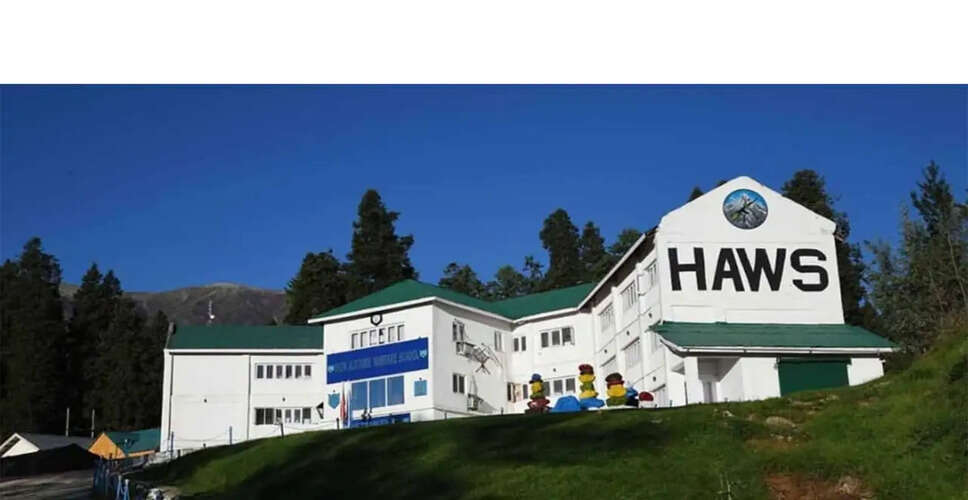
The Heart of Winter Sports: HAWS
As the sun glinted off the medals during the Khelo India Winter Games, athletes pointed not to the podium but to the snow-covered peaks of Gulmarg, highlighting the pivotal role of the High Altitude Warfare School (HAWS).
Taking place from February 23 to 26, this year's event saw participants from various states, Union Territories, and prominent institutions like the Indian Army, Central Reserve Police Force (CRPF), and Indo-Tibetan Border Police (ITBP) credit HAWS for their achievements.
HAWS: A Legacy of Excellence
Established in December 1948 by General K S Thimayya as the 19 Infantry Division Ski School, HAWS was created out of necessity in a region prone to avalanches. It transformed into the Winter Warfare School and was officially designated as a Category A Training Establishment on April 8, 1962, with a mission to excel in mountain warfare.
HAWS specializes in winter warfare and snowcraft, offering elite courses that combine high-altitude combat training with survival skills. Over time, it has also become a breeding ground for competitive athletes.
From Novices to Champions
Kajal Kumari Rai, a 25-year-old from Shillong, had never encountered snow until 2024. Within a year, she won gold in the Nordic women's 15 km and 10 km sprints, attributing her success to a 15-day skiing initiation at HAWS. "Joining the CRPF gave me direction, while HAWS and the Army instilled belief in me," she stated.
Similarly, Bhavani T N, who secured gold in the Nordic women's 1.5 km sprint and bronze in the 15 km and 10 km events, also began her journey late at 23. It was at the Indian Institute of Skiing and Mountaineering (IISM) and HAWS that she honed her skills.
The HAWS Training Methodology
In the men's Nordic 10 km event, the Army dominated the podium with Padma Namgail taking gold, followed by Aman and Manjeet. In the 1.5 km sprint, Sunny Singh, Shubam Parihar, and Manjeet also swept the medals. They all acknowledged HAWS as a transformative force.
"HAWS is crucial for developing winter sports athletes from the Army and beyond," Namgail remarked. "There are no funding or training issues, and top athletes are even sent to Europe for exposure. The challenging tracks and tough ice prepare us well, thanks to HAWS."
World-Class Facilities and Training
The systematic approach to training is evident. Col. Kumar Singh Negi, the Indian Army team manager, emphasized the role of expert trainers from countries like Italy, Norway, and Sweden in refining techniques to meet international standards.
Coach Rameez Ahmad noted that HAWS supports 250 to 300 Army winter athletes annually, along with a handful of civilian trainees. Currently, 24 athletes are engaged in Alpine skiing, 16 in snowboarding, and 20 in Nordic skiing, logging at least 600 training hours each year. The facility boasts ski simulators, roller skis for summer training, a modern gym, and an indoor sports complex that remains active even during winter.
Physiotherapist Vivek Kaktwan praised the infrastructure as world-class, highlighting the benefits of training at high altitude in Gulmarg.
Beyond Military Training
The influence of HAWS extends to the CRPF, with team manager Magesh K acknowledging the shift from mere equipment support to elite coaching. Over the past three years, Army coach Nadeem Iqbal, an Olympian, has worked closely with CRPF athletes to enhance their skills.
The results are evident in the performances at Gulmarg, where individual medals tell a story rooted in the rigorous training and dedication fostered at HAWS.