
Khaleda Zia, Pioneering Political Leader of Bangladesh, Passes Away at 80
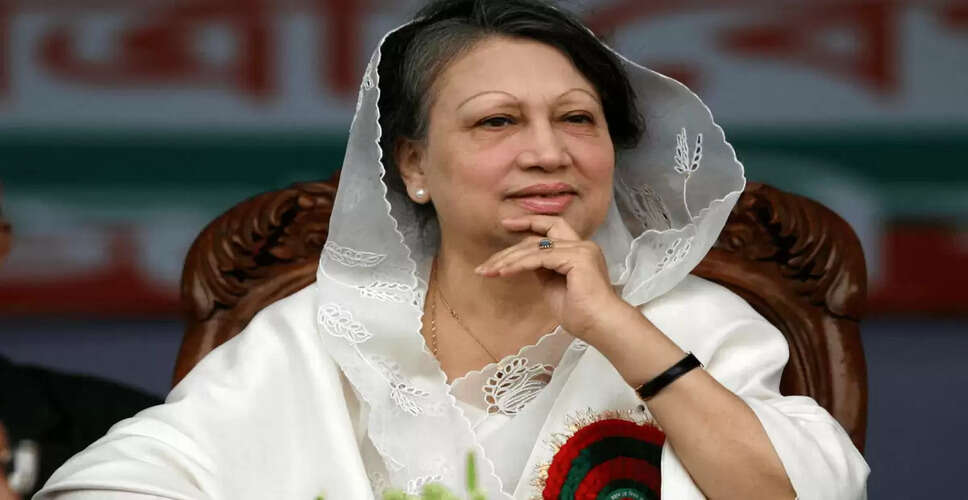
A Significant Figure in Bangladesh's Political Landscape
Remained at the heart of Bangladesh’s intense political scene for over thirty years
Sunil Chadha
Former Prime Minister of Bangladesh and chairperson of the Bangladesh Nationalist Party (BNP), Khaleda Zia, passed away on the morning of December 30, 2025. Her death marks the end of a significant political journey that influenced the nation’s transition to democracy post-military rule. She was 80 years old and had been suffering from a long-term illness. The BNP confirmed her passing at 6 am at Evercare Hospital in Dhaka.
A prominent yet divisive figure, Khaleda Zia was a central player in Bangladesh’s tumultuous politics for over three decades, alternating between governance and opposition with remarkable determination.
From Imprisonment to Prominence
Khaleda Zia’s political journey began under duress. During the 1971 Liberation War, she was confined to her home by the Pakistani Army while her husband, Major Ziaur Rahman, fought with the Mukti Bahini. Following the country’s independence, she chose to focus on her family, despite her husband’s rising political stature.
Her reluctant foray into politics occurred after the assassination of Ziaur Rahman in 1981, as the BNP, which he had established, faced suppression under military governance.
A Prolonged Struggle Against Military Rule
Entering the political arena in the early 1980s, Khaleda Zia became a key figure in the BNP’s opposition to General Hussain Muhammad Ershad’s regime. Her efforts, characterized by widespread protests and political activism, ultimately led to Ershad’s removal and the restoration of parliamentary democracy.
In 1991, she made history by becoming Bangladesh’s first female Prime Minister, and only the second woman to hold such a position in the Muslim world, following Pakistan’s Benazir Bhutto.
Her later years were overshadowed by legal troubles, including corruption charges that resulted in imprisonment. In 2018, she was convicted in several graft cases and spent significant time in custody before her sentence was suspended for health reasons.
After several hospital stays in Dhaka and treatment abroad, her health deteriorated in recent months. Khaleda Zia’s passing signifies the end of a pivotal era in Bangladesh’s contentious political history, long characterized by the rivalry between her and Sheikh Hasina.