
Khaleda Zia, Bangladesh's First Female Prime Minister, Passes Away at 80
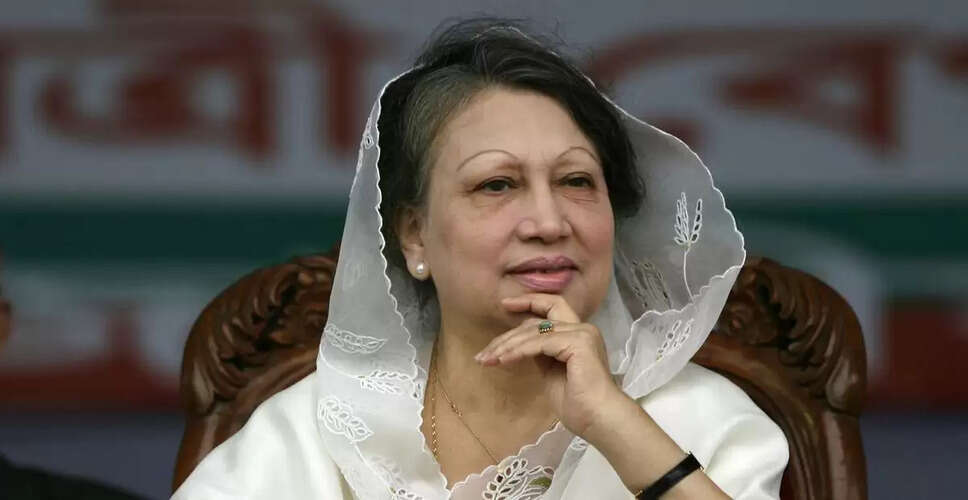
Khaleda Zia's Legacy and Health Struggles
Khaleda Zia, who made history as Bangladesh's first female prime minister, passed away on Tuesday at the age of 80, as confirmed by her party, the Bangladesh Nationalist Party. Her health had been in decline due to advanced liver cirrhosis, arthritis, diabetes, and heart complications, according to medical reports.
Since November 23, she had been receiving treatment at a Dhaka hospital, and her condition worsened significantly, leading to her being placed on a ventilator on December 11.
Her son, Tarique Rahman, who is currently the acting chairperson of the Bangladesh Nationalist Party, returned to Bangladesh after spending 17 years in exile. He is seen as a potential candidate for the prime ministerial position in the upcoming general elections scheduled for February.
Zia served as prime minister during three separate terms: from 1991 to 1996, briefly in 1996, and from 2001 to 2006. She was married to Ziaur Rahman, a former president who was assassinated during a coup in 1981.
On the eve of her passing, both Zia and Rahman had submitted their nomination papers for the upcoming elections. Zia was nominated for the Bogura-7 constituency, while Rahman plans to contest from Dhaka-17 and Bogra-6.
The Bogura seat has historically been a stronghold for Zia, who won it in the 1991 elections and retained it in subsequent elections in 1996 and 2001.
In 2008, her party colleague won the seat in a bye-election. The Bangladesh Nationalist Party had previously boycotted the 2014 elections following Zia's house arrest and reports of violence against opposition leaders.
In 2018, the Election Commission rejected Zia's nomination applications due to corruption convictions. She, along with others, was convicted of embezzling funds meant for the Zia Orphanage Trust, established during her tenure as prime minister.
In October 2018, she received a seven-year prison sentence for another corruption case involving the Zia Charitable Trust. Both sentences were served concurrently.
Following her release due to health issues in 2020, her family made multiple requests for her to receive treatment abroad, all of which were denied by the government led by her rival, Sheikh Hasina.
After Hasina's government was ousted in August 2024 amid protests, Nobel laureate Muhammad Yunus became the chief adviser of the interim government, which permitted Zia to travel to London for treatment. She returned to Bangladesh in May.
In January, the Supreme Court of Bangladesh acquitted her of the corruption charges.