
Khagen Mahanta: The Bihu Samrat Who Enriched Assamese Culture
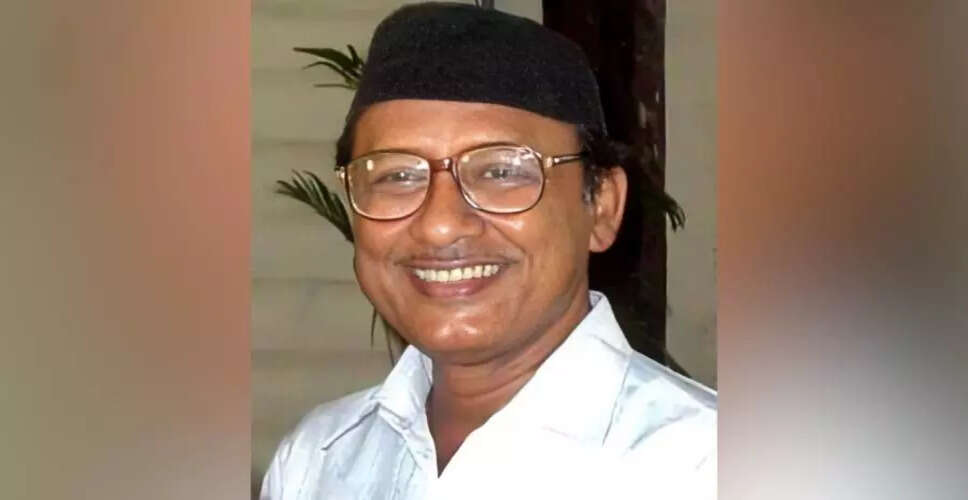
A Cultural Icon
Khagen Mahanta, fondly referred to as the ‘Bihu Samrat’, was a monumental figure in Assamese music and culture. As a singer, composer, and cultural advocate, he devoted his life to safeguarding and promoting the rich folk traditions of Assam. His legacy is deeply ingrained in the hearts of the Assamese people, not only for his enchanting voice but also for his steadfast belief in music as a means of fostering unity, peace, and cultural identity.
Musical Journey
From local village gatherings to grand national platforms, Khagen Mahanta carried the essence of Assamese culture wherever he performed. His influence continues to motivate countless artists, scholars, and folk music enthusiasts.
Born on August 17, 1941, in the Nagaon district, he was immersed in a culturally rich environment. Folk music was integral to village life, and young Khagen was captivated by the melodies of ‘Bihu geet’, ‘Tokari geet’, and devotional songs from an early age.
His formal musical career began in the early 1950s with performances for All India Radio in Guwahati. His voice, characterized by clarity and emotional resonance, quickly garnered public attention. He showcased a unique ability to merge rural traditions with structured musical forms, establishing himself as a leading folk talent of his era.
Association with IPTA
A significant aspect of Khagen Mahanta’s life was his long-standing relationship with the Indian People’s Theatre Association (IPTA). He was not only a lifelong member but also served as the vice president and later as an adviser.
IPTA, known for its cultural activism, aimed to use art for social change, a philosophy Mahanta embraced wholeheartedly. Through IPTA, he performed across Assam and beyond, advocating for workers, farmers, and the common man, always highlighting themes of equality and social justice.
Cultural Unifier
The 1960s and 70s were tumultuous times for Assam, marked by political unrest and social divisions. In these challenging circumstances, Mahanta, alongside cultural icons like Bhupen Hazarika and Hemanga Biswas, emerged as a unifying force. Their performances served as cultural interventions aimed at healing societal rifts, with Mahanta’s voice acting as a bridge between diverse communities.
Musical Legacy
Beyond being a remarkable singer, Khagen Mahanta was also a talented composer. His works were celebrated for their lyrical simplicity and emotional depth, staying true to folk traditions. He skillfully incorporated traditional instruments like the dhol, pepa, and tokari, crafting music that was both authentic and innovative. His compositions for Assamese cinema, such as Mainajan and Meghmukti, showcase his extraordinary creative talent.
Unlike many commercial adaptations of folk music, Mahanta’s creations preserved the spiritual essence of the genre. He believed that music should educate, inspire, and uplift rather than merely entertain.
A Musical Partnership
Khagen Mahanta shared both his life and stage with his wife, Archana Mahanta, a renowned singer in her own right. Together, they formed one of the most cherished musical duos in Assamese history, their performances embodying love, respect, and artistic synergy.
Their son, Angaraag Mahanta (Papon), has emerged as a prominent figure in Indian music, known for his Bollywood hits while also reviving many of his father's folk songs with a contemporary flair, ensuring the legacy endures.
Enduring Legacy
Throughout his life, Khagen Mahanta received numerous accolades from various institutions, but his most significant reward was the everlasting love and respect of the Assamese people, who viewed him as a symbol of their cultural pride. He was affectionately dubbed a ‘People’s Artiste’ by his admirers.
On June 12, 2014, Khagen Mahanta passed away, marking the end of an era. However, his musical legacy continues to thrive through recordings, performances, and the efforts of future artists, ensuring his voice remains alive in Assam and beyond.
Khagen Mahanta was more than just a musician; he was a movement. A guardian of tradition, a messenger of peace, and a voice for the people, he demonstrated that folk music is a vibrant narrative of a community’s soul. In a world filled with distractions, Mahanta’s legacy encourages us to pause and listen to the rhythms of our cultural heritage.
Conclusion
Parag Jyoti Mahanta