
Key Developments in Indian Politics and Economy: Bail Granted, Currency Crisis, and More
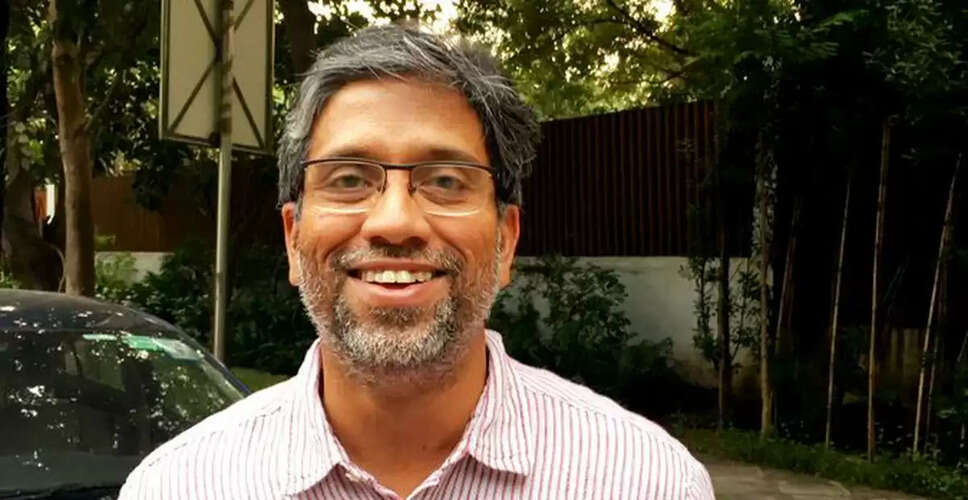
Bail Granted to Hany Babu in Bhima Koregaon Case
The Bombay High Court has approved bail for former Delhi University Professor Hany Babu, who has been incarcerated for over five years. He was arrested in July 2020 under the Unlawful Activities Prevention Act.
This case is linked to the violence that erupted near Pune on January 1, 2018, following the Elgar Parishad event commemorating the 200th anniversary of the Bhima Koregaon battle.
The National Investigation Agency claims that the Elgar Parishad was part of a broader Maoist plot aimed at inciting caste violence, undermining the Union government, and plotting to assassinate Prime Minister Narendra Modi. Babu is accused of being affiliated with the banned Communist Party of India (Maoist) and participating in this alleged conspiracy.
Despite the serious allegations, the trial has yet to commence even after seven years.
Rupee Hits Record Low Amid Capital Outflows
The Indian rupee has plummeted to a historic low of 90.4 against the US dollar, driven by ongoing foreign capital outflows from the equity market. This decline is exacerbated by punitive tariffs from the United States and uncertainty surrounding a trade agreement between India and the US.
Having crossed the 90-mark recently, the rupee has depreciated approximately 5% in 2025, marking its steepest annual decline since 2022.
Congress leader Mallikarjun Kharge has attributed the rupee's fall to the policies of the Modi administration. In contrast, Chief Economic Advisor V Anantha Nageswaran stated he is unconcerned, as the rupee's depreciation is not affecting inflation or exports.
Supreme Court Addresses Electoral Roll Revision Challenges
The Supreme Court has issued directives to alleviate the difficulties faced by booth-level officers during the special intensive revision of electoral rolls. It has instructed state governments to assign additional personnel to reduce the workload of these officers.
This revision process is currently taking place in 12 states and Union Territories, with reports of at least eight suicides and seven deaths among booth-level officers in states like West Bengal, Uttar Pradesh, Kerala, and Rajasthan.
The court emphasized that if officers are overwhelmed by their regular and extra duties from the Election Commission, state governments should take measures to ease their burdens.
New H-1B Visa Regulations Require Public Social Media Profiles
The United States has mandated that all foreign workers applying for H-1B visas, along with their dependents, must keep their social media profiles public for review. This follows similar guidelines issued in June for student visa applicants, emphasizing thorough vetting, including online presence.
H-1B visas permit US companies to temporarily hire foreign workers in specialized fields. In recent years, Indian nationals have made up the majority of H-1B visa holders, accounting for 72.3% of all visas issued in the fiscal year 2022-2023.
These new regulations will apply to both new applicants and those seeking visa renewals.
Trinamool Congress Suspends MLA Over Controversial Remarks
The Trinamool Congress has suspended MLA Humayun Kabir after he expressed intentions to construct a mosque modeled after the Babri Masjid in Murshidabad district. The Babri Masjid was demolished on December 6, 1992, by Hindutva extremists who believed it was built on the birthplace of Lord Ram. A Ram temple was inaugurated at the site in January 2024, led by Prime Minister Modi.
Kabir had previously announced plans to lay the foundation stone for the mosque on December 6. The party's leader Firhad Hakim stated that Kabir had been warned multiple times for his statements, which were seen as inciting communal tensions and allegedly encouraged by the Bharatiya Janata Party.