
Key Decisions Made in Cabinet Meeting Led by Prime Minister Modi
In a pivotal cabinet meeting chaired by Prime Minister Narendra Modi, several key decisions were made, including the recognition of Modi's record tenure and significant infrastructure projects. The cabinet highlighted welfare initiatives aimed at poverty alleviation and women's empowerment, alongside national security reforms. Notably, the approval of the Ahmedabad Metro project and a residential complex in Amaravati were among the highlights. The meeting underscored the government's commitment to a self-reliant and prosperous India, aiming for developed nation status by 2047. Discover more about these important developments.
| Jun 10, 2026, 16:22 IST

Significant Cabinet Meeting Outcomes
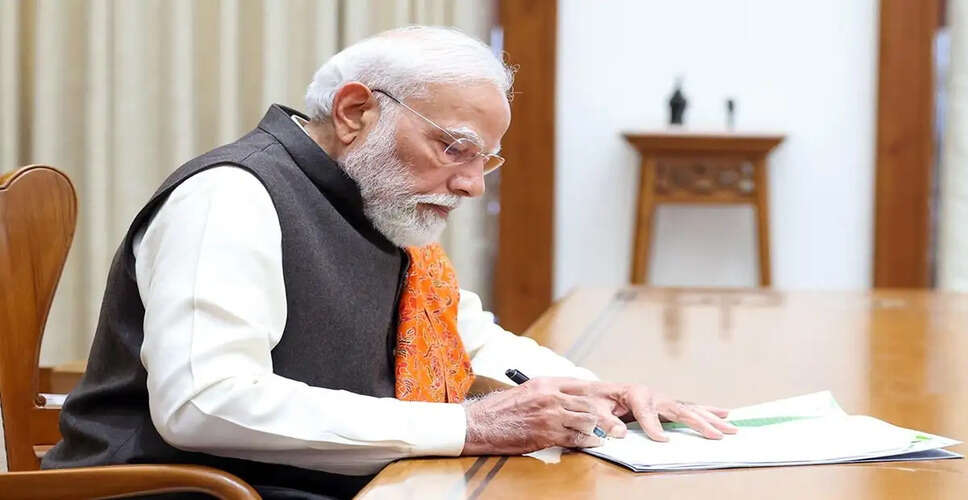
Today, a crucial cabinet meeting was held under the leadership of Prime Minister Narendra Modi, where several important decisions were made. During the meeting, cabinet members congratulated Modi for setting a new record as the longest-serving elected Prime Minister and expressed their commitment to advancing the vision of a developed India. Upon his arrival, the members stood to welcome and honor him.
Recognition of Prime Minister Modi's Tenure
In a special resolution, the cabinet acknowledged Prime Minister Modi's remarkable service of 4,399 days as an elected leader, surpassing the previous record of 4,398 days held by Jawaharlal Nehru. This achievement was described as a historic symbol of Indian democracy, public participation, and trust. The resolution highlighted that this milestone coincides with the completion of twelve years of the National Democratic Alliance government under Modi's leadership, marking the third consecutive mandate for a government in six decades.
Focus on Welfare and Development
The resolution emphasized Modi's mantra of 'Sabka Saath, Sabka Vikas', stating that the welfare of the poor has been central to governance. The government has provided millions with permanent housing, electricity, clean water, direct benefit transfers, free rations to 80 crore people, and healthcare services to over 60 crore impoverished individuals. The cabinet noted that these initiatives have helped over 25 crore people escape poverty. Additionally, the proposal mentioned efforts to foster innovation and entrepreneurship among youth, positioning India as the third-largest startup ecosystem globally. Steps towards women's empowerment, such as the Millionaire Didi campaign and 33% reservation for women in legislative assemblies, were also commended.
National Security and Reforms
The cabinet also highlighted decisions made in the realm of national security and reforms. The abrogation of Article 370, implementation of the Goods and Services Tax, One Rank One Pension scheme, Citizenship Amendment Act, Indian Justice Code, and labor codes were termed historic measures. Achievements under Modi's leadership included surgical and air strikes against terrorism, the suspension of the Indus Water Treaty, control over Naxalism, and peace agreements in the Northeast. The resolution expressed full confidence in Modi's leadership to achieve the goal of a developed India.
Infrastructure Developments
Regarding the decisions made in the cabinet meeting, approval was granted for the second phase of the Ahmedabad Metro Rail project, specifically for Corridor 2-K. This approximately six-kilometer corridor will feature five stations, including four elevated and one underground. It will connect Koteshwar Road to the airport, expanding the total metro network in Ahmedabad and Gandhinagar to around 78 kilometers upon completion. The total project cost is estimated to exceed ₹2,171 crores, promising improved connectivity to the airport, reduced traffic congestion, and environmental benefits. The construction phase is expected to create jobs for around 2,000 individuals, with 500 jobs during operations.
New Residential Complex in Amaravati
Additionally, the Economic Affairs Committee of the cabinet approved the construction of a general residential complex for central employees in Amaravati, Andhra Pradesh. Spanning 17 acres, this complex will consist of 11 residential towers, providing a total of 1,504 housing units. The estimated project cost is over ₹1,234 crores, and it will include facilities such as banks, post offices, childcare centers, dining areas, guesthouses, and shopping complexes. The complex will adhere to green building standards and ensure accessibility for persons with disabilities. The construction phase is projected to generate approximately 700,000 man-days of employment annually, with 50,000 man-days during operations.
Central Government Office Complex Approval
Furthermore, the cabinet approved the construction of a central government office complex in Amaravati. Covering 5.3 acres, this complex will feature two large office buildings accommodating around 8,000 officials and staff. The project is estimated to cost approximately ₹1,299 crores and will include amenities such as banks, post offices, conference rooms, multipurpose auditoriums, and dining facilities. This project will also comply with green construction standards, aiming to enhance efficiency by consolidating various central offices into a single location, thereby improving the availability of central services in the state.
Vision for a Self-Reliant India
The Modi cabinet expressed confidence that under Prime Minister Modi's leadership, the country is rapidly progressing towards the goal of a self-reliant, secure, and prosperous India. The meeting also noted that the political stability, decisive leadership, and visionary policies over the past twelve years have established India as the fastest-growing major economy in the world. The cabinet wished for Modi's health and longevity, expressing belief that under his guidance, India will achieve its goal of becoming a developed nation by 2047.