
Key Decisions from Cabinet Meeting to Boost India's Economy
In a pivotal cabinet meeting led by Prime Minister Narendra Modi, several significant decisions were made to enhance India's economy. The launch of the Grand Industrial Development Scheme aims to create 100 industrial parks with substantial investment, while new energy projects focus on sustainable development. Infrastructure improvements, particularly in Uttar Pradesh, are set to boost trade and employment. Additionally, direct support for cotton farmers aims to stabilize their livelihoods. This comprehensive approach signifies a robust strategy for India's growth and development.
| Mar 18, 2026, 18:13 IST
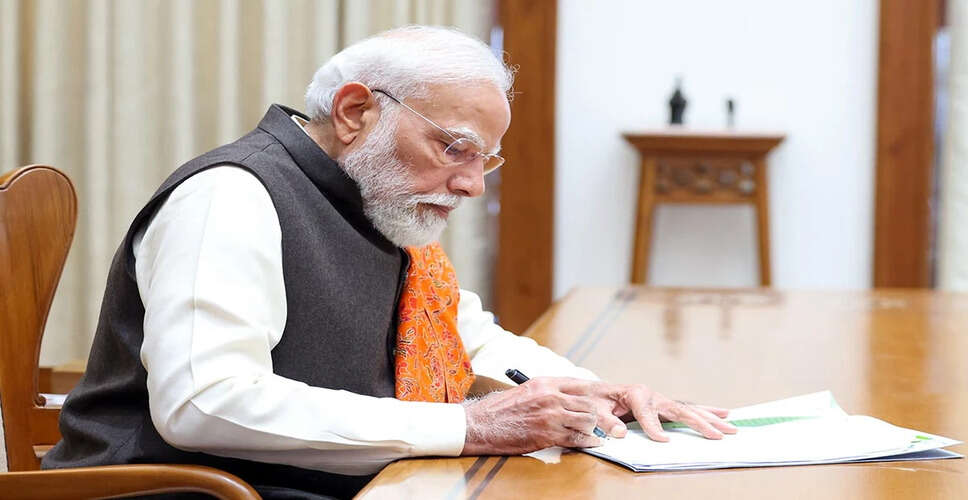
Cabinet Meeting Under PM Modi's Leadership
Today, a significant cabinet meeting was held under the leadership of Prime Minister Narendra Modi, where several crucial decisions were made. Ashwini Vaishnaw, the Minister of Information and Broadcasting, shared insights about these decisions during a press conference. The Modi government has made it clear that it is committed to revitalizing the economy and realizing the vision of an 'Atmanirbhar Bharat' (self-reliant India) through a series of impactful and decisive measures. This initiative aims to harmonize the interests of industries, energy, infrastructure, and farmers, potentially transforming the country's trajectory.
Launch of the Grand Industrial Development Scheme
The most significant and impactful decision is the launch of the Grand Industrial Development Scheme, which involves a massive investment of ₹33,660 crores to develop 100 plug-and-play industrial parks across the nation. This initiative is not merely about establishing factories but represents a revolutionary platform for industries. Investors will no longer need to navigate through various approvals for land, electricity, water, and infrastructure; everything will be pre-arranged, allowing industries to commence production immediately.
State and Private Sector Collaboration
This scheme will be implemented with the participation of states and the private sector, fostering a new competitive environment where states willing to embrace reforms and investments will thrive. With support of up to ₹1 crore per acre, facilities such as ready-made factory sheds, warehouses, testing labs, and worker housing will empower industries. This initiative is expected to create a surge in employment and mark a pivotal shift towards making India a global manufacturing hub.
Energy Initiatives for Sustainable Development
On the energy front, the government has signaled a commitment to balancing development with environmental sustainability. Under the small hydropower project initiative, ₹2,584 crores will be invested to develop 1,500 megawatts of capacity, particularly in hilly and northeastern regions where development has lagged. These projects will not only provide clean energy but also create new investment and job opportunities in remote areas, generating 5.1 million person-days of employment during construction and establishing a long-term source of jobs during operation.
Infrastructure Development in Uttar Pradesh
Additionally, the government has made significant strides in infrastructure development. Approval has been granted for the construction of a four-lane controlled highway from Barabanki to Bahraich in Uttar Pradesh, with an estimated expenditure of ₹6,979 crores. This project is not just about road construction; it is poised to become an economic artery, enhancing trade and movement towards the Nepal border with faster travel, reduced fuel costs, and improved safety. It will facilitate easier access to the Rupaidiah land port, boosting agricultural trade, tourism, and cross-border commerce, while also generating millions of person-days of employment and revitalizing the regional economy.
Support for Cotton Farmers
Furthermore, the government has taken a significant step to support cotton farmers by approving over ₹1,718 crores in direct assistance. Under the minimum support price system, the Cotton Corporation will directly purchase from farmers to mitigate losses due to falling market prices. This decision is crucial as approximately 60 lakh farmers and millions of others depend on cotton for their livelihoods. The initiative ensures that farmers in 508 procurement centers across 151 districts in 11 major cotton-producing states can sell their produce without hassle.
A Comprehensive Development Model
When viewed collectively, these decisions paint a clear picture: a boost for industries, strengthened energy initiatives, improved connectivity through roads, and enhanced security for farmers. This integrated development model is the key to transforming India into a developed nation. The government's aggressive development agenda indicates that the goals are no longer modest. If this strategy, which aims to harmonize employment, investment, exports, and self-reliance, is implemented with full vigor, it could dramatically reshape India's economic landscape in the coming years.