
Key Changes in November 2026: Rising Gas Prices and New Telecom Features

Significant Changes Effective from November 1, 2026
New Delhi | As November begins, several important regulations affecting the general public, businesses, and drivers have come into effect. Ahead of Diwali, the price of commercial gas cylinders has increased by up to ₹17. Additionally, mobile phone users will now see not only the number but also the actual name of the caller when receiving calls from unknown numbers. Furthermore, private vehicle owners residing within a 20-kilometer radius of toll plazas will benefit from an annual FASTag local pass. These changes will impact gas prices, telecom services, road transport, mutual fund investments, and online businesses. Here are the five major changes that took effect on November 1, 2026.
1. Increase in Commercial Gas Cylinder Prices
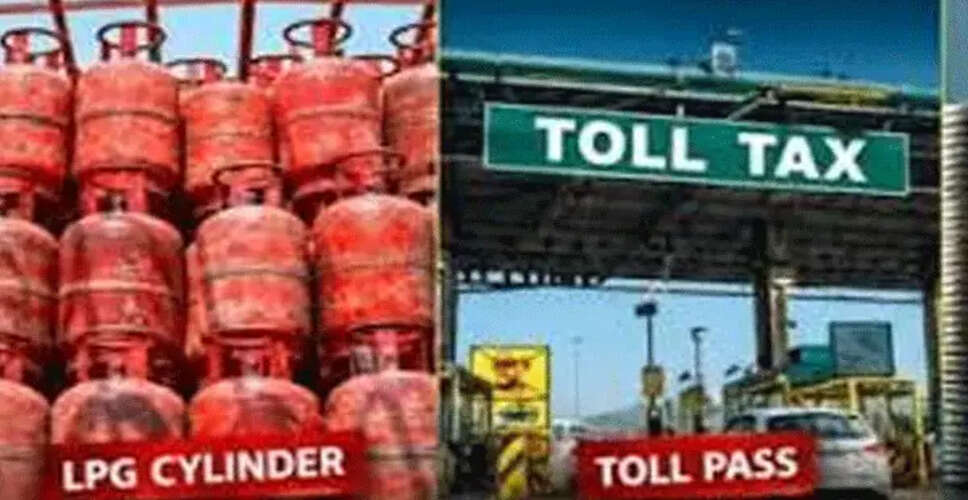
In anticipation of Diwali, oil marketing companies have raised the prices of commercial gas cylinders by up to ₹17, effective from November 1. This increase will directly affect businesses that rely on commercial LPG cylinders, particularly in the hospitality sector, including hotels, restaurants, and catering services, potentially raising their operational costs.
As a result of the higher costs for commercial gas, restaurant owners may face additional financial burdens, leading some to consider raising prices for tea, snacks, and other food items. Catering businesses involved in weddings and events may also see an increase in their expenses. However, domestic consumers will not experience any changes in the prices of household LPG cylinders, which remain stable at 14.2 kilograms.
2. Caller ID for Unknown Numbers
A significant update for mobile phone users has been implemented as of November 1. When receiving calls from unknown numbers, users will now see not just the number but also the actual name of the caller. This name will be displayed based on the identification information provided by the caller when obtaining a new SIM card, such as their government-issued ID.
Mobile users will not need to download any additional applications or subscribe to any services for this feature; it will function automatically. The telecommunications department has mandated all telecom companies to implement this rule, integrating caller identification into their services.
This change is expected to help users identify unknown calls more easily. Previously, many relied on third-party apps like Truecaller to obtain this information. With the new system, users can identify callers without external assistance, aiding in the prevention of fraudulent calls and potential financial scams.
3. Annual FASTag Local Pass for Nearby Residents
A new facility has been introduced for private vehicle owners living near toll plazas, effective November 1. Those residing within a 20-kilometer radius will no longer need to pay toll fees repeatedly. The government has implemented a local FASTag pass valid for one year, available for a fee of either ₹1,500 or ₹3,000.
This initiative aims to alleviate the financial burden of daily commuting for residents near toll plazas, who previously had to pay tolls frequently. With the new local pass, eligible vehicle owners can travel throughout the year without worrying about toll charges, saving both time and money.
4. Direct Plans as Default in Mutual Fund Investments
Another important change for mutual fund investors has been introduced as of November 1. Now, when investing through digital platforms, direct plans will automatically be set as the default option. This means investors will initially see the direct plan option, while those wishing to invest through regular plans will need to select that option separately.
Investors will be informed about the additional costs associated with choosing a regular plan before making their selection. The cost difference between regular and direct plans can range from 0.66% to 1.7%. This information aims to raise awareness about the financial implications of both options.
This change particularly benefits investors who invest directly in mutual funds without the assistance of distributors or agents, as direct plans typically have lower expense ratios. For example, over a 20-year SIP, the cost difference could yield an additional benefit of up to ₹22 lakh, depending on the investment amount and fund performance.
5. Easing Business for Small Online Sellers
As of November 1, a significant relief has been granted to small e-commerce sellers and suppliers. They can now sell their products in other states without needing to establish separate offices. The Central Board of Indirect Taxes and Customs (CBIC) has relaxed GST-related regulations, allowing eligible sellers to use the warehouse address of the e-commerce platform for GST registration in other states.
Previously, expanding business into different states required small sellers to navigate various administrative and operational hurdles, often necessitating separate offices. The new system simplifies these formalities, enabling approximately 950,000 small businesses and suppliers across the country to expand their sales reach without incurring additional costs for physical offices.
Conclusion
In summary, these five changes effective from November 1, 2026, will impact a wide range of individuals, from consumers to small business owners and investors. While the increase in commercial gas cylinder prices may raise costs for food-related businesses, the new caller identification feature is expected to enhance convenience for mobile users. The FASTag local pass will provide relief for nearby vehicle owners, while prioritizing direct plans in mutual funds and easing GST regulations will open new opportunities for investors and small online sellers.