
Keir Starmer Resigns: UK Set for Another Leadership Change

Keir Starmer's Resignation Announcement
On June 22, 2026, Keir Starmer addressed the public outside 10 Downing Street, declaring his intention to resign as Prime Minister once the Labour Party selects a new leader. He acknowledged that he had lost the confidence of a significant portion of his parliamentary colleagues, accepting this outcome with what he described as 'good grace.' Just under two years after a decisive victory, the leader who promised stability has become a representation of a modern trend in British politics: the prime minister as a temporary figure, celebrated upon arrival but leaving before their term concludes.
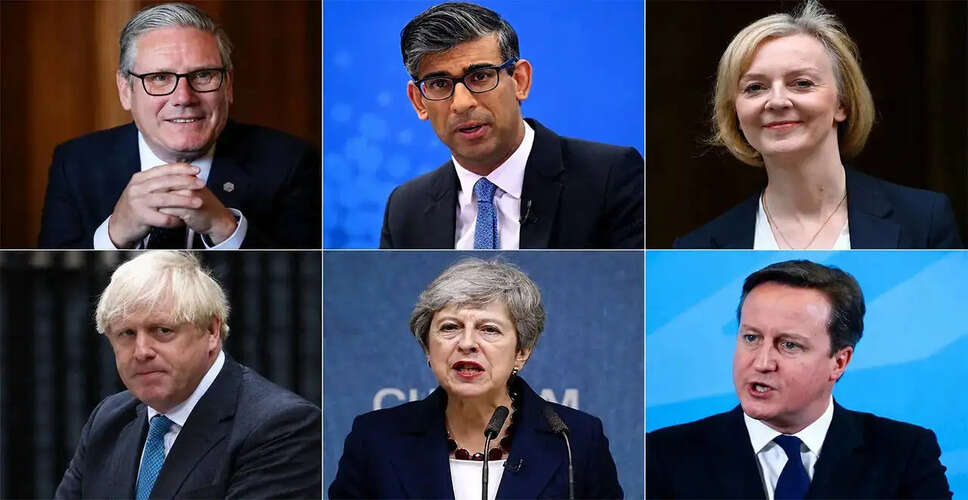
The statistics illustrate the situation clearly. The UK is poised to welcome its sixth prime minister in seven years, following Theresa May, Boris Johnson, Liz Truss, Rishi Sunak, and now Starmer, with Andy Burnham set to take over.
Theresa May resigned in 2019 after being unable to secure parliamentary support for her Brexit deal, following a disastrous election in 2017 that stripped her of a majority. Boris Johnson, who succeeded her in 2022, faced a scandal involving lockdown parties but stepped down shortly after due to fallout from the Chris Pincher incident, which led to mass ministerial resignations. Liz Truss's tenure in 2022 was the shortest in British history, collapsing after a controversial mini-budget. Rishi Sunak, who took office in 2024, was ousted by voters in a general election, unlike his predecessors who were removed by their parties. Now, Starmer's resignation comes as Labour's standing plummeted and the Reform UK party gained traction.
What is driving this recurring phenomenon? The answer lies in the constitutional framework. According to the House of Commons Library, when a prime minister resigns mid-term while their party maintains a majority in the Commons, the party selects a successor based on internal rules. The outgoing prime minister formally resigns only after this process is completed. This system allows parties to change leadership without necessitating a general election, with the monarch then inviting the new leader to form a government. This mechanism contributes to the 'seasonality' of leadership, enabling a ruling party to replace its leader without consulting the electorate.
The immediate cause of Starmer's resignation was a significant decline in Labour's popularity. Following a landslide victory in July 2024, Starmer struggled to foster economic growth, improve public services, and alleviate the cost of living crisis, compounded by controversial decisions such as appointing Peter Mandelson as the UK ambassador to the United States. The local elections saw Labour suffer heavy losses, while Nigel Farage's hard-right Reform UK party called for an immediate general election to address what they termed a 'broken Britain.'
Andy Burnham, the mayor of Greater Manchester and known as the 'King of the North,' emerged as the frontrunner to succeed Starmer. A by-election was arranged to facilitate Burnham's return to Parliament, where he won the Makerfield seat decisively against Reform UK, solidifying his position as the leading candidate. He is now officially set to take over from Starmer.
Wes Streeting, the former health secretary and once considered Burnham's main rival, has endorsed him, stating that Burnham 'can win the fight of our lives against the forces of nationalism,' a clear reference to Reform UK. Under Labour's rules, a challenger must secure the support of at least 81 MPs, which is one-fifth of the party's Commons members.
The timeline is now established. Starmer has requested the Labour National Executive Committee to initiate nominations on July 9, with a new leader expected to be in place before Parliament reconvenes in September. Starmer will remain in office until the transition is complete, ensuring a smooth handover as a caretaker until his successor arrives.
This ongoing cycle raises a critical question for British democracy: does this frequent turnover indicate adaptability or persistent instability? The same rules that allow a party to rectify a failing leadership mid-term also mean that a new prime minister can ascend to power without ever facing the electorate. The next general election is not mandated until 2029, which means Burnham, if confirmed, could govern a nation of approximately 70 million people based on a mandate granted by his party rather than through a public vote. In a system designed for continuity, the prime minister has become one of the most transient roles in Britain, with the public increasingly relegated to spectators in a leadership selection process that occurs behind closed doors rather than at the ballot box.