
Kaziranga National Park Faces Challenges with Illegal Fishing Practices
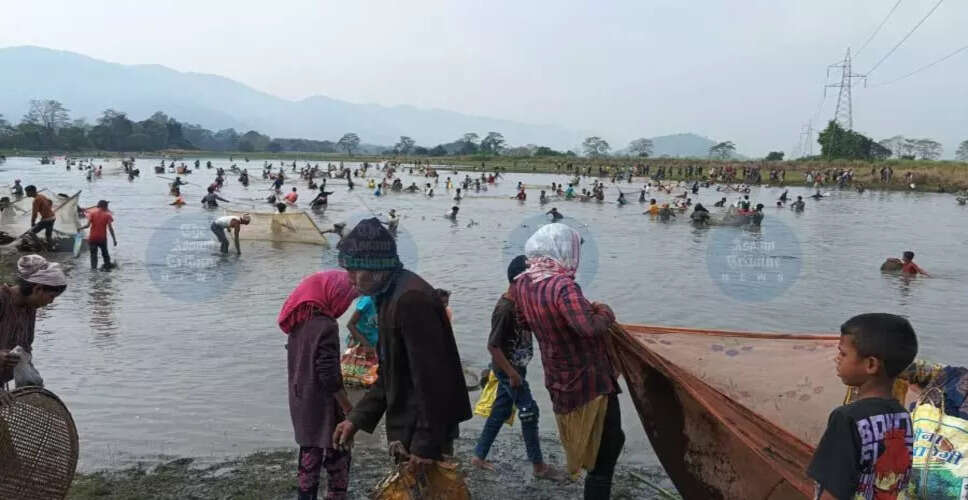
Concerns Over Fishing in Kaziranga National Park
Guwahati, Jan 18: The inability of the State government, particularly the Kaziranga National Park and Tiger Reserve authorities along with district administrations, to halt extensive 'community fishing' within the protected area raises serious concerns regarding the long-term conservation efforts, especially in light of a clear directive from the Gauhati High Court.
What began as a traditional fishing practice by a small community near the park for the Magh Bihu festival has now escalated into a commercial venture. Fish caught during the festivities are being sold in markets across nearby districts.
Last month, the Gauhati High Court issued a stern directive to the State government, KNP authorities, and the district administrations of Nagaon and Golaghat, mandating the enforcement of a ban on fishing in the park's wetlands during the Magh Bihu festival.
However, the government's response was limited to issuing prohibitory orders without implementing effective preventive measures. As a result, large numbers of individuals engaged in fishing within the national park for two consecutive days, highlighting inadequate arrangements and a lack of commitment.
This situation also reflects the government's reluctance to take a firm stance, as it has consistently adopted a lenient approach towards the issue.
Politically, the matter is sensitive, with no party willing to upset local tribal and tea-tribe communities over fishing rights, especially with upcoming assembly elections. The ruling party appeared to overlook ongoing fishing activities.
A senior Forest official, who preferred to remain anonymous, stated that enforcing a ban through force could lead to significant law-and-order issues and foster long-term resentment among local residents.
“A comprehensive strategy is needed that respects local sentiments while ensuring that fishing is limited to feasting purposes for a short duration. Regulated fishing for a brief period once a year should not harm the park's ecology. However, commercial fishing must be strictly prohibited, and local communities should be educated to maintain the integrity of their traditions,” the official remarked.
Regrettably, recent years have seen the emergence of a syndicate exploiting local communities to facilitate the commercial sale of fish from Kaziranga.
An official source acknowledged the rise in fishing activities and emphasized the need for the government to take decisive action against commercial fishing.
Another Forest official suggested a complete ban on fishing, asserting that such activities violate forest, wildlife, and conservation laws. The growing trend of commercial fishing poses a significant threat, and the government must act decisively for the protection of Kaziranga.
The High Court, responding to a public interest litigation filed by environmental activist Rohit Choudhury, noted that protecting the site is crucial to avoid violations of the Wildlife Protection Act, 1972, the Forest Conservation Act, 1980, and various constitutional obligations under Article 48A of the Indian Constitution, as well as international commitments.
“It is imperative to enforce the necessary prohibitory orders,” the court concluded in its ruling.