
Kaziranga National Park Enhances Flood Preparedness Ahead of Monsoon

Intensified Flood Preparedness Measures
Guwahati, June 6: As the monsoon season approaches, Kaziranga National Park and Tiger Reserve are already experiencing saturation in their water bodies due to unusually early rainfall. In response, park officials have ramped up their flood preparedness initiatives to safeguard both wildlife and staff during what is anticipated to be a challenging inundation period.
The park management has implemented a comprehensive strategy that includes mechanized boats, speed boats, floating camps, improved animal monitoring systems, and collaboration with local district administrations, police, transport authorities, community members, and volunteers.
During a press briefing on Saturday, Arun Vignesh, the Divisional Forest Officer (DFO) of the Eastern Assam Wildlife Division, emphasized the urgency of this year's preparations due to the early onset of rainfall.
"Flooding is a regular occurrence in Kaziranga, and we initiate our preparations well ahead of time. This year, rainfall began as early as March, leading to saturation in many water bodies. Any further heavy rainfall could cause water levels to rise quickly, prompting us to enhance our readiness," he stated.
Each camp within the park is now equipped with two country boats, and additional mechanized and inflatable rubber boats are on standby for emergency responses and animal rescue operations.
Monitoring Wildlife Movement on National Highway 715
Highway Watch: Cameras, sensors & a speed cap
Particular focus is being directed towards National Highway 715, which traverses the animal migration corridor. This area becomes especially perilous during floods as animals seek higher ground in the Karbi Anglong hills.
To monitor wildlife movement, cameras and animal sensor systems along the highway have been activated. During the flood season, vehicular traffic will be strictly controlled, with a speed limit set at 40 kilometers per hour. Offenders will incur a fine of Rs 5,000.
According to the DFO, "Our animal sensor system along the highway is operational and continuously monitoring wildlife movement. Additional personnel have been deployed in sensitive areas to ensure prompt action when wildlife is detected."
Health and Sanitation Initiatives
Flood preparedness at Kaziranga also encompasses the health of park personnel and departmental elephants. Regular health camps are being organized for frontline staff and elephants to ensure their fitness throughout the flood season. Sanitation efforts are also in progress within the park.
Vignesh noted, "We are preparing mechanized boats, speed boats, and floating camps. Sanitation-related tasks are ongoing, and health camps for our frontline staff and departmental elephants are being conducted to keep them fit during the flood season."
Collaborative Flood Management Efforts
A coordinated response
The DFO highlighted that effective flood management at Kaziranga necessitates collaboration beyond the forest department. Joint preparedness meetings have been convened with district officials, police, transport departments, NGOs, and local residents to identify challenges and synchronize responses.
"We recently held joint preparedness meetings with district officials, police, transport departments, NGOs, and local residents. The goal was to exchange ideas, pinpoint challenges, and enhance coordination for effective flood management," he explained.
The Ecological Importance of Seasonal Flooding
Seasonal flooding at Kaziranga presents both challenges and ecological benefits. The annual overflow of the Brahmaputra and its tributaries revitalizes the park's wetlands and grasslands, which is crucial for the ecosystem.
However, these floods also drive wildlife to higher ground, increasing the risk of road accidents and posing dangers to animals caught in swiftly rising waters.
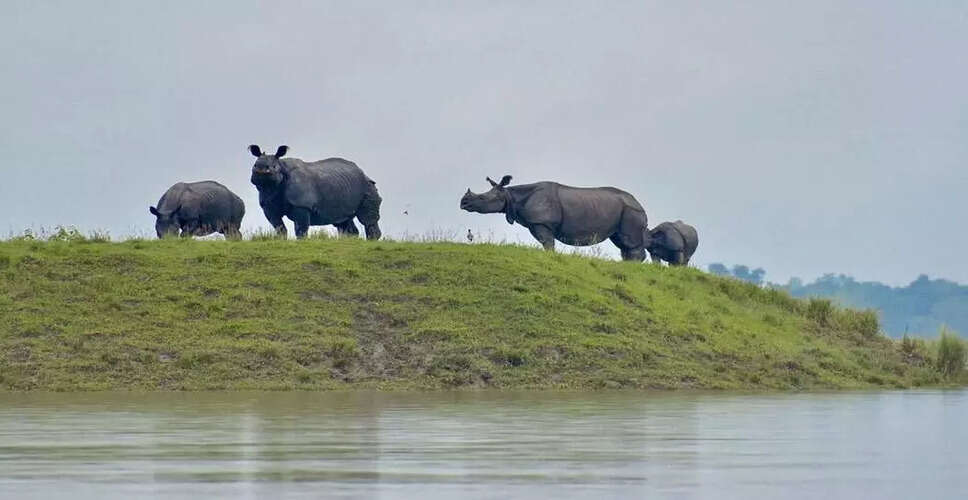
The severity of the situation was starkly illustrated in 2024, when flooding resulted in the deaths of 174 animals, including 10 one-horned rhinoceroses, which are among the park's most iconic and protected species.
With water bodies already filled and the monsoon season yet to peak, authorities are taking no chances this year.