
Kashmir's Political Landscape: Salman Khurshid Discusses Article 370 and Future Prospects
In a recent address, Congress leader Salman Khurshid shed light on the ongoing issues in Kashmir, emphasizing the significance of Article 370's abrogation. He discussed the current political landscape, the importance of elections, and India's commitment to reclaiming Pakistan-occupied Kashmir. Khurshid's insights reflect a broader narrative about Kashmir's future and the aspirations of its people. This article delves into his remarks and the implications for the region's governance and autonomy.
| May 30, 2025, 12:26 IST
Khurshid Addresses Kashmir's Long-standing Issues
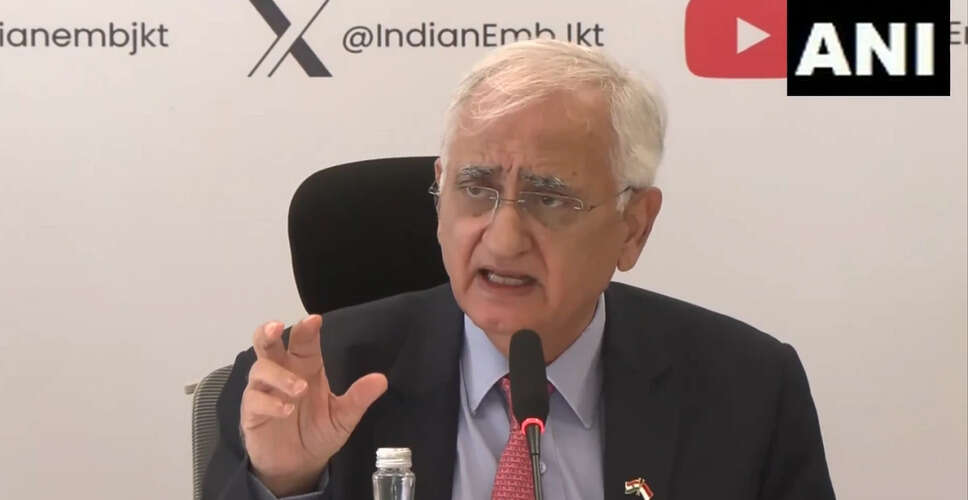
Salman Khurshid, a prominent Congress leader and member of an all-party delegation, highlighted the persistent challenges faced in Kashmir. Speaking to the media, the former External Affairs Minister emphasized during a session with Indonesian think tanks and scholars that Kashmir has grappled with significant issues for an extended period. He noted that a substantial aspect of this situation was reflected in the government's perspective on Article 370 of the Constitution, which created an impression of Kashmir being distinct from the rest of the country. However, with the abrogation of Article 370, this distinction was effectively removed. Following this change, elections were held, witnessing a participation rate of 65%. Khurshid stated that today, Kashmir has an elected government, and the populace desires to restore the prosperity that has emerged since these developments.
Understanding Article 370
What is Article 370?
Introduced in 1950, Article 370 of the Indian Constitution granted Jammu and Kashmir special status and considerable autonomy within the Indian Union. From its inception, this provision has been a topic of debate, with many viewing the unique privileges afforded to the region as divisive. In 2019, the Indian government revoked Article 370, effectively nullifying Jammu and Kashmir's special status. This action also led to the reorganization of the state into two separate Union Territories—Jammu and Kashmir, and Ladakh—bringing the region fully under the purview of the Indian Constitution.
Khurshid's Stance on Pakistan-Occupied Kashmir
In his remarks, Khurshid reiterated India's firm stance that Pakistan-occupied Kashmir (POK) should be returned to India, in line with a long-standing consensus resolution from the Indian Parliament. During his media interaction, he emphasized that seats in the Jammu and Kashmir Assembly will remain vacant for POK, serving as a symbolic gesture of India's commitment to reclaiming the territory.