
Kapil Sibal Critiques NCERT's Focus on Judicial Corruption in New Textbook
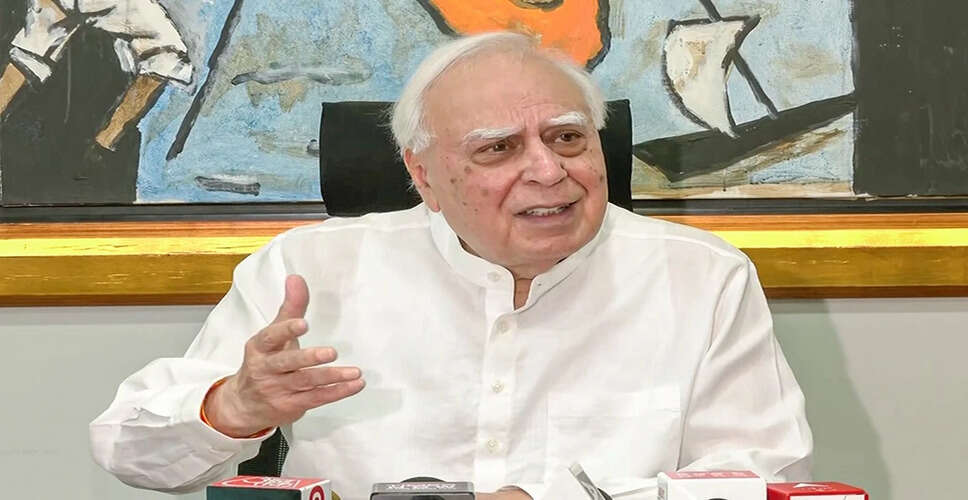
Sibal Questions NCERT's Emphasis on Judicial Corruption
On Tuesday, senior advocate Kapil Sibal expressed his disapproval of the National Council of Educational Research and Training (NCERT) for adding a section on corruption within the judiciary in its Class 8 textbook. He raised concerns about why corruption in other sectors is not being addressed. In a post on social media, Sibal criticized the autonomous body for focusing on corruption issues within the executive and legislative branches of the government. He pointed out that while the NCERT textbook includes a section on judicial corruption, it neglects the significant corruption involving leaders, ministers, and government officials.
Changes in the NCERT Class 8 Social Science Textbook
Sibal's remarks followed the introduction of a new section on judicial corruption in NCERT's revised Class 8 Social Science textbook, marking a significant shift from previous editions that primarily focused on the structure and role of the courts. The updated chapter, titled 'The Role of the Judiciary in Our Society,' goes beyond merely explaining the hierarchy of courts and access to justice. It also addresses challenges faced by the judicial system, including corruption and case backlogs.
Statistics on Pending Cases in the Judiciary
The chapter provides statistics on pending cases, listing approximately 81,000 cases in the Supreme Court, 6.24 million in High Courts, and 47 million in District and Subordinate Courts. The section on corruption emphasizes that judges are bound by a code of conduct that governs their behavior both inside and outside the courtroom. It highlights the internal accountability mechanisms within the judiciary and mentions the procedures established for receiving complaints through the Centralized Public Grievance Redress and Monitoring System (CPGRAMS). Furthermore, it discusses efforts at both state and central levels to enhance transparency and public trust, including the use of technology and prompt action on corruption cases.